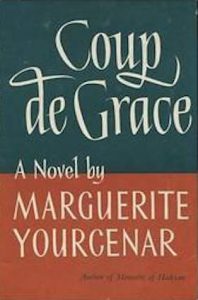
Coup De Grâce by Marguerite Yourcenar is this noted French author’s 1939 novella, her second such work following Alexis (1929). In a 1988 interview in Paris Review, Yourcenar reveals that the novella’s lead female, Sophie, is very close to herself at twenty.
The brief but emotionally devastating story is of the love triangle between three young people affected by the civil war between the White Russians and the Bolsheviks: Erick and Conrad, best friends from childhood; and Sophie, who is burdened with an unrequited love for Conrad. Read More→
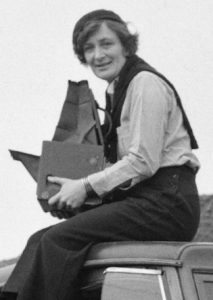
Jasmin Darznik, author of The Bohemians, a novel of Dorothea Lange’s early career (Ballantine Books, 2021), presents 10 fascinating facts about this trailblazing American documentary photographer of the early 20th century:
Though she is most known for her iconic Depression-era photograph “Migrant Mother,” Dorothea Lange’s photographs put a face to nearly every major historical event of the twentieth century, including World War II and the Japanese American internment camps.
Her photographs are infused with a deep and abiding dedication to documenting the lives of the have-nots in our country—those banished to the fringes by poverty, hardship, forced migration, and discrimination. She also dedicated herself to documenting environmental degradation, as in her series Death of a Valley. Read More→
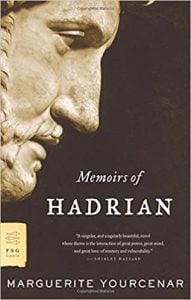
Memoirs of Hadrian, a novel by Marguerite Yourcenar, the Belgian-born French writer, was first published in France in 1951. Originally written in French, it was published in English in 1954. It was an ambitious project many year in the making; Yourcenar first had the idea for it in the 1920s, then worked on it, on and off, in the 1930s.
Many years in gestation, it was a book that, with the benefit of hindsight, she didn’t think she could have written when she was younger. “There are books,” she said later, “which one should not attempt before having passed the age of forty.”
Considered this author’s masterwork, and the book she’s best remembered for, it was from the start a critical success. The novel, told from a first person person by the Roman Emperor Hadrian, begins with a letter to his adoptive grandson, who became Marcus Aurelius and his successor. Read More→
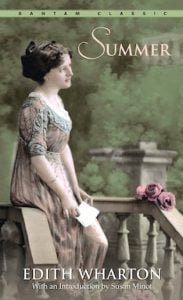
This analysis of Summer by Edith Wharton, a 1917 novella of the coming of age of Charity Royall, a small-town girl, is excerpted from Girls in Bloom: Coming of Age in the Mid-20th Century Woman’s Novel by Francis Booth, reprinted by permission.
The slim novel was one of Wharton’s personal favorites. She called it the “hot Ethan,” referring to her 1911 novella, Ethan Frome. It’s unclear if she was speaking of the book’s setting in the summer season, Charity’s sexual awakening, or both.
Unusually for Edith Wharton (1862–1937), best known for her novels of patrician Gilded-Age New York like The House of Mirth and The Age of Innocence, this novella is set in a tiny New England town close to ‘the Mountain,’ from which Charity Royall has been brought down as a baby by lawyer Royall, as he is universally known, and his wife, who is dead before the story begins. Read More→
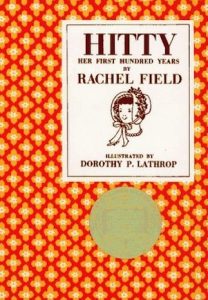
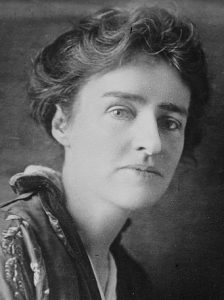
Among the works Rachel Field (1894 – 1942) created for children, the most celebrated and enduring is Hitty: Her First Hundred Years, published in 1929.
Written in the voice of a 100-year-old doll telling her life story, it gave Field the distinction of being the first woman to win a Newbery Medal (1930). It also received the acclaimed Lewis Carroll Shelf Award.
Hitty enjoyed a long life in print. The 1959 MacMillan Company version (which went into several editions over the next several decades), with the original illustrations by Dorothy P. Lathrop, describes the book as follows: Read More→
Jean Webster (July 24, 1876 – June 11, 1916) was an American author best known for her enduring girls’ novel, Daddy-Long-Legs (1912), which was successfully dramatized two years after its publication.
Her fiction reveals her dedication to social welfare and her characters often triumph over destitution and injustice.
Born Alice Jane Chandler Webster in Fredonia, New York, the name Jean was acquired later, as a young woman. Her parents, Charles Webster and Annie Moffett Webster, were married in 1875; Alice was their firstborn. Read More→
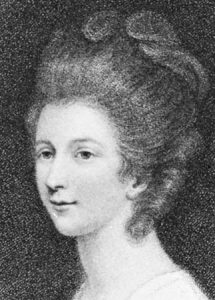
Charlotte Lennox (c. 1730 – 1804), née Barbara Charlotte Ramsay, was an English novelist, playwright, and poet best remembered for her 1752 novel, The Female Quixote. This introduction to her life and work is excerpted from Killing the Angel: Early Transgressive British Woman Writers by Francis Booth ©2021, reprinted by permission.
Charlotte had a peripatetic early life. Born in Gibraltar, the daughter of a Scottish captain in the British Army, she lived her first ten years in England before moving to Albany in New York, where her father was Lieutenant Governor.
After her father’s death in 1742, Charlotte remained in New York with her mother until, at age thirteen, she was sent to London to a companion to her aunt. Her aunt, however, seems to have been mentally unstable, so Charlotte became companion to the unmarried courtier Lady Isabella Finch, cousin of the poet Anne Finch, Countess of Winchilsea. Read More→
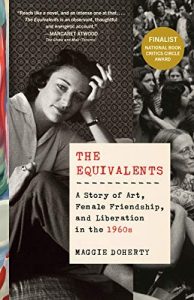
Anne Sexton and Maxine Kumin were significant twentieth-century poets who provided deep friendship and support for one another as they developed and mastered their craft. Literary Ladies Guide has offered fascinating musings and insights into several significant literary friendships between women writers.
But none of these compare in intensity to the literary friendship of Anne Sexton and Maxine Kumin, a relationship brought to life in The Equivalents (2020) by Maggie Doherty.
This book is an exploration of the first group of poets and artists to be part of the Institute for Independent Study at Radcliffe College (later the Bunting Institute, and now the Radcliffe Institute for Advanced Study). Read More→