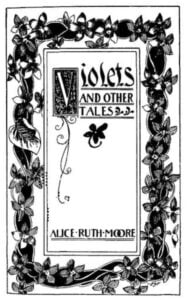
Alice Dunbar-Nelson (1875 – 1935; also known as Alice Moore Dunbar-Nelson) was a poet, short story writer, essayist, and journalist associated with the Harlem Renaissance. Presented here are poems from Violets and Other Tales (1895), her first collection, when she was still Alice Ruth Moore, her original name.
Published when she was just twenty, Violets and Other Tales includes short stories interspersed with the poems. Some of this early work hints at feminism and social justice, in a preview of the kind of writing that would become her hallmark.
Dunbar-Nelson would later become at least as well known for her short stories and searingly honest essays as for her poetry, if not more so. More of her short stories, which have come to be known as the Creole stories, have recently come to light.
Read More→
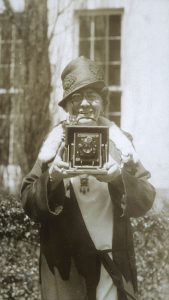
Though Margaret Bourke-White and Dorothea Lange pioneered modern photojournalism in the first half of the 20th century, the field continues to be male dominated. As we learn more about them, along with the two other trailblazing American women photojournalists presented here (Jessie Tarbox Beals and Ruth Gruber), it’s worth musing on why this persists.
A photojournalist is a reporter with a camera. Some photojournalists (past and present) have only taken pictures, and a different reporter writes the text that goes with them. Others take photos as well as write articles. Read More→
How can writers reconcile the demands of the social and political moment with the demands of their craft? Caribbean women writers of color offer some models in the way they explore the rich intersection of concerns with gender, race, and colonialism through their work.
Anglophone writers with links to African and indigenous Caribbean cultures as well as to the United States or the United Kingdom (or both) express those connections with language, story, and rhythm.
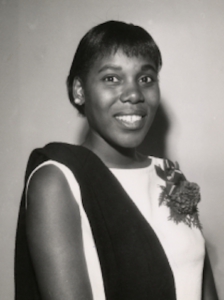
Following are brief introductions to several classic Caribbean women writers, listed in order of their dates of birth — Rosa Guy, Paule Marshall (shown above), Georgina Herrera, Michelle Cliff, Mahadai Das, and Jean “Binta” Breeze. Read More→
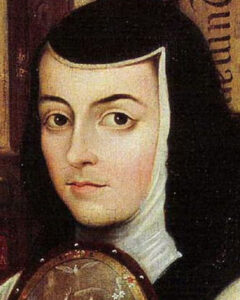
Juana Inés de Asbaje Ramírez de Santillana (November 1648 (?) – April 17, 1695), more familiarly known as Sor Juana Inés de la Cruz was a Mexican writer, poet, philosopher, composer, and Hieronymite nun.
Known as the “Tenth Muse” or as “The Phoenix of America” due to her formidable achievements in literature and scholarship, she is now revered as an early feminist.
Her writing is the subject of vibrant academic discourse on subjects as wide-ranging as women’s rights, environmentalism, colonialism, and education. Read More→
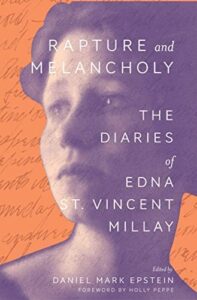
Rapture and Melancholy: The Diaries of Edna St. Vincent Millay, edited and annotated by Daniel Mark Epstein (Yale University Press, 2022) sheds an intimate light on an iconic American poet.
A revival of interest in the life and work of Pulitzer Prize-winning poet Edna St.Vincent Millay began in the early 2000s with the publications of What Lips My Lips Have Kissed (2001), also by Daniel Mark Epstein (2001), and Savage Beauty by Nancy Milford (2001) and
Millay received the Pulitzer Prize for poetry in 1923 for The Ballad of the Harp-Weaver, her fourth collection. She was the first woman (and only the second person) to win this award. Only thirty-one at the time, she was already one of America’s best-known poets, able to attract huge, enthusiastic crowds on her reading tours. Read More→
What is it that makes us long to see what the writers we love once saw? To stand in their footsteps? Do we imagine that some fairy dust will fall from nearby trees or rise from abandoned floorboards to bring us the wisdom or the art that flowed from their fingers to their manuscripts, whether through pens or pencils, typewriter keys, or pixels?
That’s what was on my mind on a visit to Cornwall, England, when I was determined to get to Godrevy Light, the lighthouse that inspired Virginia Woolf’s To the Lighthouse. Read More→
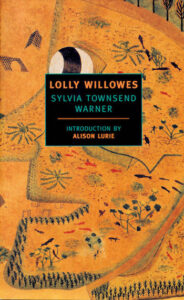
Lolly Willowes; or The Loving Huntsman was the first novel by modernist author Sylvia Townsend Warner. Published in 1926, it’s now considered an early feminist classic.
Considered comedy of manners, this novel is steeped in social satire. This collection of reviews was gathered in High Collars & Monocles: 1920s Novels by British Female Couples by Francis Booth, © 2020. Reprinted by permission.
Following is a synopsis and two reviews from 1926, when the book was originally published. A more recent look back at Lolly Willows in the Guardian lauds it as a social satire and “an elegantly enchanting tale that transcends its era.” Read More→
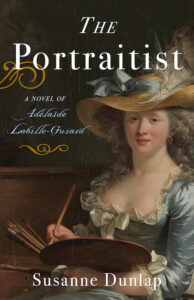
Susanne Dunlap, author of the historical novel The Portraitist: A Novel of Adélaïde Labille-Guiard (She Writes Press, 2022) presents ten fascinating facts about one of the two most important French female artists of the period before, during, and after the French Revolution.
About The Portraitist:
Adélaïde Labille-Guiard is ready to draw the line between art and politics in The Portraitist. Award-winning author Susanne Dunlap paints a historical retelling of real-life Adélaïe Labille-Guiard, a female portraitist and painter, and her earnest battle to win recognition as an artist in 18th-century Paris amidst the French Revolution. Read More→