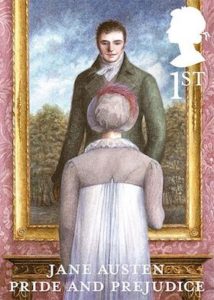
Every Pride and Prejudice fan can quote the famous opening line of Jane Austen’s beloved classic, “It is a truth universally acknowledged, that a single man in possession of a good fortune, must be in want of a wife.” There are lots more gems where that came from, as evidenced by the memorable quotes from Pride and Prejudice on life, love, and marriage that follow.
Jane’s family recognized her talent, and with the assistance of her father and brothers, they sought to find a publisher for Pride and Prejudice. Amazingly considering the book’s iconic status, they met with no success. Soon, they embarked on a similar mission for Sense and Sensibility. Read More→
Dear Literary Ladies,
I always thought that one needed great swathes of time to get any writing done. Now I hear that some esteemed authors worked in short bursts and still produced an enormous amount of brilliant work. How did you do it, and what did you do with the rest of your time?
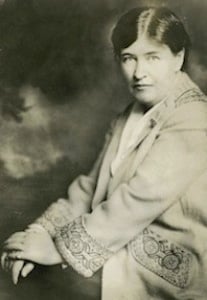
I work from two and a half to three hours a day. I don’t hold myself to longer hours; if I did, I wouldn’t gain by it. The only reason I write is because it interests me more than any other activity I’ve ever found. I like riding, going to operas and concerts, travel in the west; but on the whole writing interests me more than anything else. Read More→
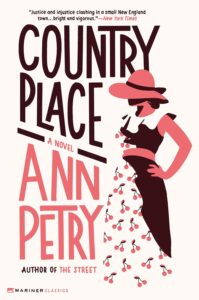
Country Place by Ann Petry (1947) came on the heels of the massive success of her first novel, The Street, published just the year before. The Street was groundbreaking, becoming the first novel by an African-American woman to sell more than a million copies. It would eventually sell more than a million and a half, and was reissued in a new edition in 1992.
Born Ann Lane (1908 – 1997), she was was raised in Old Saybrook, Connecticut and was shielded from the very worse effects of racism in early 20th-century America. In 1938, she married George Petry, and the couple moved to Harlem. There she began a writing career in earnest, working as a journalist, columnist, and editor. Read More→
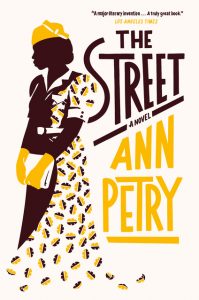
The Street by Ann Petry (1946) was the first novel by a Black woman writer to sell more than a million copies — all told, it sold more than 1.5 million. The story centers on Lutie Johnson, a young Black single mother coping with racism, sexual harassment, violence, and class divisions in World War II-era New York City.
Ann Petry was raised in Old Saybrook, Connecticut, and grew up as part of a middle-class Black family. Her father, a pharmacist, and her mother, a podiatrist, provided a relatively sheltered life for Ann and her siblings.
Ann followed in her father’s footsteps and became a pharmacist, but writing was her true ambition. She was an admirer of Jo March, the budding author and main character in Louisa May Alcott‘s Little Women. Read More→
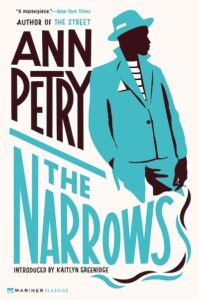
The Narrows by Ann Petry (1953) was the third and last full-length novel for adult readers by the groundbreaking author of the 1946 blockbuster, The Street.
Though Petry would never replicate the incredible success of The Street, which became the first novel by an African-American woman to sell more than a million copies, The Narrows is a solid entry into the canon of an American author whose talent deserves to be more widely recognized. Read More→
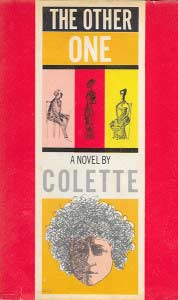
A brief description of the The Other One, from the 1931 edition, Farrar, Straus and Cudahy: The Other One by Colette is a bravura performance which perhaps she alone among writers could have carried off with such perfect tact.
It has for its essential theme the acceptance by a wife of another woman in the home, not so much as a rival, but rather as an ally who “seconds” her in the difficult task of keeping her roving and egocentric husband within bounds.
Although it is true that the other woman succumbs to the husband’s seduction, this is no study in polygamy, but a poignant, brilliantly analyzed story of two women with much in common and a determination not to become antagonists. Read More→
From the 1995 Random House edition of A Long Fatal Love Chase by Louisa May Alcott, circa 1866, written by under the name A. M. Barnard, and unpublished during her lifetime: “I often feel as if I’d gladly sell my soul to Satan for a year of freedom.”
This passionate cry from a beautiful, impetuous young woman marks the opening of an extraordinary novel of obsessional love …
Rosamond Vivian has been brought up as a recluse by her heartlessly indifferent grandfather on a remote island off the English coast. Her only knowledge of he outside world is derived from the books she devours so voraciously. Read More→
Adapted from the novel of the same name by Kate Douglas Wiggin, the film version of Mother Carey’s Chickens must have resonated as much or more when it came out in 1938, in the waning days of the depression.
Starring Anne Shirley in the lead role as Nancy, and Ruby Keeler as her sister Katherine, or Kitty. The film was based on the 1917 stage adaptation of the same novel. Fay Bainter portrayed Mrs. Margaret “Mother Carey.” Read More→