Literary Centenaries 2026: Classic Fiction by Women Writers
By Nava Atlas | On April 11, 2026 | Updated June 27, 2026 | Comments (0)
I find literary centenaries fascinating. What books were being read and discussed one hundred years ago? What books and stories have become classics? Here we’ll explore literary centenaries that happened in 2026 — specifically, books by women writers published in 1926. Which have stood the test of time?
Because of the hoopla surrounding the centenary of The Great Gatsby in 2025, I did a similar roundup of books and stories by women writers from 1925.
All of these books and stories following are in the public domain, so you might find free versions of them online on sites like Project Gutenberg. Many are still circulating in print form in public or university libraries; and audio versions of most are available as well.
. . . . . . . . . . .
The Blue Castle by L.M. Montgomery
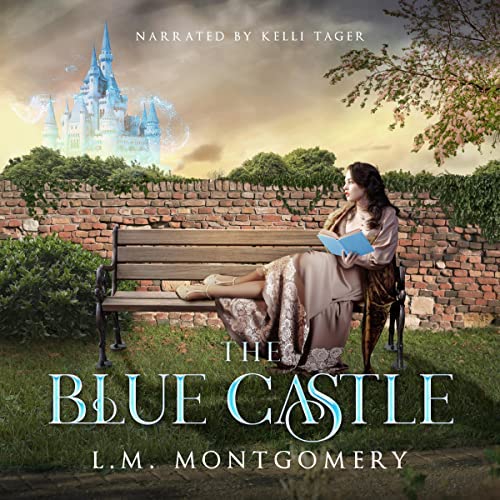
Canadian author L.M. Montgomery (1874 – 1942) is best known for her Anne of Green Gables and Emily of New Moon series. The Blue Castle (1926) was two novels she intended for adults (though all her books can be enjoyed by readers of all ages; the other is A Tangled Web, 1931). While this book may not be as famous as Montgomery’s Anne and Emily series, it’s beloved by those who have discovered it, and is one of her few standalone novels.
The story’s heroine, Valancy Stirling, is considered a hopeless old maid at age twenty-nine. Infantilized and controlled by her prim and eccentric family, she takes refuge in daydreams of her “Blue Castle” and reading nature books by an author known as John Foster.
When Valancy is diagnosed with a heart ailment that she’s told will kill her within a year, she suddenly feels liberated from her family, their judgements, and low expectations. She sets out to do just as she pleases, and so, the real story of Valancy’s life begins.
It’s best to read the book without knowing too much about the story in advance so that it can delight and surprise as it unfolds without spoilers. More about The Blue Castle.
. . . . . . . . . . .
Enough Rope:
A Book of Light Verse by Dorothy Parker

It’s almost a cliché to say that Dorothy Parker (1893–1967) was known for her acid wit, but that’s an accurate way to describe her acerbic style. Enough Rope: Poems by Dorothy Parker (1926) was her first published collection of verse. This collection includes the much-anthologized verses “Résumé” and “One Perfect Rose.”
In addition to verse, Parker wrote short stories, essays, and reviews. She was one of the founding members of the Algonquin Roundtable, an exclusive group of eminent New York City writers in the early twentieth century.
Parker was self-aware enough to know that she wasn’t a great poet. Her verses — in turn witty, funny, reflective, and wise — were often tinged with sadness and disappointment. In the introduction to The Portable Dorothy Parker, an omnibus of both short stories and poems, W. Somerset Maugham observed:
“Admirable as are Dorothy Parker’s stories, I think it is in her poems that she displays the quintessence of her talent … she has made little songs out of her great sorrows … And how fresh and various they are! Though beautifully polished, they have an air of spontaneity and none can know better than a writer what patient industry is needed to acquire that quality …”
Read Enough Rape in full here.
. . . . . . . . . . .
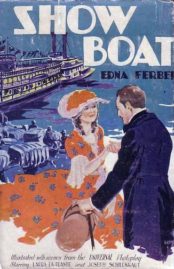
Show Boat by Edna Ferber
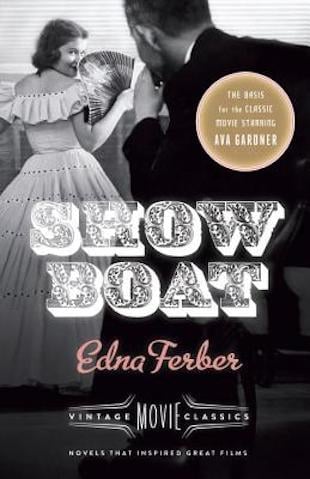
Show Boat by Edna Ferber, another 1926 classic, tells the story of three generations of performers on a floating theater, the Cotton Blossom. As the titled show boat travels down the Mississippi River from the 1880s to the 1920s, readers get a glimpse of a forgotten form of American entertainment.
In that era, floating theaters stopped in river towns that normally didn’t have access to high quality performances because of their distance and isolation from major urban centers. Edna Ferber captured the spirit of this way of life with her skillful storytelling and captivating characters.
Through the character of Julie, she also sensitively touched on racial topics that were quite controversial at the time — mixed marriage (then called “miscegenation, and in most states, illegal) and the concept of “passing.”
When the novel came out, it was praised more for its storytelling than as a masterpiece of literature, which was typical of how Ferber’s sprawling tales were receive.d And like many of Ferber’s works, it has a cinematic and theatrical quality. Read more about Show Boat about how Show Boat went from page to stage to screen (it was actually filmed twice).
. . . . . . . . . . .
Precious Bane by Mary Webb
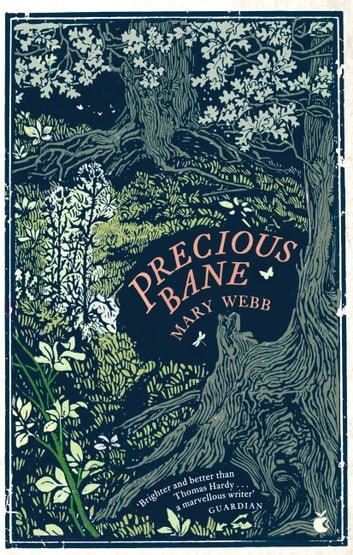
Precious Bane, the 1926 novel by English author Mary Webb, is a coming–of–age novel set in the English countryside. Our heroine, Prue Sarn, is a sharply observant young woman of Shropshire during the Napoleonic Era who has been born with a disfigured lip.
Her harelip leads the others in her superstitious village to treat her as an outsider due to the association it shares with witchcraft. Despite the hardships of rural life, her disfiguration and its resulting perceptions Prue endearingly finds beauty and compassion for all around her.
The colorful cast of Precious Bane includes Prue’s brother Gideon, whose temperament is the of polar opposite of hers. Gideon, the inheritor of the family farm, cannot see anything in his environment outside of its potential to be exploited for personal monetary gain.
In contrast Prue’s romantic interest Kester Woodseaves, a skilled weaver, shares a profound empathy for his world and sees this same beauty in. English traditions and folklore fill out the world around Prue as her disfigurement encourages the suspicion of her community and ultimately the false accusation of murder and witchcraft to which Prue must defend.
Ultimately Mary Webb gifts her audience with a satisfying conclusion fitting for its kindhearted and empathetic protagonist. Read more about Precious Bane.
. . . . . . . . . . .
Lolly Willowes
by Sylvia Townsend Warner

Lolly Willowes was the first novel by modernist author Sylvia Townsend Warner. It’s now considered an early feminist classic. A comedy of manners, this novel is steeped in social satire.
In his piece on this novel, Literary Ladies Guide contributor Frances Booth presents two reviews from 1926, when the book was originally published. The Scotsman’s review began:
“There is a piquant charm in this quiet chronicle of the life of an old spinster who makes a compact with the Devil, throws her relations to the winds, and asserts her right to stay out all night in the hills.
If it be objected that the patient Aunt Lolly whose submissive girlhood, submissive sisterhood, and submissive aunthood are so delicately and with fine persistence pictured by the writer could never develop into such a “monstrosity” as a witch, then the objector is referred to the exquisite old lady herself, who, it is certain, will charm doubt into conviction.”
A more recent look back at Lolly Willowes in the Guardian lauds it as “an elegantly enchanting tale that transcends its era.” Read more about Lolly Willowes.
. . . . . . . . . . .
“Sweat” – a short story
by Zora Neale Hurston
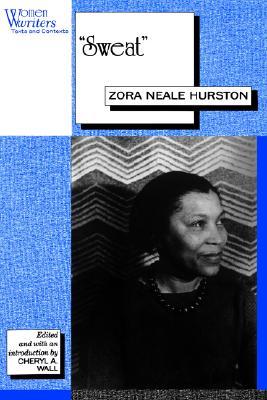
Zora Neale Hurston’s short story, “Sweat,” is nuanced and eloquently compact. Hurston maximizes each word, object, character, and plot point to create an impassioned and enlightening narrative.
Hurston addresses a number of themes, such as the trials of femininity, which she explores with compelling and efficient symbolism. In her introduction to the 1997 anthology entirely devoted to the story (“Sweat” by Zora Neale Hurston), editor Cheryl A. Wall wrote:
“The many levels on which ‘Sweat’ can be read make it one of Zora Neale Hurston’s most enduring works. It was published in 1926, early in Hurston’s career, indeed, long before she had dedicated herself to the profession of writing.”
“Sweat” was originally published in Fire!! Devoted to the Younger Negro Artists (1926), and is now in the public domain, so you can read it in full here.
Leave a Reply