By Nava Atlas | On March 1, 2019 | Updated August 20, 2026 | Comments (0)
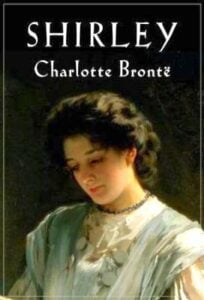
Shirley, the second published novel by Charlotte Brontë, came out in 1849 while she was still using the pseudonym Currer Bell. Charlotte had already achieved fame and notoriety with the wildly successful Jane Eyre under her ambiguous nom de plume.
The question we’ll be exploring here is how much of Shirley’s character did Charlotte draw from her sister Emily.
A more challenging novel to read than Jane Eyre, Charlotte’s best known, Shirley: A Tale is now considered a prime example of the mid-19th century “social novel.” The social novels that emerged from that period were works of fiction dealing with themes like labor injustice, abuse of and bias against women, and poverty. Read More→
By Nava Atlas | On February 28, 2019 | Updated July 1, 2021 | Comments (0)
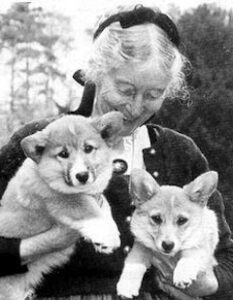
Tasha Tudor (August 28, 1915 – June 18, 2008) not only wrote and illustrated some two dozen of her own titles, but her exquisitely detailed watercolors and drawings grace scores of other books. Her writing and art have earned her a secure place in children’s literature, yet she became nearly as famous for her unconventional lifestyle.
Anyone who knows a bit about Tasha’s private life will know that she was a consummate Corgi lover. And if this is news to you, you’re in for a lovely look at Tasha Tudor’s corgis.
Read More→
By Nava Atlas | On February 27, 2019 | Updated January 22, 2023 | Comments (0)
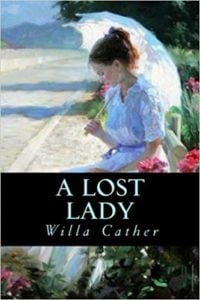
A Lost Lady (1923) is a shining example of Willa Cather’s gift for concise expression and talent for vivid character studies. Marian Forrester, a young woman of beauty and grace, brings an uncommon air of sophistication to the frontier town of Sweet Water.
Marian wound up in Sweet Water, which lay along the Transcontinental Railroad, through her marriage to the much older Captain Daniel Forrester.
The novel is written from the viewpoint of Niel Herbert, a young man who has grown up in Sweet Water. He idealizes Mrs. Forrester, even as he witnesses her decline. As a contemporary edition of A Lost Lady concludes, “The recurrent conflict in Cather’s work, between frontier culture and an encroaching commercialism, is nowhere more powerfully articulated.” Read More→
By Skyler Gomez | On February 21, 2019 | Updated January 28, 2024 | Comments (6)
Here is a tribute to the women who won the Nobel Prize in Literature in chronological order, starting from the most recent. Note, we need to update this list to include recent recipients: Annie Emaux (2022), Louise Glück (2020), and Olga Nawoja Tokarczuk-Fingas (2018).
The Nobel Prize in Literature has arguably become the most prestigious literary prize, awarded annually since 1901. It is given to an author from any country who, in the words of Swedish industrialist Alfred Nobel, created “in the field of literature the most outstanding work in an ideal direction.”
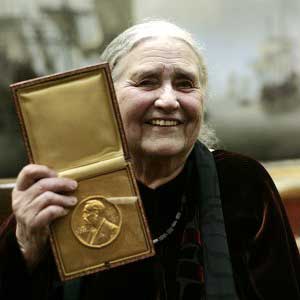
The Nobel Prize has been awarded to some 894 men (as of 2023), and around 60 women in all fields combined since its inception in 1895. Seventeen of the women achieved this honor in literature. Above right, Doris Lessing receiving her award in 2007. Read More→
By Melanie P. Kumar | On February 20, 2019 | Updated July 6, 2021 | Comments (0)
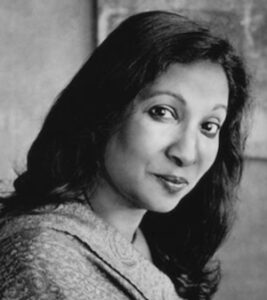
There are times when you take more interest in a poet or an author after you read her obituary. This is what happened with Meena Alexander, whom I had read in passing but devoured in great detail, especially after I heard that she had succumbed to cancer on November 21, 2018 in New York.
Meena could be termed an international poet as she was of Indian origins, born in Allahabad in 1951 and raised in Kerala, India before the family moved to Sudan.
Meena finally made the U.S. and New York City her home, where she was a professor of English and Women’s Studies at City University of New York and Hunter College. Read More→
By Nava Atlas | On February 18, 2019 | Updated August 22, 2026 | Comments (0)
Do you enjoy literary pilgrimages (actual or virtual)? Be prepared for a visit to Harper Lee’s Monroeville, Alabama. This small Southern town (population around 6,000) was the inspiration for Maycomb, where To Kill a Mockingbird is set.
To Kill a Mockingbird (1960) by Harper Lee continues to be one of the most frequently taught novels in American high schools and is beloved by readers of all persuasions. The Pulitzer Prize-winning book has sold more than forty million copies and has been translated into some forty languages.
After a gap of fifty-six years, the 2016 publication of Go Set a Watchman set off a fervor of renewed interest in the famously private (though not, as myth would have it, reclusive) author. Read More→
By Grace Carter | On February 16, 2019 | Updated October 13, 2026 | Comments (0)
Most often, book clubs (aka book groups) choose recent publications for discussion, many straight off the current bestseller list. And this is understandable, given all the great books coming out. It’s hard enough to keep up with all the new publications, but can we make the case for discussions of classic literature by women authors?
Some suggestions in this post are by authors of the past that are still well known, while others have fallen under the literary radar. Either way, these novels make for fantastic reading and stimulating discussion. Books remain classics for a reason, after all.
With universal themes of what it means to be a woman — and what it means to be human — these great stories are timeless. Read More→
By Larrisa Pope | On February 15, 2019 | Updated June 22, 2026 | Comments (0)
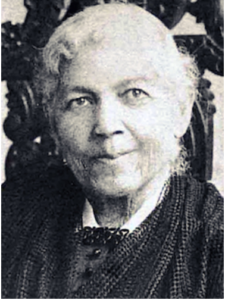
Harriet Ann Jacobs (February 11, 1813 – March 7, 1897) chronicled her life under enslavement in North Carolina and the constant sexual harassment by a prominent doctor.
She is alternately referred to as Harriet A. Jacobs (or simply Harriet Jacobs) and is today best known as the author of Incidents in the Life of a Slave Girl, an autobiographical narrative published privately in 1861. Read More→