By Nava Atlas | On March 4, 2020 | Updated August 25, 2026 | Comments (2)
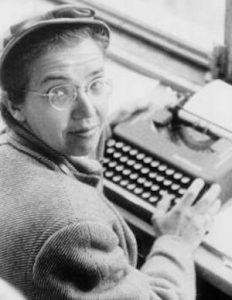
The story of women in American journalism has a common thread: From Colonial times on, women have fought for the right to report. That was (and still remains) especially true for women sports journalists, including this trio of trailblazers: Ina Louise Young, Mary Garber (at right), and Anita Martini.
Sports journalism seems like the final frontier because there have been more women reporting from the battlefield than from the playing field. Consider that during World War II, there were about one hundred forty accredited female war correspondents. That’s not a huge number, yet it eclipses the handful of female sports reporters working at the time. Read More→
By Nava Atlas | On March 3, 2020 | Updated September 2, 2022 | Comments (0)
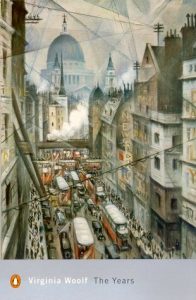
The Years by Virginia Woolf (1937) was the last novel she had published in her lifetime. Spanning some fifty years, it covers the trajectory of the respectable Pargiter family from the 1880s to the 1930s.
One of its overarching themes is the passage of time, and it does so by detailing small, mostly private moments of the characters lives. Still, it moves away from the stream of consciousness style that she’s best known for, and into a more traditional narrative.
The novel is less internal than most of Virginia Woolf’s books, and traces the lives of the Pargiter family and the dailyness of their existence. From the Penguin Modern Classics edition: Read More→
By Nava Atlas | On March 1, 2020 | Updated September 2, 2022 | Comments (0)
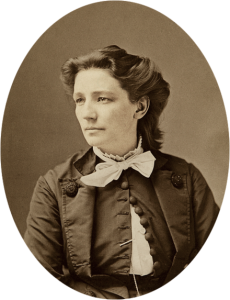
Shirley Chisholm may have been the first woman to seek the presidential nomination from one of the two major political parties — that was in 1972 — but exactly one hundred years before that, Victoria Woodhull (1838 – 1927) was the first woman to launch a national presidential campaign. She did so under the banner of the Equal Rights Party.
And running for president long before women even had the right to vote was just one chapter in an incredibly colorful, yet largely forgotten American life.
Victoria was a suffragist, publisher, stockbroker, orator, and agitator. She was also accused at various points of being a bigamist, prostitute, spiritual charlatan, and adulteress. Read More→
By Nava Atlas | On February 24, 2020 | Updated November 28, 2023 | Comments (0)
Fanny Burney (June 13, 1752 – January 6, 1840), born Frances Burney, was a British novelist, diarist, and playwright best remembered for her first novel, Evelina (1778).
Born in Lynn Regis, now known as King’s Lynn, her father, Dr. Charles Burney, was a musician of note. Her mother, Esther Sleepe Burney, died when Fanny was ten, and this marked the time when she began writing in earnest.
Fanny’s literary output included four novels eight plays, a biography, and some twenty-five volumes of journals and letters. She was an influence on novelists of manner and satire who came a bit later, notably, Jane Austen and William Makepeace Thackeray. Read More→
By Nava Atlas | On February 20, 2020 | Updated September 2, 2022 | Comments (0)
A Girl of the Limberlost by Gene Stratton-Porter (1863 – 1924) was the author’s third novel, published in 1909 as a sequel to Freckles (1905), both of which are stories for “children of all ages.”
Gene was enchanted by the great outdoors from an early age, and was encouraged by her parents to explore her surroundings. Her love of nature served as the foundation for her career as a naturalist, photographer, and writer.
In the course of her early explorations, Gene came upon the Limberlost Swamp near her home in rural Indiana. There she discovered birds, butterflies, and wildflowers that captured her imagination. Read More→
By Nava Atlas | On February 17, 2020 | Updated November 14, 2024 | Comments (0)
2018 marked the 100th anniversary of the first and most important book by Lola Ridge,The Ghetto and Other Poems. In the epic-length title poem, the Irish-American poet known for her radicalism celebrated the Jewish immigrants of New York City’s Lower East Side.
Terese Svoboda, author of Anything That Burns You: A Portrait of Radical Poet Lola Ridge (2018) wrote of her:
“A bigamist as well as an anarchist, Ridge left her son in an orphanage in L.A. soon after her arrival in the U.S., when she went to work for Emma Goldman and Margaret Sanger in New York. Ten years later, she protested Sacco and Vanzetti’s execution in Massachusetts, and faced down a rearing police horse.
Solo and broke in the next decade, she traveled to Baghdad and Mexico – and took a lover at sixty-one. Her five books of poetry contain poems about lynching, execution, race riots, and imprisonment.” Read More→
By Susan Bailey | On February 16, 2020 | Updated September 2, 2022 | Comments (0)
Louisa May Alcott: A Biography by Madeleine B. Stern (1999) is considered the definitive biography of the famous author of Little Women (1868). Presented here is Stern’s brilliant analysis of Little Women.
Tracing the life of Louisa May Alcott (1832 – 1888) the writer, Stern gives penetrating insight not only into Alcott’s life, but her very essence as a writer.
As a writer myself, I have found much wisdom in these pages and have marveled at Alcott’s ability to “simmer a story” in her head while fulfilling duties around the house, and then later sitting down to spill it out on paper to submit without editing.
Read More→
By Nava Atlas | On February 15, 2020 | Updated September 2, 2022 | Comments (4)
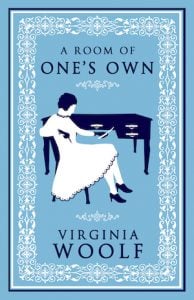
A Room of One’s Own by Virginia Woolf has stood the test of time, though the fact that it remains relevant is a sorry statement of contemporary culture. Following are presented two reviews from both sides of the Atlantic, plus a selection of quotes.
Based on two lectures Woolf delivered in the late 1920s at Newnham and Girton Colleges, two women’s colleges in Britain, it has since become a classic feminist text.
First published in 1929 by Hogarth Press, a publishing company in the U.K. that the author herself ran with her husband, Leonard Woolf, it was also published by Harcourt, Brace in the U.S. that same year.
Read More→