By Nava Atlas | On July 16, 2017 | Updated October 11, 2025 | Comments (0)
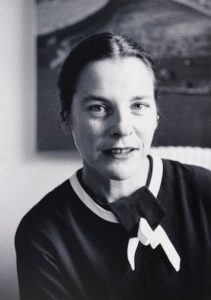
Elizabeth von Arnim went by various pen names throughout her career, perhaps explaining why her reputation wasn’t quite as cemented in her lifetime as was that of some of her contemporaries.
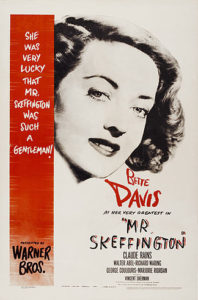
An incicive and witty writer, two of her novels became well-known films. The first was Mr. Skeffington (1940). Much later, The Enchanted April (1922) was adapted into the charming 1991 film Enchanted April.
Here is a review of the Americanized and significantly altered 1944 film version of Mr. Skeffington starring Bette Davis and Claude Rains. Read More→
By Nava Atlas | On July 15, 2017 | Updated October 26, 2022 | Comments (0)
Mary McCarthy (1912 – 1989) was an American novelist and political activist. She began her writing career as a critic, gaining respect for her observations on culture and politics.
The Group (1954) was arguably her most popular novel — it sat on the New York Times bestseller list for two years and was made into a popular film.
McCarthy’s novels and stories are part autobiography and part fiction, as she draws on her own experiences, traumas, and successes. That, along with her writing style, made her a respected talent in the writing community. It’s an honest and critical eye that inform this selection of Mary McCarthy’s quotes. Read More→
By Nava Atlas | On July 15, 2017 | Updated December 30, 2024 | Comments (8)
Lots of films have been made from novels by the classic women authors on this site, as you’ll see by linking to this site’s Filmography. But there are also a number of biographical films about women authors themselves, the lives they led, and the stories they told.
What is it, do you supposed, that’s so fascinating about the life of a woman who writes? The films don’t focus on the act of writing for the most part — wouldn’t that be a yawner! Rather, they pay homage to the literary legacy they left behind in the form of their wonderful stories.
Some of these films take more literary license than others when it comes to the true facts of their subjects’ lives, but many, if not all, can at least be an introduction to the author, her life, and work.
Read More→
By Nava Atlas | On July 14, 2017 | Updated December 29, 2024 | Comments (0)
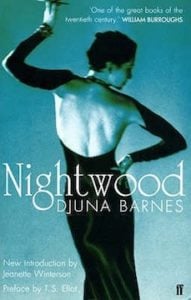
Nightwood is the best-known of the novels of Djuna Barnes, the American-born expat who spent much of her life among the lesbian circles in 1930s Paris. Published in 1936, it has long been considered her literary masterpiece, and is still regarded as one of the most influential works of modernist fiction.
This experimental novel explores the lives and loves of five eccentric and extraordinary people, and may be the first modern novel with a transgender character.
Nightwood was edited by T.S. Eliot. Barnes, then in her mid-40s, was still overwhelmed by the breakup with her lover, Thelma Wood. The novel follows the obsessive love affair of two women, which led to Barnes being called a “lesbian evangelist.” Despite the real-life parallel, Barnes despised and denied the label. Read More→
By Nava Atlas | On July 13, 2017 | Updated September 21, 2024 | Comments (0)
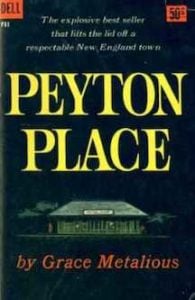
When Peyton Place by Grace Metalious was published in 1956, critics from coast to coast found the book scandalous. The book was vilified in the press and numerous attempted banned didn’t stop Americans from buying it in droves.
Canadians weren’t as lucky — it was banned countrywide.
A blockbuster bestseller, the novel by an unknown 34-year-old captured the public imagination. The fine yet somewhat sanitized film that was brought out following year (1957) cemented Peyton Place’s spot in the cultural conversation. The term “Peyton Place” quickly became synonymous with scandal and intrigue.
Read More→
By Nava Atlas | On July 12, 2017 | Updated June 13, 2026 | Comments (0)
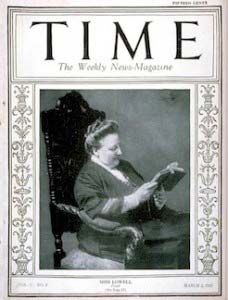
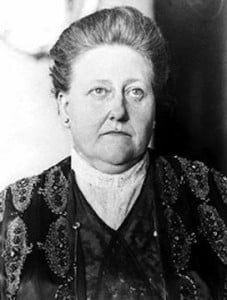
American imagist poet Amy Lowell (1874 – 1925) said of her works in vers libre (free verse) that its rhythms “have not been sufficiently plumbed, that there is in them a power of variation which has never yet been brought to the light of experiment.”
Expounding on her vers libre poetry, she wrote about this particular piece, “In ‘The Cremona Violin’ I have tried to give this flowing, changing rhythm to the parts in which the violin is being played.
The effect is farther heightened, because the rest of the poem is written in the seven line Chaucerian stanza.” This poem was originally part of Lowell’s collection titled Men, Women, and Ghosts (1916). Read More→
By Nava Atlas | On July 12, 2017 | Updated September 16, 2026 | Comments (0)
American poet Amy Lowell (1874 – 1925) was a master of imagist poetry. In an introduction to her “vers libre” poetry, she directs the reader of “A Roxbury Garden” to “find in the first two sections an attempt to give the circular movement of a hoop bowling along the ground, and the up and down, elliptical curve of a flying shuttlecock.”
This poem was originally part of a 1919 collection titled Men, Women, and Ghosts. Read More→
By Nava Atlas | On July 12, 2017 | Updated October 26, 2022 | Comments (0)
Prolific American poet Amy Lowell (1874 – 1925) was above all considered an Imagist, which in her definition was the “concentration is of the very essence of poetry” whose aim is to produce verses “that is hard and clear, never blurred nor indefinite.” Here are presented in her words, thoughts on her vers libre (free verse) poetry.
Lowell was kind of an evangelist of poetry, powered by her incredibly energy. She lectured tirelessly to promote poetry, and wrote ceaselessly — in addition to more than 650 poems, she wrote numerous essays, as well as works of criticism and translation. T.S. Eliot called her “the demon saleswoman of poetry.”
Here to shed more light on her work is the poet herself, from the Preface of Men, Women and Ghosts (1919): Read More→