By Nava Atlas | On August 29, 2017 | Updated November 18, 2022 | Comments (0)
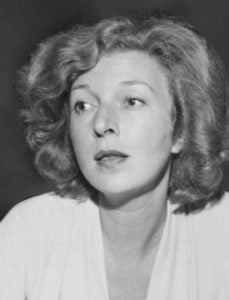
Gone With the Wind — the book — was a publishing phenomenon. Not within memory had an American novel been so long (1,037 pages, a half-million words) or weighed so much (3.5 pounds).
The following narrative was originally published in The Story of Gone With the Wind by Bob Thomas, © 1967 Metro-Goldwyn-Mayer Inc., National Publishers, Inc., New York.
MacMillan published GWTW at a time when the book industry, like all others in the U.S., was still suffering from the results of the Depression. At least one person was concerned about the enterprise: Margaret Mitchell. Read More→
By Nava Atlas | On August 28, 2017 | Updated November 18, 2022 | Comments (0)
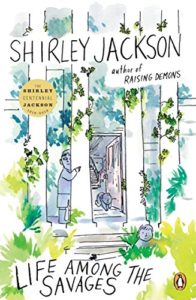
Shirley Jackson’s haunting classic short story “The Lottery” made her famous in 1948, and subsequent books cemented her brand of psychological terror. So when she came out with Life Among the Savages in 1953, reviewers were delighted and surprised by her cheery and wry observations of life with four children and husband in a shabby, rambling house in Vermont.
It turns out that Life Among the Savages, and its follow-up, Raising Demons, were idealized (and somewhat-to-fairly fictionalized) portrayals of the family’s chaotic life and individual eccentricities. Read More→
By Nava Atlas | On August 28, 2017 | Updated June 12, 2023 | Comments (2)
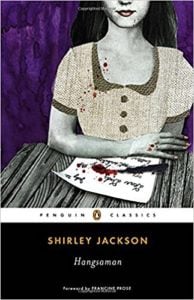
Shirley Jackson (1916 – 1965) occasionally turned to true crime news stories as jumping off points for her novels of psychological terror and suspense. This was apparently the case for her second novel, Hangsaman (1951).
Jackson, her husband Stanley Edgar Hyman, and their four children were living in North Bennington when 18-year-old Bennington College freshman Paula Jean Weldon disappeared. She went out for a hike on December 1, 1946, and simply never returned.
There were, and have since been, theories about what might have happened to Weldon, but neither she —nor her body — were ever found. Read More→
By Nava Atlas | On August 28, 2017 | Updated November 18, 2022 | Comments (0)
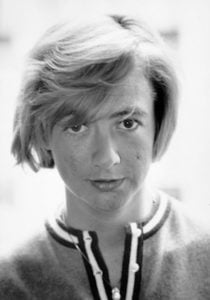
Martha Gellhorn was a fearless war correspondent who reported on nearly every major conflict at a time when such female journalists were a rarity.
Her debut as a novelist wasn’t auspicious. What Mad Pursuit was generally panned by critics, if it got any attention at all. One called it “palpable juvenilia;” another stated that it was “a rather futile book.
The story of three college friends seeking fulfillment, meaning, and sexual adventure meet mostly with disappointment — and an STD. Read More→
By Nava Atlas | On August 27, 2017 | Updated November 18, 2022 | Comments (0)
In 1971, Linda Nochlin, a well-regarded art historian and critic, asked the provocative question, “Why Have There Been No Great Women Artists?” in essay that quickly became iconic.
Now a standard of feminist art theory and history, it explores the institutional barriers that prevented women, but for a few exceptions, to rise to the level of their male peers in the art world.
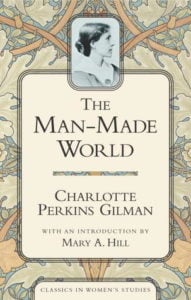
Exactly 60 years earlier, pioneering feminist author Charlotte Perkins Gilman (best known for The Yellow Wallpaper) examined the same question in a chapter of one of her lesser-known works of nonfiction, The Man-Made World (1911) — originally titled Our Androcentric Culture. Read More→
By Nava Atlas | On August 25, 2017 | Updated February 20, 2026 | Comments (4)
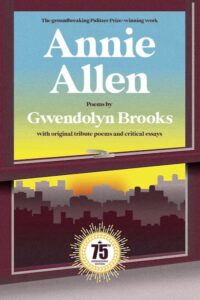
Annie Allen is a 1949 collection of poems by Gwendolyn Brooks. It won the Pulitzer Prize in 1950, making her the first Black writer to receive this award.
The poems don’t flinch from the violence and racism that are part of Annie’s milieu, and end with her hopes for a better world than the one she has inhabited.
Central to this book, in addition to individual poems, is a 43-stanza epic poem, “The Anniad” (a reference to the epic poem “The Aeneid” by Virgil, the ancient Roman poet) follows the life of Annie, an African-American girl, from birth to womanhood, as she seeks self-awareness and fulfillment. Read More→
By Nava Atlas | On August 24, 2017 | Updated October 1, 2024 | Comments (3)
If you’re looking for some inspiration to sit yourself down and set words to paper (or screen), these images of women authors at their writing desks (posed though they are) might just do the trick.
A famous quote goes something like: “The art of writing is the art of applying the seat of the pants to the seat of the chair.” Attributed to Mary Heaton Vorse, variations of it have been credited to (mostly male) authors from Ernest Hemingway to Kingsley Amis. Read More→