Here are more than a dozen women poets of the Harlem Renaissance, some of whom have been somewhat or largely forgotten, but whose words and lives deserve to be rediscovered and read.
The Harlem Renaissance of the 1920s was a fertile decade for Black creators of all kinds — writers, musicians, playwrights, and artists. Like many creative movements, it was male-dominated, but many women rose to prominence. Read More→
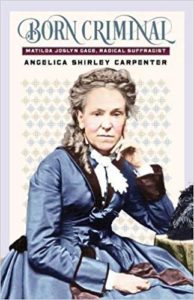
Matilda Joslyn Gage was born in 1826 in Cicero, New York, near Syracuse. She lived all her life in the Syracuse area but also spent time with her adult children who lived in Dakota Territory. Her home in Fayetteville, New York, is now a museum.
In 1893, a deputy sheriff knocked on Matilda Joslyn Gage’s door in Fayetteville, New York. He served her with a supreme writ, court papers summoning her to appear before a judge for breaking the law.
“All of the crimes which I was not guilty of rushed through my mind,” she wrote later, “but I failed to remember that I was a born criminal—a woman.” Her crime: registering to vote. The verdict: guilty as charged. Read More→
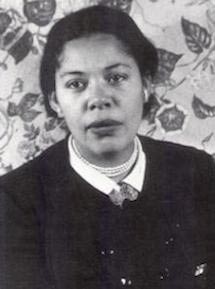
Ann Petry (October 12, 1908 – April 28, 1997) was the first American Black woman to produce a book (The Street, 1946) whose sales topped one million. Ultimately, it sold a million and a half copies.
Encounters with the pervasive racism that permeated American life in their time were relatively rare — though not entirely absent — in the relatively sheltered life that Ann and her siblings experienced. Read More→
The most fascinating part of this exploration of classic Indian women authors is that their writings reflected a feminist bent.
Given the strong patriarchal culture that still prevails in India and the fact that most of these women started their creative lives in the mid-twentieth century, one can only marvel at the courage and strength of their writings.
Since India has twenty-two recognized languages, this compilation is by no means comprehensive. For the sake of convenience, the authors have been listed in chronological order of their birth years. Read More→
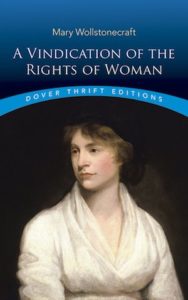
A Vindication of the Rights of Woman: With Strictures on Political and Moral Subjects by Mary Wollstonecraft (1792) is considered of the earliest works of feminist philosophical literature,
In this classic, Mary Wollstonecraft (not to be confused with her daughter, Mary Wollstonecraft Shelley, author of Frankenstein) argues for equality of men and women. In her view, both are born with equal ability to reason, and so, power and influence should be available to all.
Wollstonecraft believed that regardless of wealth and social status, males and females deserved the same educational opportunities. She sought radical reform of 18th-century education systems, believing that a society where all were offered the same opportunities would bring beneficial change to the future of humanity. Read More→
A short story is a fantastic way to get a sense of an author’s voice. Here are ten thought-provoking classic short stories by women authors. You’ll be able to read some of them (those in the public domain) right here on this site; others are part of these authors’ short story collections.
In some ways, it can be more challenging to create a compelling narrative in a short form than within the span of a novel. Building suspense and getting the reader to care about the characters are true marks of craftsmanship. Read More→
“Désirée’s Baby” is an 1893 short story by Kate Chopin. The bold and unconventional American author best know for the classic novella The Awakening explores the hypocrisy, racism, and sexism in upper crust Creole Louisiana.
First published in the January 1893 issue of Vogue magazine as “The Father of Désirée’s Baby,” it was included in Bayou Folk, a short story collection by Chopin published the following year.
In this fairly brief short story, Chopin wove in the themes that would come to define her works, including women’s struggle for equality, suppressed emotion, and the vagaries of identity.
Abandoned as a baby, Désirée is the adopted daughter of Monsieur and Madame Valmondé, wealthy French Creoles. When she reaches young womanhood she marries Armand, the son of another wealthy French Creole family. Read More→
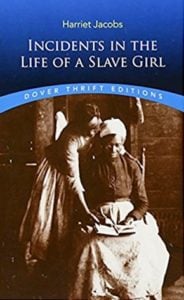
In 1857, Harriet Ann Jacobs (February 11, 1813 – March 7, 1897) was completing a manuscript for an account of her life as an enslaved person, and of her struggle to free herself and her children.
It took several years to bring it to fruition, following years of seeking emancipation. Jacobs was urged by abolitionists she befriended once she was able to escape to New York and New England to tell her story.
After two publishers went bust on the eve of promised publication dates (unrelated to the book itself), Jacobs was able to procure the printing plates, and had the book privately published in a small edition. Incidents in the Life of a Slave Girl, Written by Herself, was published in 1861.
Read More→