Jane Austen (1775 – 1817), the beloved British author, was deeply invested in her craft as a wordsmith. Her talent was recognized early on and valued by her family.
Jane’s father, a country rector, and her brothers played key roles in getting her works published at a time when it was considered unseemly for women to put themselves forth in business.
She longed to see her work in print, regardless of whether or not it would gain her fame or fortune — but getting it published was important to her, contrary to the myth about her extreme modesty. Read More→
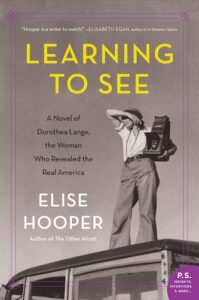
Dorothea Lange‘s influential photography has been collected and displayed in museums and institutions everywhere, yet few know the story of how Dorothea Nutzhorn became Dorothea Lange, social justice activist and pioneering photojournalist. In Elise Hooper’s much anticipated second novel, Learning to See, Dorothea Lange’s legacy is reimagined in a riveting new light.
In 1918, a fearless 22-year-old arrives in San Francisco with nothing but a friend, her camera, and determination to make her own way as an independent woman. In no time, Dorothea goes from camera shop assistant to celebrated owner of the city’s most prestigious and stylish portrait studio. Read More→
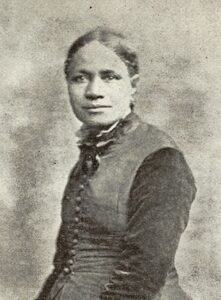
Frances Ellen Watkins ( 1825 – 1911), later known as Frances Watkins Harper or Frances E.W. Harper, built her reputation on her various talents, including fiction, essays, poetry, and public speaking. Following, we’ll explore the activist wisdom in portions of the speeches of Frances Watkins Harper.
One of America’s first and most successful African-American authors, she was also an active abolitionist, feminist, and conductor on the Underground Railroad.
She launched her writing career in the late 1830s by publishing essays in antislavery journals. At age twenty, her first collection of poems, Autumn Leaves, was published in 1845. She was the first black author to have a short story published (“The Two Offers”) and one of the first to publish a novel (Iola Leroy, 1892). Read More→
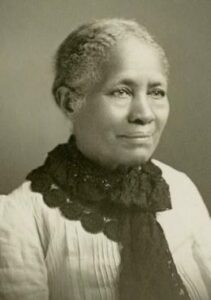
Frances Ellen Watkins Harper (September 24, 1825 – February 22, 1911), also known as Frances Watkins Harper and Frances E.W. Harper, combined her talents as a writer, poet, and public speaker with a deep commitment to abolition and social reform.
She sustained a long and prolific publishing career at a time when it was rare for women, particularly women of color, to have a voice. She used that voice in powerful ways, and as a result, she has been referred to as “the mother of African American journalism.”
Poems on Miscellaneous Subjects (1854), her first collection, was possibly her most successful, having gone through many editions. “The Two Offers” was the first published short story by a BlackAmerican woman. And Iola Leroy (1892) was one of the first novels by a Black woman to be published in the U.S.
Read More→
Frances Watkins Harper (1825 – 1911, also known as Frances E.W. Harper or Frances Ellen Watkins Harper) was an ardent suffragist, social reformer, and abolitionist in addition to her renown as a poet and author. Here, presenting a taste of her deeply thoughtful and moving work, is a selection of poems by Frances Watkins Harper.
She wrote prolifically from the time she published her first collection of poetry in 1845, at the age of twenty. A freeborn African-American from Baltimore, Maryland, she dedicated her life to social causes, including abolition, women’s suffrage, and the quest for equality.
The dynamic Frances Harper became involved in anti-slavery societies in the early 1850s and was a conductor on the Underground Railroad. Read More→
Ethan Frome (1911) by Edith Wharton is a somber tale indeed, but so beautifully told that many readers return to it again and again. An original review in the San Francisco Call from the year the book was published sketches the outline of the novella:
“Twenty years before the tale opens we learn that Ethan Frome has been crippled in a terrible accident … Ethan had his old parents to take care of and after their death he married the young woman who had helped him to nurse them … In a few years she needed assistance, so a young poor relation, Mattie Silver, came to live with them. Slowly she and Ethan fell in love. What happens next isn’t ‘happily ever after.’” Read More→
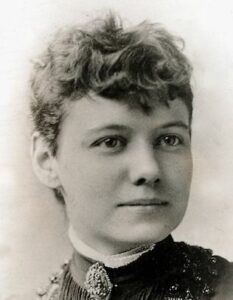
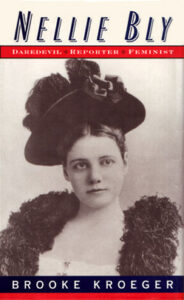
Excerpted from Nellie Bly: Daredevil, Reporter, Feminist by Brooke Kroeger, the most comprehensive biography to date on the pioneering investigative journalist, born Elizabeth Jane Cochran (she later spelled her name Cochrane) on May 5, 1864, in Cochran’s Mills, Pennsylvania:
Nellie Bly was one of the most rousing characters in the late nineteenth and early twentieth centuries. In the 1880s she pioneered the development of “detective” or “stunt” journalism, the acknowledged forerunner of full-scale investigative reporting.
While she was still in her early twenties, the example of her fearless success helped open the profession to coming generations of women journalists clamoring to write hard news. Read More→
From the Times Books description of Nellie Bly: Daredevil, Reporter, Feminist by Brooke Kroeger (1994): Nellie Bly was “the best reporter in America” according to the New York Evening Journal on the occasion of her death in 1922.
One of the most rousing characters of the late nineteenth and early twentieth centuries, Nellie Bly was a pioneer of investigative journalism.
She feigned insanity and got herself committed to a lunatic asylum to expose its horrid conditions. She circled the globe faster than any living or fictional soul. She designed, manufactured, and marketed the first successful steel barrel produced in the United States. Read More→