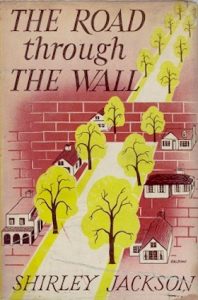
The Road Through the Wall was Shirley Jackson’s first novel (1948). That was also the year when her short story, “The Lottery,” was published, making her instantly famous (as well as infamous). This plot summary and analysis of The Road Through the Wall focuses on its young heroine, Harriet Merriam.
Jackson claimed that the novel was loosely based on her childhood growing up in a well-to-do neighborhood in California. Admitting that this book was somewhat of a revenge novel, she asserted that a first novel’s purpose, after all, was to get back one’s parents.
Excerpted from Girls in Bloom: Coming of Age in the Mid-20th Century Woman’s Novel by Francis Booth, reprinted by permission.
Read More→
From the time of her classic essay, “Notes on Camp” (1963), Susan Sontag was launched into the position of one of America’s premier public intellectuals.
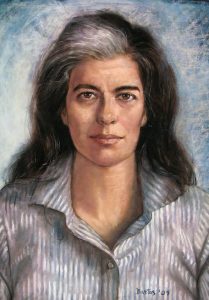
Nearly every line she wrote or spoke was quotable, so it’s a great challenge to choose a selection of quotes by Susan Sontag for a post that’s reasonable in length; here, we’ve attempted such a feat. Painting at right by Juan Bastos ©2009, courtesy of Wikimedia Commons, Creative Commons License 3.0.
Achieving fame (and sometimes notoriety) in multiple forms of media — essays, fiction, film, and more — Sontag seemed to embrace her role as provocateur. Susan Sontag pastel portrait at right by Juan Bastos. Read More→
This brief biography of Rachel Field (September 19, 1894 – March 15, 1942), a noted yet often neglected American author, will highlight her extensive body of work in the areas of adult fiction, poetry, and children’s fiction.
She’s perhaps best remembered for All This and Heaven Too (1938), which was adapted into a film starring Bette Davis, and Hitty: Her First Hundred Years (1929), an award-winning children’s book.
Several of her other books were adapted into films starring prominent Hollywood stars of the time, and upon her untimely death in 1942, newspaper editor Laura Benet remembered her as a calming and reassuring presence to all of those who knew her. Read More→
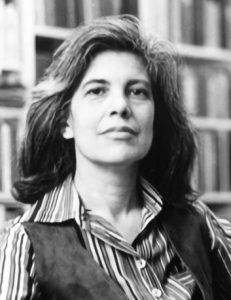
In the course of American letters, there have been very few writers who are able to approach the iconoclastic status and cultural significance that Susan Sontag (January 16, 1933 – December 28, 2004) gained in her sixty-year career as an essayist, documentarian, political activist and novelist.
Beginning with her classic essay, Notes on Camp (1964), Sontag embraced her role as one of the country’s premier public intellectuals; and, with her signature style of always dressing in black — combined with her long black hair with one distinctive white streak framing her face — Sontag became instantly recognizable in pop culture and in the more refined circles of literary discourse.
Sontag achieved what was believed to be impossible for any American writer: she could easily pontificate on structuralist philosophy and on the history of interpretation — subjects not widely embraced in American culture — yet Sontag easily made the crossover from the inaccessible intellectual into the realm of established literary star. Read More→
India is a rich mosaic when it comes to languages, cultures and states. This diverse selection keeps in mind the feminist angle as it journeys from the 12th century through the 21st. These classic Indian women poets are presented here in order of birth, from Akka Mahadevi (1130-1160) through Meena Alexander (1951-2018).
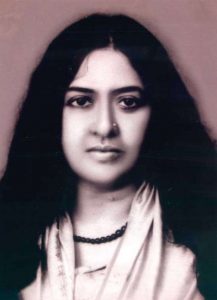
Though all have passed on, their voices and influence echo through the ages. Pictured at right, Kamala Das as a young woman.
Read More→
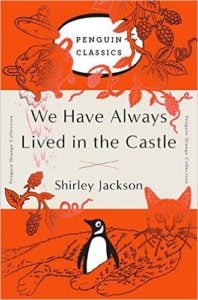
This analysis of We Have Always Lived in the Castle (1962), Shirley Jackson’s last novel, has a special emphasis on Mary Katherine (Merricat), the younger of the Blackwood sisters central to the story.
Excerpted from Girls in Bloom: Coming of Age in the Mid 20th Century Woman’s Novel by Francis Booth, reprinted by permission.
In Shirley Jackson’s The Sundial and The Haunting of Hill House, she used an old house as a brooding, malign presence in the novel, almost a character in its own right. She did the same, though in a completely different way, in We Have Always Lived in the Castle, her last completed novel. Read More→
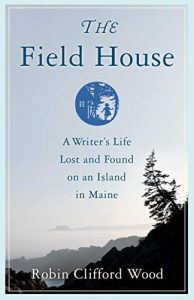
A compelling blend of biography and memoir, The Field House: A Writer’s Life Lost and Found on an Island in Maine by Robin Clifford Wood recounts the remarkable life of writer Rachel Field (1894 – 1942). It’s told from the perspective of Wood, a writer who lived in Field’s old, neglected island home in Maine, sparking a unique sisterhood across time.
Born of illustrious New England stock, Rachel Field was a National Book Award-winning novelist, a Newbery Medal-winning children’s writer, a poet, playwright, and rising Hollywood success in the early twentieth century.
Her light was abruptly extinguished at the age of forty-seven, when she died at the pinnacle of her personal happiness and professional acclaim. Read More→
This look at the depiction of adolescent and teen girls in the fiction and nonfiction of American author Shirley Jackson is excerpted from Girls in Bloom: Coming of Age in the Mid-20th Century Woman’s Novel by Francis Booth, reprinted by permission.
In the works of Shirley Jackson (1916 – 1965), there is an absence of sex of any kind, other than the veiled implication that Natalie Waite in Hangsaman has had a sexual experience that she does not remember, and which is not described in the novel.
One reason for this lack of sex among her teenage protagonists might be that Jackson had daughters of her own who might read her work. She did know a lot about the adolescent girl; she wrote several of them into her novels and stories, chief among them, the aforementioned Natalie Waite; Harriet Merriam (The Road Through the Wall), and Merricat Blackwood (We Have Always Lived in the Castle). Read More→