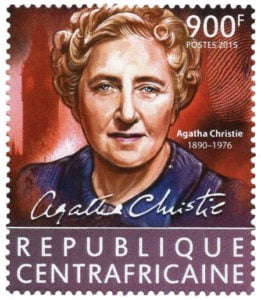
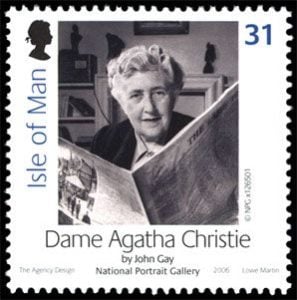
Dame Agatha Christie (1890 – 1976) drew on her observations of the world and people surrounding her to become the literary world’s “Queen of Mystery” (sometimes also called “Queen of Crime”). Here we’ll savor 10 quotes by Agatha Christie on writing and the writing life — for anyone who could use a bit of reassurance about the process.
Christie’s first novel, The Mysterious Affair at Styles (1920), was written as a dare from her sister. This was the book that introduced the now-iconic Belgian detective Hercule Poirot.
Though she earned a place in The Guinness Book of World Records as the best-selling novelist in the world with sales of over four billion books, writing didn’t come easily to Dame Agatha. In his post on The Writing Habits of Agatha Christie, Tony Riches explains: Read More→
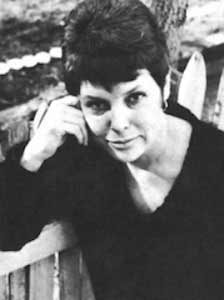
Louise Fitzhugh (October 5, 1928 – November 19, 1974) was an American author, born in Memphis, Tennessee. She wrote and illustrated children’s books (mainly for middle grade), the best known and most beloved of which remains Harriet the Spy.
Louise’s father was well off, and her mother was from a working class background. They divorced when she was a baby and her father was awarded full custody. Louise got on quite well with his second wife, Sally.
She lived with her paternal grandparents until her father remarried and was rarely allowed to see her mother (the two would build a relationship once Louise was an adult. Though she seemed to have had a fairly well-adjusted childhood despite these early challenges, she gained an understanding of the loneliness and confusion that can be hallmarks of childhood. Read More→
Dorothy Canfield Fisher (February 17, 1879 – November 9, 1958) was an American author, educational reformer, and social activist based in New England. Her ancestors settled in Vermont in 1764 and owned land there ever since.
Her father, James Hulme Canfield, was a college professor and president of several universities, and so the family valued education. Her own education was rather cosmopolitan, as she moved among several midwest university towns and traveled to France and Italy to broaden her scope.
After receiving a bachelor’s degree from Ohio State University and studying at the Sorbonne in Paris, she received a Ph.D in French from Columbia University in 1905. Eventually, she had the ability to speak five languages. Read More→
Dame Agatha Christie earned her place in The Guinness Book of World Records as the best-selling novelist in the world with sales of over four billion books. She is also the third most widely translated author, beaten only by William Shakespeare and the Bible.
Reassuringly for anyone struggling to follow in her footsteps, after four years working on her first novel, even she was rejected by all the leading publishers of her day, before The Bodley Head press took a chance with her. Read More→
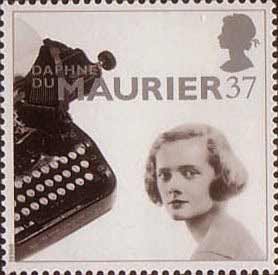
Daphne du Maurier was born in London in May 1907 and was still writing at her death in 1989. Educated by private tutors in Paris, she published her first short stories at the age of twenty-one. Daphne du Maurier’s writing habits surely contributed to her prolific career as an author of fiction and drama.
Her publisher encouraged her to write a novel, which became The Loving Spirit in 1931. She was made a fellow of the Royal Society of Literature in 1952 and became a Dame of the British Empire in 1969.
In 1977 she won the Mystery Writers of America Grand Master Award. As well as Jamaica Inn, Hitchcock directed film versions of The Birds and Rebecca. Read More→
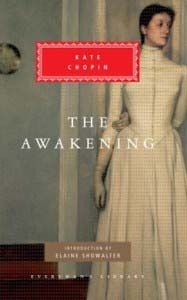
On Certain Brisk, Bright Days, an essay by American author Kate Chopin, was originally published in the St. Louis Dispatch in November 1899. It was the same year her now-classic novella The Awakening was published.
In her analysis of The Awakening, Sarah Wyman writes that it “came under immediate attack when published.” Though it was rarely formally banned, as myth would have it, the amount and ferocity of the vitriol against this exquisitely written novella banished it from the public just as thoroughly as if it indeed had been.
The author died virtually forgotten, yet The Awakening has been rediscovered and holds a secure and prominent position as a watershed text in U.S. literature and feminist studies.” Despite the initial negative initial reaction to her novella, Kate Chopin created this cheery description of her writing life: Read More→
The Awakening by Kate Chopin is a short novel, published in 1899. Now considered a feminist classic, it was widely criticized, even reviled when first published.
The heroine, a young Creole named Edna Pontellier, searches for meaning outside her accepted roles of wife and mother. She also seeks sexual fulfillment and independence.
It’s more accurate to say that The Awakening was silenced rather than was banned after initial publication, as is commonly believed. Critics were brutal; one called the story “poison,” which captured the prevailing sentiment of others. Read More→
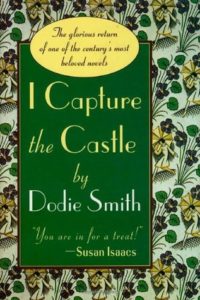
I Capture the Castle by Dodie Smith was the first novel by this British author. It’s the story of Rose and Cassandra Mortmain, two sisters who are part of an eccentric family living in genteel poverty in a crumbling castle in the 1930s.
This coming of age novel has been beloved by young adults ever since it was published in 1948.
At the time of its publication, Smith was an established playwright, and would later become even better known for the children’s classic, The 101 Dalmatians (1956). I Capture the Castle was as well received by critics as it was by the public; here is one such review: Read More→