Too much to do and too little time, no room of one’s own, and no willpower to simply sit down and write—those are the Big Three of “why I’m not writing” excuses.
Those obstacles were as true for women writers in earlier generations as they are for today’s writers, if perhaps even more valid and not just excuses to dawdle.
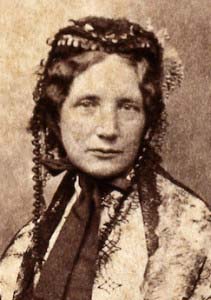
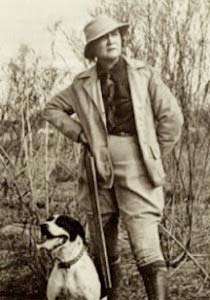
Sure, you’re busy, but you may feel less overwhelmed when you learn that Harriet Beecher Stowe (at right) had seven children, and was in charge of all the household duties, aside from being responsible for bringing in at least half of its income. Not to mention some of the crushing losses she endured. Read More→
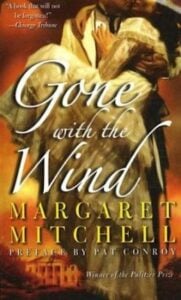
“The greatest love story ever told.” “The epic novel of our time.” These are just two of the many descriptive phrases applied to Margaret Mitchell’s brilliant 1936 tome, Gone With the Wind.
Is it an epic tale, indicative of the essence of the American south during the Civil War? Absolutely, it is. Is it one of the most tense, romantic, and familiar love stories of all-time? Yes, it definitely is.
But, when it comes down to it, do these short phrases accurately describe what Gone With the Wind is all about? No, they do not. Gone With the Wind is about the end of an era – the collapse of a civilization. It is about selfishness and prosperity, morals and aristocracy, war and destruction, mercenaries and old maids. Read More→
Dear Literary Ladies,
You seem like such a prolific author, but like the rest of us who live by our pen, you likely feel blocked from time to time. How does this uncomfortable and sometimes scary feeling play out in your mind?
The dark times that came to me as a writer, those sterile periods when it seemed that not only the inkwell but the wells within had dried, were suffered alone. There doubtless have been and are creative writers who have not encountered this dark experience. The sense of aridity, the mind a desert, that usually follows the completion of a book. That sudden panic when every theme or plot your brain has cradled no longer so much as stirs. Read More→
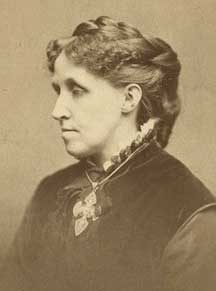
On the subject of developing plots and characters, one of my favorite quotes on writing is from Louisa May Alcott, the author of Little Women and numerous other classics. She said:
“My methods of work are very simple and soon told. My head is my study, & there I keep the various plans of stories for years sometimes, letting them grow as they will till I am ready to put them on paper … While a story is under way I lie in it, see the people, more plainly than the real ones, round me, hear them talk, & am much interested, surprised, or provoked at their actions.” (from a letter to a journalist, 1887)
During the writing of my first ten or eleven novels, I always had from one to four babies, toddlers, and preschoolers underfoot. I desperately loved writing fiction, and I longed for the day when I could sit down at the typewriter, take a deep breath, close my eyes in solitude, and think about what I wanted to say. Developing plots and characters is challenging when time is at a premium. Read More→
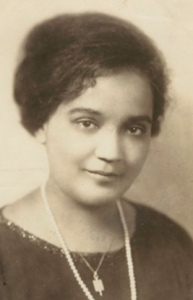
Presented here is selection of poems by Jessie Redmon Fauset (1882 – 1961), a multi-talented, influential figure in the Harlem Renaissance movement of the 1920s.
Fauset was the literary editor of the magazine of the NAACP, The Crisis, and in her own right was a poet, essayist, translator, and novelist.
While working at The Crisis, she had the opportunity to publish her own work, which included editorials, stories, and poetry. All of the genres in which she wrote were appreciated by readers and literary critics alike. Read More→
Do you have the dreaded cognophobia? It’s a Latin term that translates literally as “fear of thinking” or fear of facing your own thoughts. You may experience it as writer’s block.
“A writer must feel comfortable expressing herself in words, letting them flow before critiquing them or subjecting them to examination,” say Linda Metcalf and Tobin Simon in Writing the Mind Alive. “Many people who have an ambition to write are held back at the starting gate by some form of this condition.” Read More→
Dear Literary Ladies,
I’ve often heard it said that “it’s who you know that matters.” Well, I don’t know anyone in the publishing world. Does that mean my work doesn’t stand a chance of being looked at seriously?
There is no easy road. “Pull” will not help. Knowing an editor, or a publisher, or a successful writer, or having a friend who knows one, will not make up for a poor manuscript. Do not write to editors, or established writers asking them to criticize your work, or for help or advice in getting your book or story published.
They are unable to help you, even if they were willing to spend half their working hours trying to assist the beginner. Your work must speak for itself. Read More→
Orlando by Virginia Woolf (1928) was the esteemed British author’s sixth major work. It was written in a year, between To the Lighthouse and The Waves.
An epic novel, it follows the journey of one character, Orlando, over the course of about 350 years (1588 – 1928). It is a biography not of any one character, but of the nature and history of gender, identity, and sexuality through time.
At the start of the novel, readers will encounter Orlando as a young boy of noble birth. His family entertains Queen Elizabeth I, who is the first to notice Orlando’s beauty and potential. Read More→