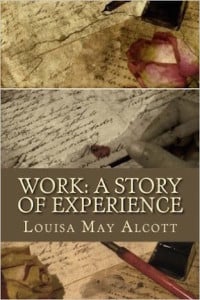
This article is part of a series of posts on Work A Story of Experience as found on the Louisa May Alcott is My Passion blog. To read all the posts associated with this book, explore this link.
“…Work is an expression of Alcott’s feminist principles and a major effort toward synthesizing in popular, readable form the broad set of beliefs encompassing family, education, suffrage, labor and the moral reform of social life that defined feminist ideology in the nineteenth century.” (from Critical Essays on Louisa May Alcott edited by Madeleine Stern) Read More→
How do writers get ideas? — that’s a question often asked of published authors, but which defies easy answer, if it can be answered at all.
Most often, ideas seem to find you, not the other way around. Of course, something you see, hear, or read can ignite sparks of inspiration, but the day-to-day work habits you develop can fuel the inception and development of ideas.
Here, Louisa May Alcott, Willa Cather, and Madeleine L’Engle share a common technique: they consciously allowed seedlings of ideas to blossom in their heads before setting them to paper. Read More→
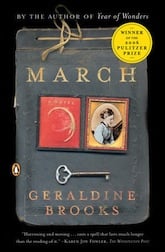
Historical fiction is a risky genre, especially if the author is tackling a beloved American classic. Geraldine Brooks presents a bold and provocative story centered on the “shadow” character of Louisa May Alcott’s Little Women, Mr. March, in her Pulitzer Prize-winning book, March (Penguin Books, 2005).
She takes that risk a step further by fleshing out Marmee, the quintessential mother figure. March succeeds in taking characters of mythical proportion and bringing them down to earth, turning them into living, breathing people, vastly more interesting, with decided with feet of clay.
Reader beware: you must be willing to set aside any pre-conceived, black and white notions about Little Women in order to appreciate March. Brooks places you in a decidedly gray-shaded world which is not for the faint of heart. Read More→
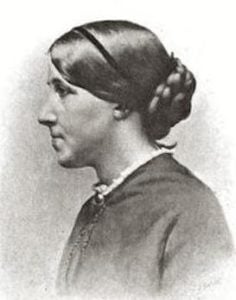
Louisa May Alcott (1832 – 1888), best known for the Little Women series, had a knack for spinning literary comfort. The following selection of best-loved Louisa May Alcott quotes demonstrate her wisdom and compassion.
Alcott had produced Moods (the first novel published under her real name as opposed to the aliases she used for her thrillers), Work: A Story of Experience, Hospital Sketches, and countless small pieces under her own name before Little Women that put her on the map.
Alcott had her share of struggles throughout her fifty-six-year life — poverty, ill health, and loss.Yet though it all she managed to see what was sweet in life and took greatest comfort in the love and companionship of her immediate family,especially her beloved mother.
Read More→
Those of us who scratch out sentences and paragraphs that we hope to turn into publishable prose have often paused to ponder the question, “why write?” When it goes well, it can all-consuming, like a passionate love affair. But when the going gets tough, or when self-doubt creeps in, “why” can become “what’s the point?”
Here, five classic women authors weigh in on questions related to the existential “why” of writing—for whom are you writing, and for what purpose? As in all matters of art, there’s no consensus here. George Sand seemed to believe that one writes to shine a light for others. Read More→
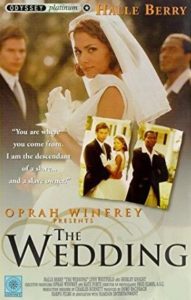
The Wedding, a two-part miniseries that premiered on television in 1998, speaks to the intersecting issues of race, gender, and class in mid-1950s America.
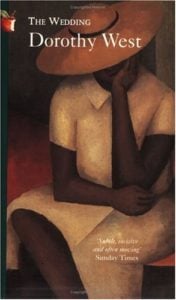
Based on Dorothy West‘s 1995 novel The Wedding, it starred Halle Berry, Eric Thal, and Lynn Whitfield. The book was adapted into a screenplay by Lisa Jones and produced by Oprah Winfrey’s company, Harpo Productions.
The setting of Martha’s Vineyard shows an aspect of the privilege available to the main character, Shelby Coles. Played by Halle Berry, Shelby is a mixed race young woman from an upper-middle class home, about to marry Meade Hall (played by Eric Thal), a white jazz pianist and composer. Read More→
Dear Literary Ladies,
What advice would you give a writer wanting to improve her craft? I read so many books on writing, and every one of them offers different techniques. Also, how long can I expect to work at this until I see results?
Each person’s method is no rule for another. Each must work in [her] own way, and the only drill needed is to keep writing and profit from criticism. Mind grammar, spelling, and punctuation, and use short words, and express as briefly as you can your meaning. Young people use too many adjectives and try to “write fine.” The strongest, simplest words are best, and no foreign ones if it can be helped … Read More→
Dorothy West (1907 – 1998) was the last surviving member of the Harlem Renaissance movement that was in full swing in 1920s New York City. She was quite young in the movement’s heyday and was affectionately called “the kid” by fellow authors and artists.
Dorothy quickly became known for well-crafted short stories. Her first novel, The Living is Easy, didn’t appear until 1948; then there was a gap of some forty-seven years until her last novel, The Wedding, was published in 1995.
Dorothy West was part of the circle of upper-class black residents of Martha’s Vineyard, having lived there since 1943. She drew from her background to create this slim yet impactful novel. One of her neighbors was Jackie Kennedy Onassis, who pressed her to finish this book. Read More→