Some years before Little Women made her famous, Louisa May Alcott volunteered as a nurse at a makeshift Union hospital in Washington, D.C. in 1862. The Civil War was raging. Alcott’s Civil War journals describing her experiences, along with the letters she sent home, provided the basis for Hospital Sketches (1863).
Though the experience was frustratingly short for the fledgling author who wanted to experience all of life, good and bad, her writings provided richly drawn views of the terrible conditions in the hospital, commentary on women’s roles in the war effort, race issues in the armed forces, and more.
Read more about Louisa May Alcott as Civil War Nurse. Read More→
“I WANT something to do,” Louisa May Alcott wrote of her desire to contribute to the Union Army’s effort in the Civil War.
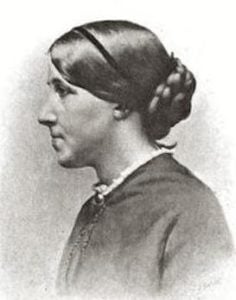
If women had been allowed to serve as soldiers, Louisa would have surely taken up arms. But as it was, the only direct way women could serve was to volunteer as nurses, and that’s just what she did. The photo at right was from around the time she served.
After the crushing defeat of Union forces in Fredericksburg, December 1862, Louisa began her duties as a nurse at the Union Hotel in Georgetown, Washington D.C. It had been hastily turned into a makeshift hospital. Read More→
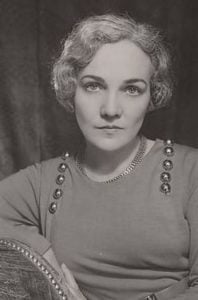
Katherine Anne Porter (1890 – 1980), the American author and journalist, made a name for herself with her short stories and her magnum opus novel Ship of Fools (1962). Following is a forthright selection of quotes by Katherine Anne Porter, who never shied away from speaking her truth.
“My life has been incredible, I don’t believe a word of it.” That’s a famous quote that reflects a penchant for self-invention. She was considered somewhat flamboyant by some; unknowable by others.
Porter often took many years to accomplish her literary goals; writing was a way to face questions encountered in her own life. Her writing voice was rooted in realism and a sense of passion. Read More→
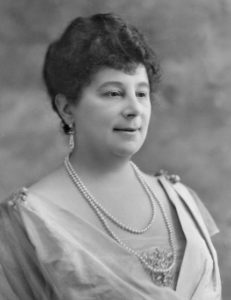
Baroness Orczy (September 23, 1865 – November 12, 1947) was born Emma (or “Emmuska”) Magdolna Rozália Mária Jozefa Borbála Orczy de Orci in Tarnaörs, Heves County, Hungary. She’s best known for The Scarlet Pimpernel and its numerous sequels, some of which were adapted to stage and film.
Both of her parents were of aristocratic ancestry. Her father Felix was a Baron and a composer and her mother, also named Emma, was a Countess and daughter of a member of the Hungarian parliament.
When revolution threatened Hungary in 1868, her parents were forced to flee their homeland and lived at various times in Budapest, Paris, and Brussels until 1880 when the family settled in London. There, Emma studied both art and music. Some of her art works were exhibited at the Royal Academy. Read More→
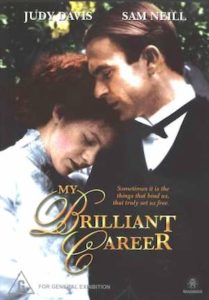
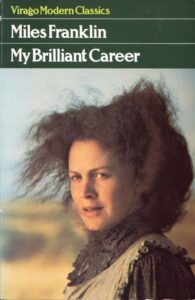
The 1979 movie My Brilliant Career was largely true to the novel of the same name by Australian author Miles Franklin (1897 – 1954) Her first book, it was published in 1901, when she was in her early twenties, though it was written while she was still in her teens.
The novel’s protagonist, Sybilla Melvyn, is a headstrong, creative young woman who fights convention, wishing to assert her independence and become a writer.
Starring Judy Davis and Sam Neill, and directed by Gillian Armstrong, the film enjoyed positive reviews and won a number of awards. Here is one such review that appeared after its American release. Read More→
From the 1957 E.P. Dutton Edition of Those Without Shadows by Françoise Sagan: Bonjour Tristesse and A Certain Smile, Françoise Sagan’s first two novels, made literary history because of the youth and amorality of their heroines and the elegant excellence of the writing.
Now in this brilliant third novel (originally published in French as Dans un Mois, Dans un An), the exciting young author explores with the same precision but with added warmth and authority the wayward hearts of a circle of sophisticated Parisians. Read More→
Jo March, the standout sister among the quartet in Little Women, is one of the most iconic and influential female characters in literature. Here we’ll take a look at ten women writers who were inspired by Jo March. Certainly, there are countless others — maybe even you!
What’s unique and wondrous is that the fictional character of Jo March influenced generations of women writers, more so even than the real-life author who wrote her into existence.
Tomboyish and ambitious, with a bit of a temper, Jo was an idealized alter ego of her creator, Louisa May Alcott. Read More→
Miles Franklin (1879 – 1954) was an Australian writer best known for her 1901 novel, My Brilliant Career. The following selection of quotes from My Brilliant Career help us to know the author better, for it has elements of autobiography.
Franklin may not be as well remembered by readers worldwide as she is in her native land, but her works are well worth exploring.
This description is from the St. Martin’s Press edition of My Brilliant Career by Miles Franklin:
“Originally published in 1901, My Brilliant Career was written when Stella Maria Sarah Miles Franklin was only sixteen years old. But Miles Franklin was decades ahead of her time, and this book was written for an audience not yet born.
For the character of Sybilla Melvyn, Miles Franklin created someone who voices with incredible charm but deadly accuracy the fears, conflicts, and torments of every young woman coming of age in a man’s world. Red-haired, impetuous, sharp-tongued, Sybilla has ambitions that reach far beyond here small-town life in the Australian outback.”
Read More→