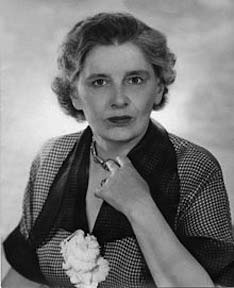
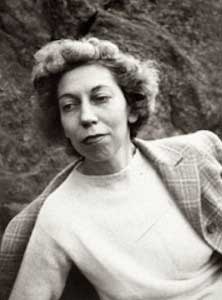
Rebecca West (1892 –1983) was a British novelist, essayist, and journalist, considered one of the sharpest intellects of the twentieth century. She was widely praised for her elegant prose, sharp wit, and insight into the human condition. This sampling of quotes by Rebecca West reflect the kind of deep thinking for which she became known and respected.
West was a woman of many talents from her early career on — she studied to be an actress. worked as a journalist, and was active in the woman’s suffrage movement.
In her work as a journalist she wrote essays and reviews for numerous publications including New York Herald Tribune, The Daily Telegraph, The New Republic and New York American.
Her first novel, The Return of the Soldier, was published in 1918. This was followed by many more works of weighty fiction and nonfiction.
Read More→
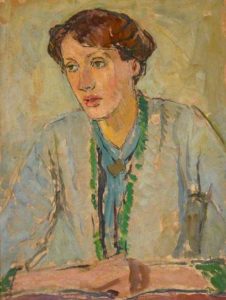
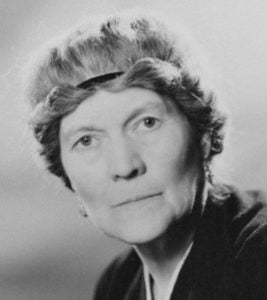
Virginia Woolf (1882 – 1941) produced groundbreaking twentieth-century works of literature. Presented here is a sampling of quotes on living and writing, displaying both the self-consciousness and wisdom for which she was known.
In her early career she taught English at Morely College, reviewed books for the Times Literary Supplement and wrote scores of articles, criticism, and essays.
Woolf’s literary genius was fully realized despite debilitating battles with mental illness, including severe breakdowns. It’s now believed that she suffered from bipolar disorder. Read More→
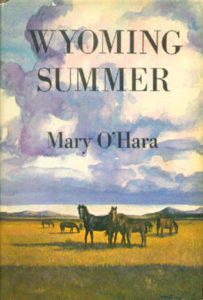
From the original review of Wyoming Summer by Mary O’Hara in The Fresno Bee (CA), April, 1963: From diaries based on the 10 years spent with her second husband at their Wyoming ranch — and out of which came her famous stories, My Friend Flicka and Thunderhead .
Mary O’Hara now gives us in journal form an account of a typical summer. In describing that life, Mary O’Hara reveals much of herself: Read More→
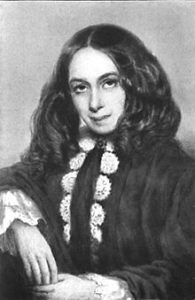
The 1853 poem “To George Sand: A Desire” was a tribute by poet Elizabeth Barrett Browning to French author Amantine-Lucile-Aurore Dupin, better known by her pen name, George Sand.
When this poem was published, Sand was nearly 50 years old (born in 1804), just two years older than Barrett Browning. But the poet considered Sand a model for boldness in writing and living.
The poem acknowledges Sand’s dual nature, and how she managed to wed intellect and emotion in her writings. Elizabeth Barrett Browning purposefully attributed brains to the feminine in Sand, and heart to the masculine, upending gender stereotypes. Read More→
In Silences (1978), Tillie Olsen examined letters and journals of women authors of the past to comment on how personal circumstances affected their creative lives.
Best remembered for this book as well as the classic short story Tell Me a Riddle, Olsen reflected on other writers’ experiences as well as the impact of motherhood on her own of writing. She looked at how marriage and parenting impacted literary output and opportunities for success. Issues of gender and class are central to these meditations.
Fast forward to the present, when many more women writers are successfully combining being a writer and being a mother. It’s still not easy, and women are the ones who have to think about it and make such choices. Read More→
Eudora Welty‘s writing reflected realism in human relationships. Known as a Southern writer, a sense of place was often an important theme in her novels and short stories. Wisdom, wit, and experience come through in these contemplative quotes by Eudora Welty.
Welty spent much of her life in the Mississippi Delta and the community out of which her most iconic writings grew. Her early novel, Delta Wedding (1946), looks at the world of adult interactions and love through the eyes of a child.
What stands out in Welty’s novels, stories, and memoirs is her ability to capture the texture of community and a sense of place. Her work explores both separateness of the individual and the healing potential of love. She also captured the writer’s life in the nonfiction works One Writer’s Beginnings (1984) and On Writing (2002).
Read More→
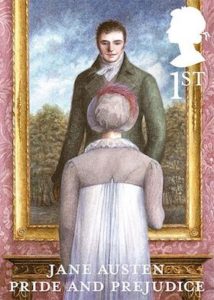
On January 28, 2013, the Royal Mail of Britain celebrated the 200th anniversary of the publication of Pride and Prejudice by Jane Austen with a set of six postage stamps.
Her other novels received the “royal” treatment equally, and included the five that rounded out her set of six: Sense and Sensibility, Emma, Mansfield Park, Persuasion, and Northanger Abbey (there were two unfinished novel as well, Sanditon and The Watsons, in addition to a posthumously published early work, Lady Susan). Read More→
Dear Literary Ladies,
How much should real life supply a writer with characters and plots? Should we be looking for people to base our fictional characters on, and stories upon which to model our plots?
“I think that actual life supplies a writer with characters much less than is thought. Of course there must be a beginning to every conception, but so much change seems to take place in it at once, that almost anything comes to serve the purpose — a face of a stranger, a face in a portrait, almost a face in the fire.
And people in life hardly seem to be definite enough to appear in print. They are not good or bad enough or clever or stupid enough, or pitiful enough. They would have to be presented by means of detailed description, and would not come through in talk. I think that the reason why a person is often angered by a supposed portrait of himself, is that the author leaves in some recognizable attributes, while the conception has altered so much that the subject is justified in thinking there is no resemblance. Read More→