By Nicola Darwood | On June 12, 2022 | Updated August 20, 2022 | Comments (0)
In the third chapter of Pull Devil, Pull Baker, “Oho, What Next? …” Stella Benson questions her role in this book: “Sometimes, I wonder whether I am editing the Count de Savine or he me. What seems to me the extreme remoteness of his point of view makes me quite giddy.”
This excerpt is from Nicola Darwood’s Afterword to Pull Devil, Pull Baker, originally published in 1933 and reissued by Boiler House Press (2022). All quotations come from the latter edition. Reprinted by permission of the publisher. Read More→
By Nancy Snyder | On June 10, 2022 | Updated July 19, 2026 | Comments (0)
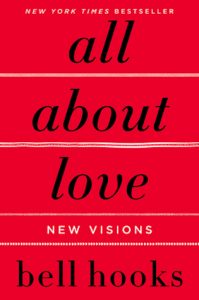
The selection of quotes by bell hooks presented here are arranged by her favored themes, especially in All About Love: New Visions (1999), one of her best-known works. The intersection of race, patriarchy, feminism, and capitalism, demonstrate how these elements determine lives and the hope that comes with resistance.
When the extraordinarily prolific and brilliant writer bell hooks passed away in December 2021, she left behind a tremendous gift for her countless readers: a legacy of thirty adult non-fiction works that will satisfy every reader of this deep thinker and cultural commentator.
In examining the life of bell hooks, there is much to discover about the wisdom in her work. It provides the potential to change every reader’s life and perspective. Read More→
By Sarah Fanny Malden | On June 8, 2022 | Updated September 6, 2026 | Comments (0)
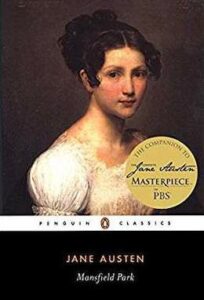
Jane Austen by Sarah Fanny Malden (1889) offers a 19th-century view of Jane Austen’s works. The following analysis and plot summary of Mansfield Park by Jane Austen (1814) focuses on her third published novel, and the one considered most controversial.
Mansfield Park is the story of Fanny Price, sent by her impoverished family to be raised in the household of a wealthy aunt and uncle. The story follows her into adulthood and is a commentary on class, family ties, marriage, and the status of women. Read More→
By Nava Atlas | On June 7, 2022 | Updated August 21, 2022 | Comments (0)
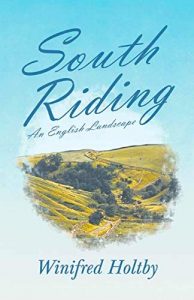
South Riding was the last published novel of Winifred Holtby (1898 – 1935), released the year after her untimely death at the age of thirty-six. It remains her best-known work and has been adapted several times for various media.
Winifred Holtby was an accomplished British author, journalist, and activist. According to this site’s biography of Holtby:
She also had a successful career in journalism and wrote the first critical study of Virginia Woolf in English. During her lifetime, her fame derived from her work for prominent newspapers and magazines, including the feminist publication Time and Tide. She wrote about democracy and social welfare, feminism and pacifism, education and responsibility, racism and injustice. Read More→
By Francis Booth | On June 6, 2022 | Updated August 28, 2022 | Comments (0)
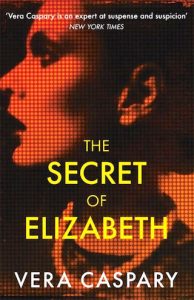
Prolific American author Vera Caspary’s last published novel, Elizabeth X, was released first in the U.K. in 1978, the year before her autobiography, The Secrets of Grown-ups. It was reissued in the U.S. the following year as The Secret of Elizabeth.
This analysis of Elizabeth X, or The Secret of Elizabeth by Vera Caspary is excerpted from A Girl Named Vera Can Never Tell a Lie: The Fiction of Vera Caspary by Francis Booth ©2022. Reprinted by permission. Read More→
By Nava Atlas | On June 3, 2022 | Updated July 23, 2026 | Comments (0)
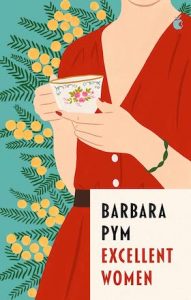
English author Barbara Pym (1913 – 1980) was often compared to Jane Austen for her comedies of manner; she was called Britain’s “new Jane Austen.” Excellent Women was her second novel, published in England in 1952.
Barbara Pym’s novels explore manners and morals in village life with subtle, understated wit and keen insight into human nature that transcends their local flavor. The nine novels published in her lifetime are considered the Pym canon; there were four others published posthumously.
Many Pym devotees cite Excellent Women as their entry-point to her novels, and for legions of fans, it remains their favorite. Shirley Hazzard wrote of Barbara Pym: Read More→
By Taylor Jasmine | On June 3, 2022 | Updated August 21, 2022 | Comments (0)
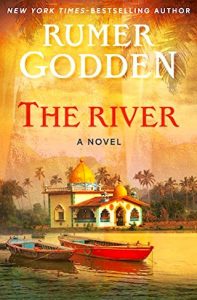
The River by Rumer Godden, a 1946 novel, is a coming-of-age tale based on the author’s experiences growing up in the colonized Bengal region of India, now part of Bangladesh.
Like so many of Godden’s novels, this one has a cinematic flavor, and indeed, is one of the nine books by this prolific author to be adapted to film. In the late 1940s, Godden collaborated on the script for the film version of The River. It was directed by Jean Renoir and released in 1951.
The well-received film won an international award at the Venice Film Festival that year. It later became a great favorite of Martin Scorsese and later also influenced director Wes Anderson. It’s still considered a classic mid-century film. Read More→
By Francis Booth | On May 31, 2022 | Updated December 10, 2024 | Comments (0)
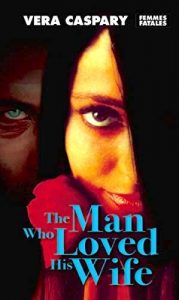
“The trouble with being the author of one of the all-time classics of suspense is that people keep expecting you to be that good again; and I suppose I must regretfully say that Vera Caspary’s The Man Who Loved His Wife is no Laura,” began Anthony Boucher’s February 20, 1966 review in the New York Times.
“But it is an intelligent and largely persuasive novel of a laryngectomy subject with a powerful death wish,” continued Boucher’s review, “ and was it himself or one of his family that fulfilled the desire?
I suspect that Mrs. Caspary has cast as a whodunit a story that could have been more effective without the puzzle element; but it still is well worth one’s attention – especially for her unflagging skill in creating unpleasant people.” Read More→