The Enchanted April, the 1922 novel by the elusive Elizabeth Von Arnim, has stood the test of time as a journey of friendship and self-discovery.
Certain stories possess an irresistible charm that beckons readers to embark on captivating journeys of the heart and mind. Elizabeth von Arnim’s 1922 novel, The Enchanted April is one such masterpiece, fueling the imagination and evoking a sense of wonder.
The Enchanted April is a lighthearted (yet not lightweight) tale of freedom to live an authentic life, and the transformative power of female friendship. This literary gem continues to engage readers even after a century, effortlessly weaving together picturesque landscapes, relatable characters, and heartfelt emotions. Read More→
In 1844, Elizabeth Barrett’s second major collection of poems (A Drama of Exile) was published and warmly received. The work included lines that praised fellow poet Robert Browning.
Presented here are the two letters that began the correspondence and ignited the romantic literary love story of Robert Browning and Elizabeth Barrett (who soon became Elizabeth Barrett Browning).
After reading the poems, Robert wrote a letter of thanks to Elizabeth on January 10, 1845, with the tantalizing line, “I love your verses with all my heart … and I love you, too.” Read More→
Dame Muriel Spark (February 1, 1918 – April 13, 2006) was a Scottish novelist, short story writer, poet, and biographer.
Her novels were famous for their wit and style, and several have been adapted for film, television, and the stage. Her best-known work is the 1961 novel, The Prime of Miss Jean Brodie.
Spark was quite prolific — in a nearly fifty-year career she wrote twenty-two novels, several collections of short stories, poetry, and nonfiction. She has been recognized as one of the greatest British writers. Read More→
Xingu by Edith Wharton (1862 – 1937), a longform short story, satirizes a snobby ladies’ literary lunch group in the early 1900s. It was first published in Xingu and Other Stories (1916) and is a fairly rare occasion in which Wharton’s sly sense of humor is on display.
The six pretentious, competitive women invite a famous author as a guest to visit their group, with unexpected results. Whereas the guests assume that the author is there to discuss her latest novel, she insists on only discussing another work — Xingu.
The ladies of the group feign knowing the work and insist they’ve studied it — but did they really? Xingu, reprinted in full here, is in the public domain. Long paragraphs have been broken up for easier viewability on devices.
Read More→
Literary Ladies Guide to the Writing Life: Inspiration and Advice from Celebrated Women Authors Who Paved the Way by Nava Atlas (2011) is now available as an audiobook (updated and expanded) produced by Blackstone Publishing (2023).
The desire to put pen to paper has been described by many writers as an obsession that can’t be denied. Perhaps best expressed by author Anaïs Nin, who writes, “You write out of a deep inner necessity. If you are a writer, you have to write, just as you have to breathe…”
In Literary Ladies’ Guide to the Writing Life, Nava Atlas presents a treasury of intimate glimpses into the unfolding writing process across fifteen brilliant careers in women’s literature and relates their struggles, striving, and successes to those experienced by women writers today.
Read More→
Though Edna St. Vincent Millay (1892 – 1950) wasn’t considered a confessional poet, her prolific love life was often reflected in her lines, sometimes obliquely, other times directly. Following is a small sampling of love poems by Edna St. Vincent Millay.
Some of Millay’s love poems hint at cynicism, others sorrow, while others still reflect a women in full charge of her sexuality and aware of her power over those whose hearts she won — or broke.
It has been argued that tales of Millay’s love life have eclipsed her reputation as a poet — and that this should be corrected, as she was a brilliant poet. In hindsight unjustly, er reputation began waning even before her untimely death. Read More→
“The Daughters of the Late Colonel” by Katherine Mansfield is a modernist short story. New Zealand-born Mansfield (1888 – 1923) has been recognized for revolutionizing the short story form.
“The Daughters of the Late Colonel” is considered among her most highly regarded stories, along with “At the Bay,” “The Voyage,” and “The Stranger.”
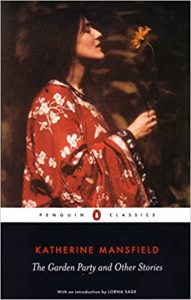
Written in 1920, this story (now in the public domain) was first published in The London Mercury in 1921, and was later part of Mansfield’s short story collection, The Garden Party and Other Stories. Read More→
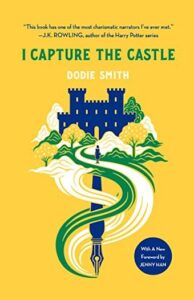
Presented here is a deep dive into the character of Cassandra Mortmain, the heroine of Dodie Smith’s 1948 young adult novel, I Capture the Castle.
British writer Dodie Smith (1896 – 1990) is best known for the children’s book The 101 Dalmatians (1956). I Capture the Castle (1948), written after World War II while Smith was living in California and writing scripts for the movies, was her first novel.
The following is excerpted from Girls in Bloom: Coming of Age in the Mid 20th-Century Woman’s Novel by Francis Booth, reprinted by permission. Read More→