Book-to-Film Adaptations directed by Mira Nair
By Melanie P. Kumar | On January 27, 2026 | Updated January 29, 2026 | Comments (2)

In celebrating the success of Zohran Mamdani, the youthful maverick who took the office of New York City mayor in 2025, we might give credit where due to his mother, Mira Nair. She has been successful and influential in her own right as a filmmaker and director.
Zohran Mamdani’s meteoric political rise has created huge interest worldwide. Consideration of his origins might bring to mind the old adage, “the hand that rocks the cradle rules the world” — a reminder of the influence that mothers have on a society’s direction.
Early years and education
Mira Nair was born in Rourkela, India. She lived in many cities in India and developed a love for English Literature in high school, like many girls of the time. She majored in Sociology from Miranda House, a prestigious women’s college, where she also dabbled in theatre, including playing Cleopatra in Shakespeare’s Anthony and Cleopatra.
Nair also took part in political street theatre in Calcutta, with Bengal’s theatre luminary and playwright, Badal Sircar. She later moved to the United States to study at Harvard on a scholarship (after turning down a full scholarship to Cambridge). The reason, in her own words: “I had a chip on my shoulder about the Brits.”
At Harvard, Nair studied photography before moving to filmmaking. Her career started with producing documentaries, and later moved on to making feature films. Her directorial debut, the Hindi language Salaam Bombay! (1988) earned nearly two dozen international awards.
. . . . . . . . . .

Mira Nair in 2008 (photo courtesy of Wikimedia Commons)
. . . . . . . . . .
Early films & developing social awareness
Praveen, Mira Nair’s mother, wielded a strong influence on her daughter, cultivating social awareness, confidence, independence, and fearlessness.
Nair’s early documentaries critique patriarchal attitudes and hypocritical notions of “virtue.” These attitudes were revealed in her documentary, India Cabaret (1985). Children of Desired Sex (1987) deals with the horrific practice of aborting fetuses after identifying them as female through amniocentesis (creating the term female feticide). Nair tackled this subject sensitively in this documentary.
Her research for the feature film Mississippi Masala (1991), a romantic drama, took her to Uganda, where she met her second husband, Indo-Ugandan academic Mahmood Mamdani, whom she interviewed about Idi Amin’s expulsion of Asians from Uganda based on his book, From Citizen to Refugee.
Nair has never shied away from tackling bold, controversial themes in her filmmaking. Her love of literature led her to turn to books for inspiration for many of her films. The choice of films and their adaptations speaks to her activist bent, which we see reflected in the values inherited by her son, Zohran Mamdani.
Monsoon Wedding
Before getting started with Mira Nair’s book-to-film adaptations, it would be remiss not to mention Monsoon Wedding (2001). Like Mississippi Masala, it was created from an original screenplay rather than a book. It’s generally considered Mira Nair’s magnum opus — her most critically praised and successful film. Rotten Tomatoes gave it a 95% rating, praising it as “An insightful, energetic blend of Hollywood and Bollywood styles … a colorful, exuberant celebration of modern-day India, family, love, and life.”
Located in Delhi, the film begins with preparations for the proverbial big fat Indian wedding, set in a traditional Hindu Punjabi household. The story revolves around the chaos of planning for such an extravaganza, with the extended family arriving from everywhere for the occasion. The baggage they arrive with, in addition to literal suitcases, is emotional.
Mira Nair is to be commended for handling the taboo issue of sexual abuse within families and ending it in a way that the audience feels that justice has been served. The film went on to win the Golden Lion at the 58th International Venice Film Festival of 2001, among other notable awards.
Following are notable book-to-film adaptations directed by Mira Nair.
. . . . . . . . . . . .
The Perez Family (1995)
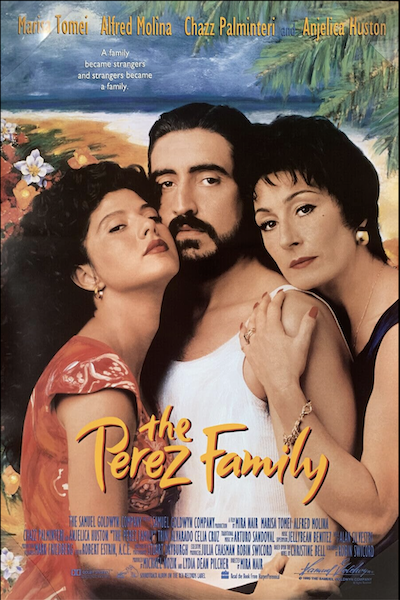
The Perez Family, based on the novel by Christine Bell, saw Mira Nair embarking on an American comedy film. The story revolves on a bunch of Cuban refugees bearing the same name, Perez, who decide to band together as a family, in the hope that they will be able to stay on in the United States under this premise. One of them, in fact, tells a U.S. immigration official (who is also named Perez), “If you want something done in this life, ask a Perez – there are so many of us!”
The film, which casts a wary eye on the vagaries of the American immigration process, received mixed-to-positive reviews. Roger Ebert, for one, gave it four out of five stars, concluding, “The movie sometimes bends the plausible to set up a laugh, and most of the time I didn’t care, because I was enjoying the company of the characters.”
. . . . . . . . .
Vanity Fair (2004)

Nair’s film adaptation of the classic novel Vanity Fair by William Makepeace Thackeray gave it a modern spin. The film opens with its famous heroine, Becky Sharp (portrayed by Reese Witherspoon), watching her impoverished father sell off her mother’s portrait, an object that means so much to her.
As the portrait leaves the shop, so goes Becky’s last connection to her lineage, which will determine her future social mobility. Nair offers a kinder than usual interpretation of Becky, as she moves from orphan to governess to middle class.
While being accused by Western critics of making Becky a one-dimensional character, the film succeeds in showing the possibilities of a post-colonial production. Reviews were generally split down the middle. Some critics opined that Thackeray’s bawdy masterpiece had been rendered dull and safe. Yet others agreed with the Washington Post, which applauded “Mira Nair’s fine movie version of the 1848 book, in all its glory and scope and wit.”
. . . . . . . . .
The Namesake (2006)
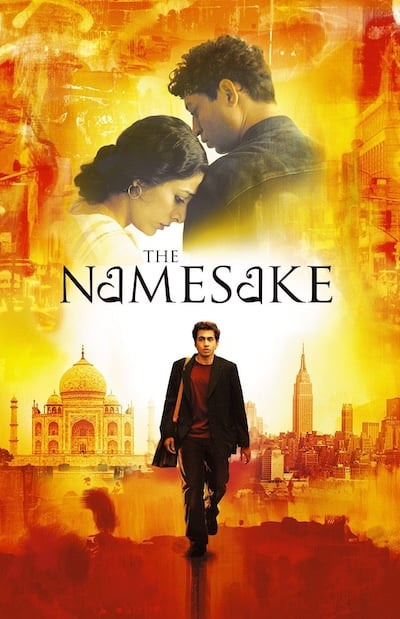
The Namesake film adaptation is based on the novel by Jhumpa Lahiri, British-born daughter of Bengali parents. The story sympathetically explores the struggles of Ashoke and Ashima Ganguli, who have moved from West Bengal, India, to the United States.
Bengalis are known for giving unusual nicknames to their children. Ashoke and Ashima’s nickname for their son is Gogol (based on the Russian author Nikolai Gogol), which becomes his officially registered name.
The story shifts to Gogol and his cultural clashes with his parents over customs and traditions that he can’t relate to. The film brings out the dilemma of American-born children of Indian parents, and the story turns full circle as it moves to its final denouement.
The film was well received, appearing on several best-of-the-year lists. Rotten Tomatoes called it “An ambitious exploration of the immigrant experience with a talented cast that serves the material well.”
. . . . . . . . .
The Reluctant Fundamentalist (2012)

Based on Mohsin Hamid’s novel, the film adaptation of The Reluctant Fundamentalist is a gripping political thriller. The film revolves around Changez Khan, a Pakistani who admires the opportunities afforded by America for economic advancement.
Returning to America after a business trip post September 11th, Changez is horrified to be picked up and invasively strip-searched, leaving him furious and humiliated. After his U.S. visa expires, Changez returns to Lahore in Pakistan and is hired as a university lecturer. His travails continue to unfold from there.
The film deftly explores issues of identity and racial stereotyping, wrapped in a gripping story. Though The Reluctant Fundamentalist wasn’t a box office success and received mixed reviews, it won several prestigious international awards, including the Centenary Award at the 43rd International Film Festival in India for addressing burning issues such as intolerance and xenophobia.
. . . . . . . . .
The Queen of Katwe (2016)
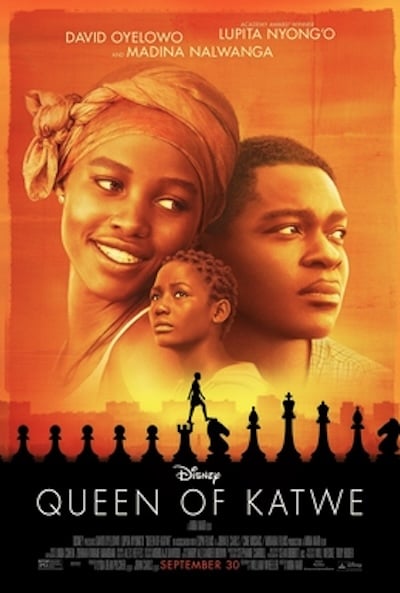
The Queen of Katwe film is based on the biography by American Tim Crothers, subtitled One Girl’s Triumphant Path to Becoming a Chess Champion. The story tells of Phiona Mutesi, a girl living in Katwe, a slum of Kampala, the capital of Uganda, who becomes a chess prodigy.
After her victories at the World Chess Olympiads, Phiona becomes a Woman Candidate Master. The film traces the ups and downs of competition, with Phiona finally overcoming setbacks to lift her family out of poverty and buying them a home.
The film received critical acclaim and won several awards. Mira Nair said of her choice to make it: “I have always been surrounded by these stories, but hadn’t done anything in Uganda since 1971. I love any story about people who make something from what appears to be nothing.”
. . . . . . . . .
A Suitable Boy (2020)

Mira Nair directed the miniseries adaptation A Suitable Boy, based on Vikram Seth’s lengthy novel. It was the first BBC period drama series to feature a non-white cast.
Reception of the miniseries was decidedly mixed, often within the same reviews. The Guardian observed,“It is beautiful, expensive and groundbreaking in its casting, yet Andrew Davies’s adaptation of Vikram Seth’s tome still feels uncomfortably old-school.”
Other critics praised the cast and the settings, but panned the stereotypical portrayal of India. “There is no dearth of stereotypes in this adaptation of Vikram Seth’s 1993 novel,” wrote the critic of The Hindu, “yet the show moves too briskly and looks too lovely to ignore.” The film ran into a bit of controversy as well, mainly due to the characters of Lata and Kabir kissing in a temple. For some time, “Boycott Netflix” trended on Twitter until the next scandal came along.
. . . . . . . . . .
Contributed by Melanie P. Kumar, a Bangalore, India-based independent writer who has always been fascinated with the magic of words. Links to some of her pieces can be found at gonewiththewindwithmelanie.wordpress.com.
Further reading
MORE BY MELANIE KUMAR ON LITERARY LADIES GUIDE
- 10 Classic Indian Women Authors
- Remembering Meena Alexander, Indian Poet & Scholar
- A House with Four Rooms by Rumer Godden
- Reminiscences of Enid Blyton
- Gone with the Wind‘s Melanie Wilkes
- Bangalore Literature Festival 2023
Thank you, Mangal, for your kind words of appreciation. Mira Nair made films with appeal, which one can watch again and again. We have much to thank her for, including Zohran Mamdani🙂.
I’ve always admired Mira Nair and enjoyed her movies immensely. Watched Monsoon Wedding recently, probably second or third time.
Your article on Mira Nair was therefore a delight to read. It’s written beautifully with lot of research.
Thank you, Melanie.