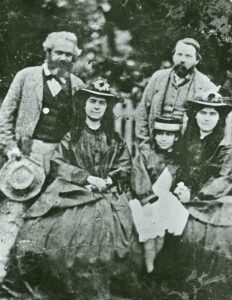
It’s striking that two daughters of Karl Marx, Laura and Eleanor, became important early translators of his work. Marx (1818 – 1883), the German-born social and economic theorist and philosopher, is best known for The Communist Manifesto (co-authored by Friedrich Engels) and Das Kapital.
Laura Marx (1845 – 1911) was the second daughter of Karl Marx and Jenny von Westphalen was instrumental in translating Marx’s works from German into French. Her sister Eleanor Marx (1855-1898), the youngest daughter in the Marx family, was involved in translation from German into English. Read More→
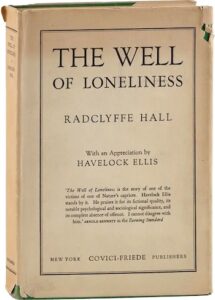
In a forthcoming book, I argue that 1928, when The Well of Loneliness (Radclyffe Hall) and Lady Chatterley’s Lover (D.H. Lawrence) were published, was the year in which sex and sexuality were first described openly in the novel without any authorial moral judgement.
So the passage below, from The Well of Loneliness, would not have been a problem in 1928 if Stephen Gordon had been a man; but Stephen is a woman.
But her eyes would look cold, though her voice might be gentle, and her hand when it fondled would be tentative, unwilling. The hand would be making an effort to fondle, and Stephen would be conscious of that effort. Then looking up at the calm, lovely face, Stephen would be filled with a sudden contrition, with a sudden deep sense of her own shortcomings; she would long to blurt all this out to her mother, yet would stand there tongue-tied, saying nothing at all. (Radclyffe Hall, The Well of Loneliness, 1928) Read More→
India’s celebrated diversity and, by and large, a sense of peaceful co-existence has taken a severe hit since the past decade. This has been linked with the rise of right-wing Hindutva in politics, which has bred a sense of injured pride in the Hindu majority accompanied by a phobia created about the threat from minorities, most of all Islam.
The myths being perpetrated include the uncontrolled rise in the Muslim population, as also the physical threats that could result from this change in demographics.
There is no data to substantiate these claims but with the power of social media and its ability to make a piece of fake news viral, nobody seems to care anymore to do a fact check and most people are quite content to believe all the lies that land on their telephones, day in and day out. Read More→
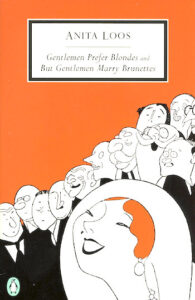
Anita Loos’ wildly successful 1925 novel Gentlemen Prefer Blondes was followed by a sequel, But Gentlemen Marry Brunettes. Published in the U.S. in 1927 and in England in 1928, it continued the adventures of the free, independent but ditzy Lorelei Lee and her friend, Dorothy Shaw.
Despite her misspellings and malapropisms, Lorelei is very much the modern, free 1920s woman and though she is deliberately written to appear as a “dumb blonde,” she is actually extremely sharp (and beautifully written in a virtuoso performance by Loos). Read More→
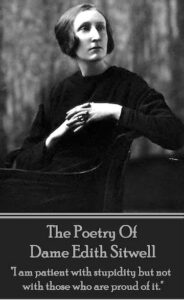
Dame Edith Sitwell (1887 – 1964), the British poet, literary critic, and famous eccentric, began publishing her poetry in 1913. With a modernist edge, some of it inscrutably abstract, some even set to music and sound.
Because of her dramatic self-presentation and manner of dress, she was sometimes criticized as a dilettante, but overall, her literary legacy remained intact and has grown over the years. Her poetry is praised for its craftsmanship and attention to technique. Read More→
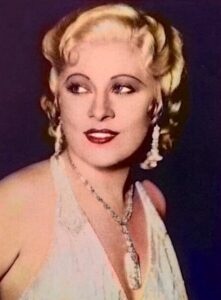
The notorious stage and screen actress and playwright Mae West (1893–1980) of “come up and see me some time” fame, was surprisingly literary minded. West was famous as an actress, but it’s far less known that she wrote all her own stage and screen roles, creating the wickedly witty vamp character she became identified with.
Despite her bad girl reputation, despite having been sentenced to ten days in prison for obscenity in her 1926 play Sex, and despite the equally provocative title of her 1927 play The Drag: A Homosexual Play in Three Acts, Mae West wasn’t as much a modern woman as she seemed. Of her 1928 play Diamond Lil West said: Read More→
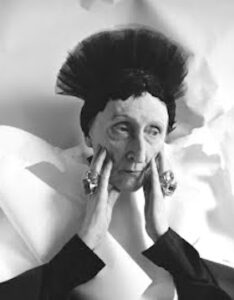
Dame Edith Sitwell (September 7, 1887 – December 9, 1964) was a British poet considered one of the first of the avant-garde movement. She had an enormous influence on literature and was also known for her eccentric demeanor, bon mots, and rather pronounced, if sarcastic, opinions.
As Elizabeth Bowen once said, she was “a high altar on the move.” Photo at right by Cecil Beaton.
Read More→
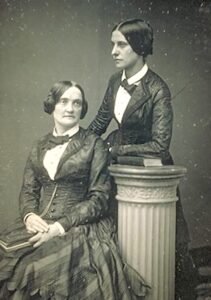
Presented here are ten trailblazing women translators whose work proved groundbreaking, from the 16th to 20th centuries.
After being entirely forgotten or reduced to half a line in their husbands’ entries in many encyclopedias, women translators are now starting to be recognized in their own right. Shown at right, translator Matilda Mary Hays (standing) and a love interest, actress Charlotte Cushman, 1858.
Read More→