It may be surprising to learn that a small but determined coterie of women published newspapers in the American colonies, before the states declared independence from Britain.
By the start of the American Revolution (1765), there were more than a dozen women printer-publishers operating on their own in the colonies. Most of them, called “widow-printers,” inherited their presses and newspapers after their husbands’ deaths.
Even so, it was rare for any woman to run a newspaper on her own. Not until much later could American women own property. They were property, though not to the extreme degree as their slaves and servants. Read More→
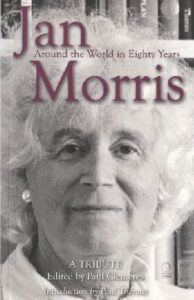
Jan Morris (October 2, 1926 – November 2, 2020) was a Welsh author and historian, whose work spanned the genres of journalism, memoir, history, essays, articles, and novels.
As a writer, she is best known for her Pax Britannia trilogy (a social history of the British Empire) and her written portraits of cities including Trieste, Venice, Oxford, Hong Kong, and New York City.
She is also famous for her transition from male to female in 1972, making her one of the first transgender public figures. Read More→
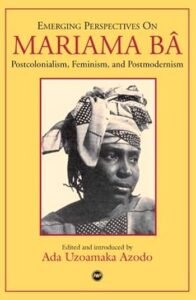
Mariama Bâ (April 17, 1929 – August 17, 1981) was a Senegalese novelist, poet, teacher, and feminist. Her best-known works, So Long a Letter and Scarlet Song, both written from a woman’s perspective, explored themes of multiculturalism, polygamy, oppression, interpersonal relationships, and grief.
These two novels are among the most widely translated and studied African works of the twentieth century, according to Cambridge University Press. Read More→
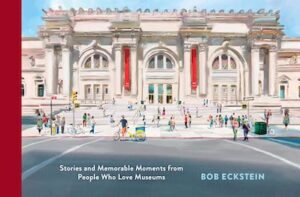
Bob Eckstein’s 2024 book, Footnotes from the Most Fascinating Museums: Stories and Memorable Moments from People Who Love Museums (Princeton Architectural Press) is a fantastic addition to the body of work by this talented writer, illustrator, and cartoonist.
A love letter to museums mainly around the U.S., it’s an eclectic collection that features Bob’s distinctive artwork. It was interesting to discover that several important museums were founded by women, and that’s what we’ll focus on here.
You’ll find plenty of art museums, of course, but other types of museums are well represented as well. Science, culture, transportation, history, and historic homes are represented. The entries offer basic info, but what really makes them shine are the personal stories from visitors to each venue. Read More→
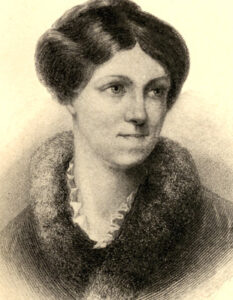
Harriet Martineau (June 12, 1802 – June 27, 1876) was an English social theorist, lecturer, and novelist. She was also an ardent supporter of women’s suffrage and other causes of her day.
Her writings, which earned enough to support herself (quite rare for a woman of her time) were proto-feminist and discusses aspects of culture pertaining to religion, politics, economics, and social institutions.
Harriet lost her senses of taste and smell from an early age and was partially deaf. Other health issues hindered her, yet she persevered in bringing her theories to a receptive audience. Read More→
Lois Duncan (April 28, 1934 – June 15, 2016) published more than fifty books, beginning with romance novels for adults and ending with picture books for children—but her name is synonymous with the teen thrillers that have remained her best-known works.
Feature films based on her books, like Down a Dark Hall (2018) and I Know What You Did Last Summer (2021), have continued to sustain her readership.
Just as her thrillers took ordinary people and thrust them into dark places, her personal life was profoundly impacted by her teenage daughter’s murder. In 1992, Lois Duncan was back in the headlines some six years after her death, when charges were brought against the man who confessed to the 1989 murder of her youngest daughter. Read More→
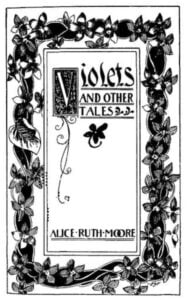
Alice Dunbar-Nelson (1875 – 1935) was a poet, short story writer, essayist, and journalist often associated with the Harlem Renaissance. Violets and Other Tales (1895), her first collection, combined poetry and prose in the same volume. “Violets,” the story that opens the book, is presented here in full.
Published when she was just twenty years old and going by her original name of Alice Ruth Moore, Violets and Other Tales includes short stories interspersed with the poems. This early work hints at feminism and social justice, predicting of the types of themes that would become her hallmark.
Her mixed heritage of Black, Creole, European, and Native American gave her a broad perspective on race. She explored racial issues in tandem with the varied and complex issues faced by women of color.
Read More→
In the late 1800s and early 1900s, the plucky literary orphan girl became a favorite trope in children’s literature. Perhaps it’s because children were indeed commonly orphaned in those days, or that parents got in the way of exciting narratives.
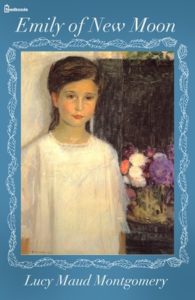
Here are seven of the most enduring orphan girls in classic children’s literature: The eponymous Heidi (does she have a last name?), Rebecca Randall (Rebecca of Sunnybrook Farm); Sara Crewe (A Little Princess); Anne Shirley (Anne of Green Gables); Pollyanna Whittier (Pollyanna); Mary Lennox (The Secret Garden); and Emily Byrd Starr (Emily of New Moon).
These girls are on the cusp of adolescence, a vulnerable stage in the best of circumstances. Orphaned and foisted on spinster aunts, unrelated caretakers, distant relatives, and indifferent schoolmistresses, these girls learn to navigate the world on their own terms. Read More→