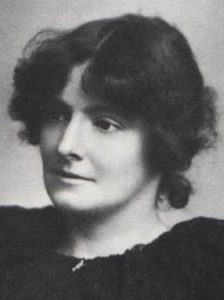
E. Nesbit (August 15, 1858 – May 4, 1924), full name Edith Nesbit, was an English novelist, short story writer, and poet best known for her imaginative books for children.
Born in Kennington, Surrey, a sister’s poor health compelled the family to move almost continually until she was in her late teens. An imaginative yet nervous child, the family’s peripatetic ways would have an impact on the stories she eventually became famous for.
At eighteen, Edith married Hubert Bland. Though the couple had five children, the marriage was an unstable one, marked by Bland’s philandering and inability to make a living. Read More→
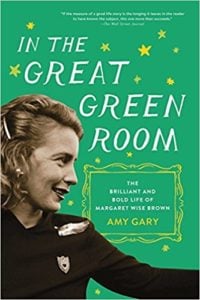
In the Great Green Room: The Brilliant and Bold Life of Margaret Wise Brown by Amy Gary (2017) is the life story of the talented woman who created the classic children’s books Goodnight Moon and The Runaway Bunny.
Though Margaret Wise Brown was only forty-two when she died unexpectedly, around one hundred books she wrote were published in her lifetime. Dozens of other manuscripts were found after her death.
Margaret was not only a prolific writer but an influential editor who helped usher in the golden age of children’s books in the mid-twentieth century. Read More→
Virginia Woolf (January 25, 1882 – March 28, 1941), born Adeline Virginia Stephen in London, epitomized rare literary genius. Despite debilitating battles with mental illness, Woolf produced a body of work considered among the most groundbreaking in twentieth-century literature.
Virginia Woolf’s father, Leslie Stephen, was a literary critic, and her mother, Julia Prinsep Stephen, was a renowned beauty and artists’ model. Her mother’s sudden death when she was thirteen may have been the catalyst for the first of her recurrent breakdowns.
As a young woman, Woolf developed her writer’s voice with a number of literary pursuits. She reviewed books for the Times Literary Supplement, wrote scores of articles and essays, and for a short time, taught English and history at Morley College in London (she herself had never earned a degree). Read More→
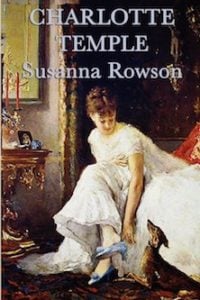
Charlotte Temple by Susanna Rowson (1762 – 1824), sometimes known as Susanna Haswell Rowson) was the best-known work by this American-British author. It was also America’s first best-selling novel. First published in England in 1790 as Charlotte: A Tale of Truth, it was retitled Charlotte Temple in 1797.
With its classic theme of seduction and remorse, it sparked a great deal of controversy in its time. Yet it remained the most widely read novel of the first half of the nineteenth century.
Other than Charlotte Temple, Susanna Rowson’s prolific body of writings (which also included other novels as well as plays, poems, and school textbooks) has been largely forgotten. Though contemporary readers give this novel mixed reviews, judging from reader comments on Goodreads, Charlotte Temple has endured as an example of early American literature. Read More→
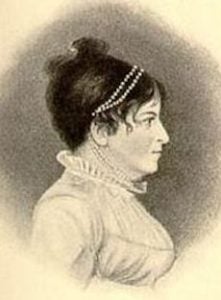
Susanna Rowson (n.d., c. 1762 – March 2, 1824) was an American-British author and actress, best known for Charlotte Temple, America’s first bestselling novel.
She was born in Portsmouth, England, the only daughter of British Navy Lieutenant William Haswell and Susanna Musgrave Haswell, who died within days of giving birth to her.
While stationed in Boston, her father met his second wife, with whom he had three sons. After being appointed a Boston customs officer, the family settled nearby. Read More→
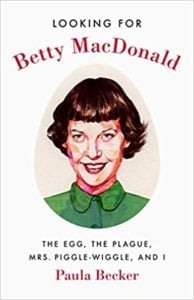
Betty MacDonald (1907 – 1958) was an American author of humorous memoirs and children’s books. The Egg and I, her bestselling 1945 memoir of running a chicken farm in rural Washington State in the late 1920s, catapulted her to international fame.
Her Mrs. Piggle-Wiggle books for children were also hugely successful. Exerpted by permission from Paula Becker’s biography Looking for Betty MacDonald: The Egg, the Plague, Mrs. Piggle-Wiggle, and I (University of Washington Press, 2016), here’s the story of how Mrs. Piggle-Wiggle came to the page and became a series. Read More→
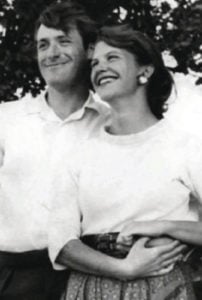
Relationships between brilliant writers were nearly always a tangle of complication and passion. Some couples preferred non-monogamous arrangements; others agreed that marriage was never to be part of the bargain. An intellectual bond was part of the attraction, and the glue that held these literary love affairs together.
Of the couples listed below, only the union of Elizabeth Barrett Browning and Robert Browning seemed like pure bliss. But even in their case, it was complicated. Her father was so dead-set against the marriage that he disinherited her. Read on for a capsule of some famed literary love affairs and marriages — truly, for better or worse. Read More→
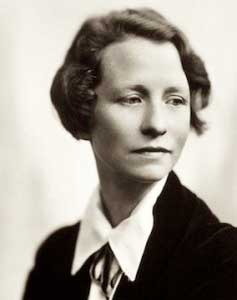
Edna St. Vincent Millay (February 22, 1892 – October 19, 1950) was an American poet long regarded as a major twentieth-century figure in the genre.
Wildly popular in her lifetime, she fell out of favor after her death, but is now being reconsidered — read, studied, and growing (or re-growing) in regard in the field of poetry.
Her middle name really was an homage to the New York City’s St. Vincent’s hospital, where the life of an uncle was saved before she was born. After her parents were divorced, there was minimal contact with their father. Her mother, Cora, was frequently away from home, on the road as a visiting nurse. Read More→