Harriet Beecher Stowe & Madeleine L’Engle on Motherhood & Writing
By Nava Atlas | On January 15, 2017 | Updated May 6, 2026 | Comments (0)

In exploring the challenges faced by women writers, a questions that often comes up is why it has always been (and still is) so difficult to master the work / life / motherhood and writing balance. Note that this question is rarely (or more like never) applied to men who write.
Being a mother and a writer was grueling for Harriet Beecher Stowe in the nineteenth century; and while it may have been somewhat easier for Madeleine L’Engle in the twentieth, it was just as guilt-inducing. For women who write today, there are still no easy answers.
I’m not one to bandy about gender stereotypes, but it’s hard to dispute that in traditional, heteronormative relationships, women still bear the greatest share of childcare and household management.
The balancing act is tricky enough in situations where both partners work, and even more so in instances where the woman’s work is something she actually likes and that gives her creative gratification.
The impulse is always to put others first — if not our kids, then our parents, or our partner, or our community. How dare I take this time to write, our guilty mind frets, when there’s so much to do, and when so-and-so needs me?
In times past, if a woman wanted to give her all to her writing pursuits, she often had to forego family life. Fewer than half of well-known women authors of past generations were mothers.
Only five oout of the fifteen classic authors I focused on in The Literary Ladies’ Guide to the Writing Life were mothers (Harriet Beecher Stowe, Madeleine L’Engle, L.M. Montgomery, George Sand, and Gwendolyn Brooks). That percentage a fairly accurate reflection of how the profession was in the past.
Now, more women writers than ever combine a fulfilling creative life with family. It’s comforting to learn that women of the distant and not-so-distant past, like most of us, muddled through as best they could, and dealt with daily disruptions and longer interruptions.
And yes, they felt guilty, acknowledged it, and wrote anyway. They just couldn’t help it.
. . . . . . . . . .
Harriet Beecher Stowe:
Burning to write an anti-slavery novel
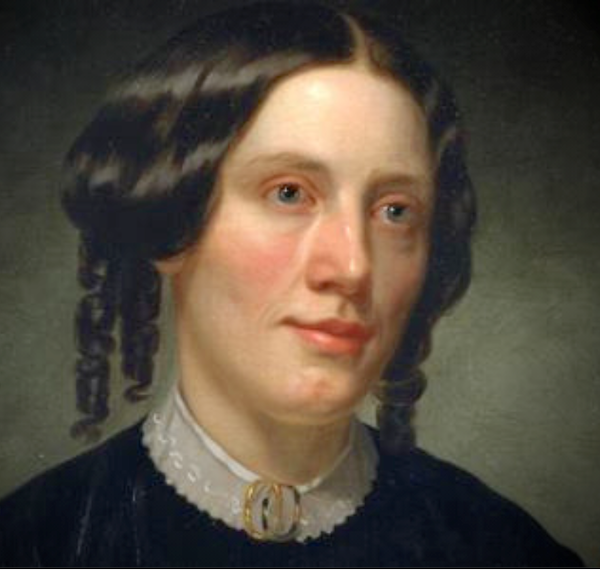
Harriet Beecher Stowe was the mother of seven children. Despite the rigors of raising a large family, attending to household duties, and doing paid writing to help with expenses, she burned to write the anti-slavery story that would become Uncle Tom’s Cabin. She expressed her desire for a private place to write and for more more domestic help.
She also wrote of her guilt, as in an 1841 letter to her husband: “Our children are just coming to the age when everything depends on my efforts. They are delicate in health, and nervous and excitable and need a mother’s whole attention. Can I lawfully divide my attention by literary efforts?”
Stowe was devastated when her toddler son died of cholera, but later, she claimed that the loss helped her empathize with enslaved mothers whose children were auctioned off: “I wrote what I did because as a woman, as a mother, I was oppressed and broken-hearted with the sorrows and injustice I saw.”
. . . . . . . . . . .
Madeleine L’Engle:
“We wish you’d get back to the typewriter”
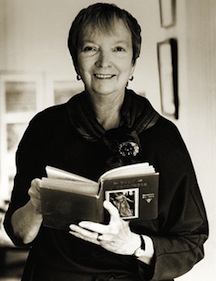
Madeleine L’Engle, best known for A Wrinkle in Time, felt guiltiest about writing during the long stretch of years that her work was continually rejected. She worried that she was spinning her wheels, while also not earning income for all her efforts. After finally becoming a published author, she wrote:
“I’m often asked how my children feel about my work, and I have to reply, ‘ambivalent.’ Our first-born observed to me many years ago, when she was a grade school child, ‘Nobody else’s mother writes books.’ But she also said, around the same time, ‘Mother, you’ve been very cross and edgy with us lately, and we’ve noticed that you haven’t been writing and we wish you’d get back to the typewriter.’
A wonderfully freeing remark. I had to learn that I was a better mother and wife when I was working than when I was not. As ambivalent as she was about taking time away from her children when she was writing, though, L’Engle had no qualms about having chosen both: “I’ve experienced the pain and joy of the birth of babies and the birth of books and there’s nothing like it.”
. . . . . . . . . .
“Still Just Writing”
Contemporary women authors are more likely to be mothers than authors of the past, and so, more have written about how the experience of motherhood informs their art. Anne Tyler, in her wry essay “Still Just Writing,” details the bumpy path to becoming a writer while her children were young.
She concluded, “It seems to me that since I’ve had children, I’ve grown richer and deeper. They may have slowed down my writing for a while, but when I did write, I had more of a self to speak from …”
It’s been said that there’s no manual for motherhood, and if that’s so, there’s truly no manual for the mother who writes. Reading about how others experienced the dual tugs of motherhood and creative desires helped me, even though they provided no blueprint.
On the many days when you feel like you’ve gotten nothing done, you can remind yourself (as you lurch from from one interruption to another) that, like Anne Tyler and the literary mothers who came before her, you, too, are growing richer and deeper.
— adapted from The Literary Ladies’ Guide to the Writing Life by Nava Atlas
Leave a Reply