Should a Writer Read Reviews of Her Work?
By Nava Atlas | On May 12, 2017 | Updated March 4, 2026 | Comments (0)

Should a writer read reviews of her work, whether by actual critics, or reader reviewers? Back in the day, when book reviews resided quietly in print media, an author could consciously avoid reading reviews of her work.
Unless a loud-mouthed aunt or neighbor broadcast the verdict, one could remain blissfully unaware of others’ opinions, if one had that sort of discipline.
Carson McCullers said: “I never read my reviews. If they’re good, they might give me the big-head, and if they are unfavorable, I would be depressed. So why bother?”
Tears of joy or sorrow at reviews, were usually a private matter between the author and her handkerchief or her soup, depending on which she preferred crying into.
In today’s world, if you’re lucky to get reviews at all, it’s hard to avoid learning about them via Google alerts, e-mails from your editor or publicist, your social media networks, and all the various sources of Too Much Information.
. . . . . . . . . . .
Should a writer look at reader reviews?
The vast majority of writers won’t be lucky enough to have their work reviewed in major newspapers or magazines, but that doesn’t shield them against the praise or poison darts thrown at your work by reader-reviewers, which you can easily avoid by simply not going to your book’s Amazon page, if you have that sort of discipline (which, if you’re like most writers, you probably don’t).
Goodreads used to be a gentler kind of reader forum, but there’s plenty of brutal commentary there, too. In fact, not a few contemporary authors have made the decision to avoid reading reviews of their work on that platform.
. . . . . . . . . .
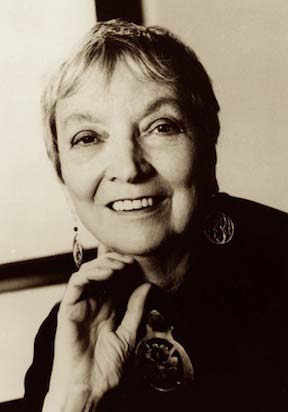
Madeleine L’Engle
. . . . . . . . . .
Which reviews will you remember?
Say you’ve gotten a whole slew of great reviews and a tiny number of negative ones. Which ones are you most likely to remember (or more precisely, still be obsessing about) five years hence? Of course, it’s the nasty reviews.
This is actually one of the top clichés of the writing life, right up there with “write what you know.” I never quite understood why this was until Madeleine L’Engle made it crystal clear in the facing passage: It’s the negative comments that reawaken our own self-doubts, the very ones we thought we overcame once our work was in print:
“When we write and are published, we become naked before people…I bleed from bad reviews, even though I have been very blessed in getting many more good reviews than bad reviews.
But like every other writer I know, when you get ninety-nine good reviews and one bad review, what review stays in your mind? The bad one. And why? Because it awakens our own doubts. Did I really serve the work? Did I really hear it? Could she really be right and I haven’t done it as I should have?
If you’re going to write and be published, you’ve got to expect to have a few arrows thrown at you. They’re going to hurt, and you’re going to bleed. You’re probably going to cry if you’re like me. But that’s just part of it and you have to learn.” (Madeleine L’Engle Herself, 2001)
. . . . . . . . . .
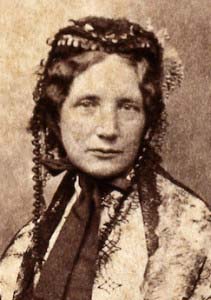
Harriet Beecher Stowe
. . . . . . . . . .
Double ouch!
A New York Times review of Harriet Beecher Stowe’s novel, The Minister’s Wooing (1859), published just a few years after the smash success of Uncle Tom’s Cabin, sniped afresh at the latter.
The review stated that “we never felt much sympathy for the extravagant admiration” conferred on that novel specifically, and on the social justice and slavery themes in Stowe’s work in general: “To use novels as weapons of attack or defense is like giving foul blows in boxing. You may disable your antagonist, but you degrade yourself, and doubly degrade the supporters who applaud you.”
While commentary like this has the power to wound, Stowe learned to take critics pronouncements in stride. She wrote in a letter to her husband after the publication of her 1856 novel, Dred: “One hundred thousand copies of Dred sold in four weeks! After that who cares what critics say? Its success in England has been complete, so far as sale is concerned. It is very bitterly attacked, both from a literary and a religious point of view …”
. . . . . . . . . .

Charlotte Brontë
. . . . . . . . . .
“Judge me as an author only, not as a woman”
Are women writers still judged differently from their male counterparts today? Likely not nearly as much as in the past, but this bias hasn’t completely disappeared. Here’s what Charlotte Brontë had to say on the subject in response to a critic writing about Jane Eyre.
“To value praise or stand in awe of blame we must respect the source whence the praise and blame proceed, and I do not respect an inconsistent critic. He says, ‘If Jane Eyre be the production of a woman, she must be a woman unsexed.’
In that case the book is an unredeemed error and should be unreservedly condemned. Jane Eyre is a woman’s autobiography, by a woman it is professedly written. If it is written as no woman would write, condemn it with spirit and decision — say it is bad, but do not eulogise and then detract. I am reminded of The Economist. The literary critic of that paper praised the book if written by a man, and pronounced it ‘odious’ if the work of a woman.
To such critics I would say, ‘To you I am neither man nor woman — I come before you as an author only. It is the sole standard by which you have a right to judge me — the sole ground on which I accept your judgment.’” (letter from Charlotte Brontë to her editor, W. S. Williams, August 1849)
. . . . . . . . . .

Virginia Woolf
. . . . . . . . . . . .
Should a writer avoid reading reviews altogether?
Emotional reaction to negative press is so pervasive that many authors past and present made the decision to ignore all reviews.
Edna Ferber was not one of them: “There are writers who say they pay no attention to reviews of their books, never read them, and don’t care whether they’re good or bad. I am not one of these. I do read them and I do care…”
Edith Wharton wisely observed, “After all, one knows one’s weak points so well, that it’s rather bewildering to have the critics overlook them and invent others that (one is fairly sure) don’t exist — or exist in a less measure.”
In more recent times, Annie Proulx, widely known for The Shipping News and Brokeback Mountain, decided, perhaps wisely, “After things are published I never read them again. I never, ever read reviews.” Few among us, alas, can resist the allure. Wouldn’t it be wonderful to let sleeping doubts lie?
Virginia Woolf did read reviews of her work, and was very much affected by them, good and bad. Best to adopt her attitude, however; despite her discomfort with criticism, she resolved to “soon recover from praise and blame.” In truth, that’s all we can, and should, do.
— Adapted from The Literary Ladies’ Guide to the Writing Life by Nava Atlas
Leave a Reply