On Love and Identity: 5 Poems by Julia de Burgos
By Skyler Gomez | On June 14, 2019 | Updated September 8, 2026 | Comments (6)
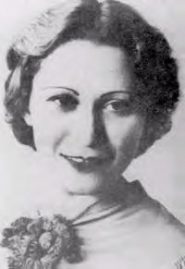
Julia de Burgos, born Julia Constanza Burgos Garcia (February 17, 1914 – July 6, 1953), was a Puerto Rican poet, feminist, and civil rights activist for women and African/Afro-Caribbean writers. Here is a sampling of poems by Julia de Burgos in both their original Spanish (poemas de Julia de Burgos) and English translation.
After Burgos was awarded a scholarship to attend University High School in 1928, her family moved to Rio Piedras, which would later influence her to write her first work, Rio Grande de Loiza.
The writings of Luis Llorens Torres, Clara Lair, Rafael Alberti, and Pablo Neruda were among those who influenced her career as a young poet. In turn, Julia de Burgos deeply influenced the next generation of Puerto Rican poets, including Giannina Braschi.
When de Burgos left Puerto Rico at the age of twenty five, she vowed never to return. Though she kept her promise, her poetry spoke of the social issues and the national identity of Puerto Rico.
The subjects of the island’s history, including colonialism, slavery, and oppression were woven into her poetry. She also wrote of her personal struggles and complicated love life.
The following poems in Spanish and English are included in this post:
- A Julia de Burgos / To Julia de Burgos
- Ay ay ay de la Grifa Negra / Ay ay ay of the Black Grifa
- El Mar y Tú / The Sea and You
- Yo Misma Fui Mi Ruta / I Was My Own Route
- Canción Amarga / Bitter Song
Poetry collections and critical studies
Here are the titles of published collected poems by Julia de Burgos:
- Poemas exactos a mi misma (1937)
- Poema en veinte surcos (1938)
- Canción de la verdad sencilla (1939)
- Antologia poética (1967)
- El mar y tú: otros poemas (1954; posthumous)
- Obra Poética (1961; posthumous)
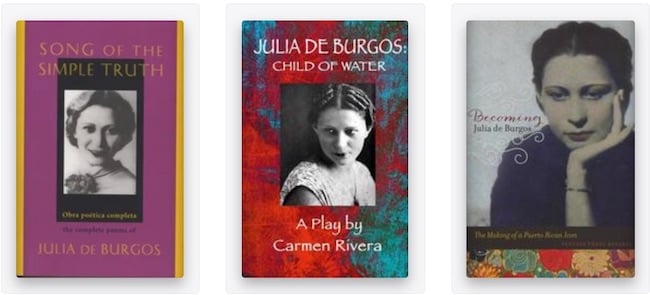
- Song of the Simple Truth: The Complete Poems of Julia de Burgos, 1995)
A recent article profiling Burgos and her work, Rising from Her Verses, was published in the LA Times Review of Books, May 2025. An excellent critical study is Julia de Burgos: Vida y Poesia (1967) by Ivette Jiménez Báez. Burgos was the subject of a 2011 profile in Ms. Magazine’s online edition. Vanessa Perez Rosario, who contributed to the piece, is also the author of Becoming Julia de Burgos, a critical biography. She wrote:
“De Burgos was an ambitious and brilliant woman who worked diligently on two fronts—to establish herself as a writer of international acclaim and to eradicate injustice. Her feminist politics and her Afro-Caribbean ideas allow us to read her as a precursor to contemporary U.S. Latina/o writers.”
. . . . . . . . . .
Julia, Todo en Mí (Julia de Burgos)
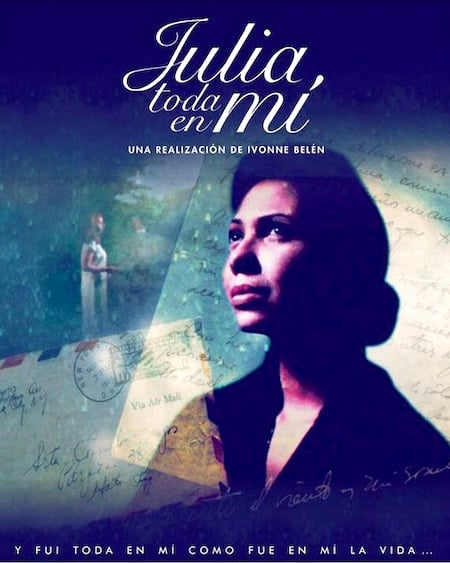
A lovely way to learn more about Julia de Burgos is this 2002 film, Julia, Todo en Mi. It’s considered a docudrama — part documentary, part re-enacted — about the esteemed Puerto Rican poet. It’s a visually captivating Spanish language film with English subtitles available to watch for free on YouTube. And now, on to the poems.
. . . . . . . . . . .
A Julia de Burgos (To Julia de Burgos)
Ya las gentes murmuran que yo soy tu enemiga
porque dicen que en verso doy al mundo mi yo.
Mienten, Julia de Burgos. Mienten, Julia de Burgos.
La que se alza en mis versos no es tu voz: es mi voz
porque tú eres ropaje y la esencia soy yo; y el más
profundo abismo se tiende entre las dos.
Tú eres fria muñeca de mentira social,
y yo, viril destello de la humana verdad.
Tú, miel de cortesana hipocresías; yo no;
que en todos mis poemas desnudo el corazón.
Tú eres como tu mundo, egoísta;
yo no; que en todo me lo juego a ser lo que soy yo.
“Tú eres sólo la grave señora señorona; yo no,
yo soy la vida, la fuerza, la mujer.
Tú eres de tu marido, de tu amor; yo no;
yo de nadie, o de todos, porque a todos, a
todos en mi limpio sentir y en mi pensar me doy.
“Tú te rizas el pelo y te pintas; yo no;
a mí me riza el viento, a mí me pinta el sol.
Tú eres dama casera, resignada, sumisa,
atada a los prejuicios de los hombres; yo no;
que yo soy Rocinante corriendo desbocado
olfateando horizontes de justicia de Dios.
Tú en ti misma no mandas;
a ti todos te mandan; en ti mandan tu esposo, tus
padres, tus parientes, el cura, el modista,
el teatro, el casino, el auto,
las alhajas, el banquete, el champán, el cielo
y el infierno, y el qué dirán social.
En mí no, que en mí manda mi solo corazón,
mi solo pensamiento; quien manda en mí soy yo.
Tú, flor de aristocracia; y yo, la flor del pueblo.
Tú en ti lo tienes todo y a todos se
lo debes, mientras que yo, mi nada a nadie se la debo.
Tú, clavada al estático dividendo ancestral,
y yo, un uno en la cifra del divisor
social somos el duelo a muerte que se acerca fatal.
Cuando las multitudes corran alborotadas
dejando atrás cenizas de injusticias
quemadas, y cuando con la tea de las siete virtudes,
tras los siete pecados, corran las multitudes,
contra ti, y contra todo lo injusto
y lo inhumano, yo iré en medio de
ellas con la tea en la mano.
(Originally published in Poema en veinte surcos, 1938)
To Julia de Burgos
People now murmur that I am your enemy
For they claim that in verses
I reveal your essence to the world.
They lie, Julia de Burgos. They lie, Julia de Burgos.
The voice uplifted in my verses is not your own: it is mine,
For you are garment and I essence;
And the greatest abyss lies between the two.
You are the cold-blooded puppet of social deceit,
And I, the driving splendour of human truth.
You, of courtesan hypocrisies…the honey; not I;
Whose heart is revealed in my poems…all.
You are like your world, selfish; not I;
Who dares all to be what I truly am.
You are merely the implacable, elegant lady;
Not I; I am life, I am strength, I am woman.
You belong to your husband, to your master; not I;
I belong to no one, or to everyone, because to all,
everyone,
In wholesome feeling and thought, I give myself.
You curl your locks and paint yourself, not I;
I am curled by the wind; brightened by the sun.
You are homebound, resigned, submissive,
Confined to the whims of men; not I;
I am Rocinante galloping recklessly
Wandering through the boundaries of God’s justice.
You are not in command of self; everyone rules you:
You are ruled by your husband, your parents, relatives,
The priest, the seamstress, theatre, club,
The car, jewels, the banquet, champagne,
Heaven and hell and… social hearsay.
But not me, I am ruled by my heart alone,
My sole thought; it is “I” who rules myself.
You, aristocratic blossom; and I, the people’s blossom.
You are well provided for, but are indebted to everyone,
While I, my nothingness to no one owe.
You, nailed to the stagnant ancestral dividend;
And I, but one digit in the social cipher.
We are the encroaching, inevitable duel to the death.
When the multitude uncontrolled runs,
The ashes of injustices, burnt, left behind,
And when with the torch of the seven virtues,
The throng to the seven sins gives chase,
I will be against you and against all
That is unjust and inhuman.
Upholding the torch… I shall be among the throng.
(English translation by Rafael Ramos Albelo)
. . . . . . . . . .
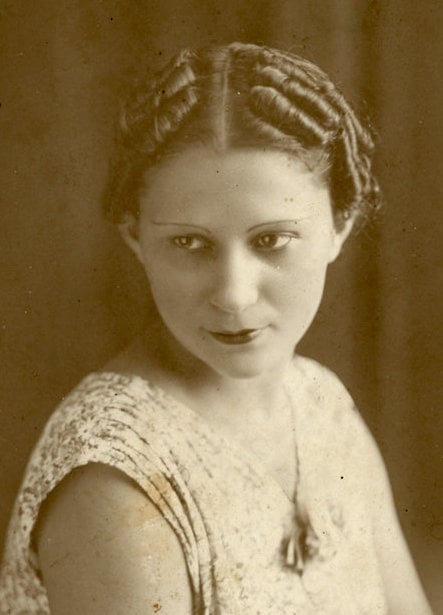
Did you know that there’s a Julia de Burgos Cultural Center
in Cleveland, Ohio?
. . . . . . . . . .
Ay ay ay de La Grifa Negra (Ay ay ay of the Black Grifa)
Ay ay ay, que soy grifa y pura negra;
grifería en mi pelo, cafrería en mis labios;
y mi chata nariz mozambiquea.
Negra de intacto tinte, lloro y río
la vibración de ser estatua negra;
de ser trozo de noche,
en que mis blancos dientes relampaguean;
y ser negro bejuco
que a lo negro se enreda
y comba el negro nido
en que el cuervo se acuesta.
Negro trozo de negro en que me esculpo,
ay ay ay, que mi estatua es toda negra.
Dícenme que mi abuelo fue el esclavo
por quien el amo dio treinta monedas.
Ay ay ay, que el esclavo fue mi abuelo
es mi pena, es mi pena.
Si hubiera sido el amo,
sería mi vergüenza;
que en los hombres, igual que en las naciones,
si el ser el siervo es no tener derechos,
el ser el amo es no tener conciencia.
Ay ay ay, los pecados del rey blanco
lávelos en perdón la reina negra.
Ay ay ay, que la raza se me fuga
y hacia la raza blanca zumba y vuela
hundirse en su agua clara;
tal vez si la blanca se ensombrará en la negra.
Ay ay ay, que mi negra raza huye
y con la blanca corre a ser trigueña;
¡a ser la del futuro,
fraternidad de América!
(Originally published in Poema en veinte surcos, 1938)
Ay, Ay, Ay of the Black Grifa
Ay, ay, ay, that am kinky-haired and pure black
kinks in my hair, Kafir in my lips;
and my flat nose Mozambiques.
Black of pure tint, I cry and laugh
the vibration of being a black statue;
a chunk of night, in which my white
teeth are lightning;
and to be a black vine
which entwines in the black
and curves the black nest in which the raven lies.
Black chunk of black in which I sculpt myself,
ay, ay, ay, my statue is all black.
They tell me that my grandfather was the slave
for whom the master paid thirty coins.
Ay, ay, ay, that the slave was my grandfather
is my sadness, is my sadness.
If he had been the master
it would be my shame:
that in men, as in nations,
if being the slave is having no rights
being the master is having no conscience.
Ay, ay, ay wash the sins of the white King
in forgiveness black Queen.
Ay, ay, ay, the race escapes me
and buzzes and flies toward the white race,
to sink in its clear water;
or perhaps the white will be shadowed in the black.
Ay, ay, ay my black race flees
and with the white runs to become bronzed;
to be one for the future,
fraternity of America!
(English translation by Jack Agüeros, from
Song of the Simple Truth: The Complete Poems of Julia de Burgos, 1995)
. . . . . . . . . .
El Mar y Tú (The Sea and You)
La carrera del mar sobre mi puerta
es sensación azul entre mis dedos,
y tu salto impetuoso por mi espíritu
es no menos azul, me nace eterno.
Todo el color de aurora despertada
el mar y tú lo nadan a mi encuentro,
y en locura de amarme
hasta el naufragio
van rompiendo los puertos y los remos.
¡Si tuviera yo un barco de gaviotas,
para sólo un instante detenerlos,
y gritarle mi voz a que se batan
en un sencillo duelo de misterio!
Que uno en el otro encuentren
su voz propia,
que entrelacen sus sueños en el viento,
que se ciñan estrellas en los ojos
para que den, unidos, sus destellos.
Que sea un duelo de música en el aire
las magnolias abiertas de sus besos,
que las olas se vistan de pasiones
y la pasión se vista de veleros.
Todo el color de aurora despertada
el mar y tú lo estiren en un sueño
que se lleve mi barco de gaviotas
y me deje en el agua de dos cielos.
(Originally published in El mar y tú: otros poemas, 1954; posthumous)
The Sea and You
The stroke of the sea upon my door
is blue sensation between my toes,
and your impetuous leap through my spirit
is no less blue, an eternal birth.
All the color of awakened aurora
the sea and you swim to my encounter,
and in the madness of loving me
until the shipwreck
you both go breaking the ports and the oars.
If I just had a ship of seagulls,
and could for an instant stop them,
and shout my voice that they fight
in a simple duel of mystery!
That one in the other might find
his own voice,
interweave their dreams in the wind,
bind stars in their eyes
so that they give, united, their beams.
May there be a duel of music in the air
the opened magnolias of their kisses,
that the waves dress in passions
and the passion dress in sailboats.
All the color of awakened aurora
may the sea and you expand it into a dream
that it carry my ship of seagulls
and leave me in the water of two skies.
(English translation by Jack Agüeros, from
Song of the Simple Truth: The Complete Poems of Julia de Burgos, 1995)
. . . . . . . . . .
Yo Misma Fui Mi Ruta (I Was My Own Route)
—Yo quise ser como los hombres quisieron que yo fuese:
un intento de vida;
un juego al escondite con mi ser.
Pero yo estaba hecha de presentes,
y mis pies planos sobre la tierra promisora
no resistían caminar hacia atrás,
y seguían adelante, adelante,
burlando las cenizas para alcanzar el beso
de los senderos nuevos.
—A cada paso adelantado en mi ruta hacia el frente
rasgaba mis espaldas el aleteo desesperado
de los troncos viejos.
—Pero la rama estaba desprendida para siempre,
y a cada nuevo azote la mirada mía
se separaba más y más y más de los lejanos
horizontes aprendidos:
y mi rostro iba tomando la espresión que le venía de adentro,
la expresión definida que asomaba un sentimiento
de liberación íntima;
un sentimiento que surgía
del equilibrio sostenido entre mi vida
y la verdad del beso de los senderos nuevos.
—Ya definido mi rumbo en el presente,
me sentí brote de todos los suelos de la tierra,
de los suelos sin historia,
de los suelos sin porvenir,
del suelo siempre suelo sin orillas
de todos los hombres y de todas las épocas.
—Y fui toda en mí como fue en mí la vida…
—Yo quiese ser como los hombres quisieron que yo fuese:
un intento de vida;
un juego al escondite con mi ser.
Pero yo estaba hecha de presentes;
cuando ya los heraldos me anunciaban
en el regio desfile de los troncos viejos,
se me torció el deseo de seguir a los hombres,
y el homenaje se quedó esperándome.
(Originally published in Poema en veinte surcos, 1938)
I Was My Own Route
I wanted to be like men wanted me to be:
an attempt at life;
a game of hide and seek with my being.
But I was made of nows,
and my feet level on the promissory earth
would not accept walking backwards
and went forward, forward,
mocking the ashes to reach the kiss
of new paths.
At each advancing step on my route forward
my back was ripped by the desperate flapping wings
of the old guard.
But the branch was unpinned forever,
and at each new whiplash my look
separated more and more and more from the distant
familiar horizons;
and my face took the expansion that came from within,
the defined expression that hinted at a feeling
of intimate liberation;
a feeling that surged
from the balance between my life
and the truth of the kiss of the new paths.
Already my course now set in the present,
I felt myself a blossom of all the soils of the earth,
of the soils without history,
of the soils without a future,
of the soil always soil without edges
of all the men and all the epochs.
And I was all in me as was life in me .. . .
I wanted to be like men wanted me to be:
an attempt at life;
a game of hide and seek with my being.
But I was made of nows;
when the heralds announced me
at the regal parade of the old guard,
the desire to follow men warped in me,
and the homage was left waiting for me.
(English translation by Jack Agüeros, from
Song of the Simple Truth: The Complete Poems of Julia de Burgos, 1995)
. . . . . . . . . .
Canción Amarga (Bitter Song)
Nada turba mi ser, pero estoy triste.
Algo lento de sombra me golpea,
aunque casi detrás de esta agonía,
he tenido en mi mano las estrellas.
Debe ser la caricia de lo inútil,
la tristeza sin fin de ser poeta,
de cantar y cantar, sin que se rompa
la tragedia sin par de la existencia.
Ser y no querer ser… esa es la divisa,
la batalla que agota toda espera,
encontrarse, ya el alma moribunda,
que en el mísero cuerpo aún quedan fuerzas.
¡Perdóname, oh amor, si no te nombro!
Fuera de tu canción soy ala seca.
La muerte y yo dormimos juntamente…
Cantarte a ti, tan sólo, me despierta.
(Originally published in , 1938)
Bitter Song
Nothing troubles my being, but I am sad.
Something slow and dark strikes me,
though just behind this agony,
I have held the stars in my hand.
It must be the caress of the useless,
the unending sadness of being a poet,
of singing and singing, without breaking
the greatest tragedy of existence.
To be and not want to be … that’s the motto,
the battle that exhausts all expectation,
to find, when the soul is almost dead,
that the miserable body still has strength.
Forgive me, oh love, if I do not name you!
Apart from your song I am dry wing.
Death and I sleep together . . .
Only when I sing to you, I awake.
(English translation by Jack Agüeros, from
Song of the Simple Truth: The Complete Poems of Julia de Burgos, 1995)
. . . . . . . . . .
. . . . . . . . . .
. . . . . . . . . .
More about Julia de Burgos and her poetry
- Poetry Foundation
- Overlooked No More: Julia de Burgos, a Poet Who Helped Shape
Puerto Rico’s National Identity
. . . . . . . . . . .
Skyler Isabella Gomez is a 2019 SUNY New Paltz graduate with a degree in Public Relations and a minor in Black Studies. Her passions include connecting more with her Latin roots by researching and writing about legendary Latina authors.
Many years ago I came across a poem by Julia de Burgos that mentioned Charon and his dark, dank realm, contrasting it with the vivid color and warmth of a tropical rainforest. The symbolic contrast between “classical” literature and her own goal in writing was absolutely brilliant. I resold the college textbook where I read it and now am searching for it to share. Not much luck since I don’t remember the title or volume title…and Google doesn’t seem to, either.
Any leads?
Hi Kevin — I couldn’t find anything like this by Julia de Bourgos, but is it possible that you’re referring to Rebelde by Juana de Ibarbourou? Here it is in English: https://biblioasistranslation.blogspot.com/2014/07/five-spanish-american-southern-cone.html (5th poem down) and in Spanish: https://letras-uruguay.espaciolatino.com/ibarbourou/rebelde.htm — if not, then I’m stumped as well!
I’M LOOKING FOR A POEM MY FATHER RECITED TO US ABOUT “UN SIERVO THAT HAD BIG ANTLERS AND VERY SKINNY LEGS.
PEDIA AL CIELO QUE LO AYUDARA. HE LOOKED VERY UGLY AND HE WAS NOT HAPPY WITH HIS OVERALL APPEARANCE. DO NOT THE AUTHOR ONLY A FAINT GENERAL IDEA. I WAS A YOUNG TEEN TODAY I’M A GREAT G/MOTHER. LOVE TO FIND THAT POEM.
Hello Esther — I wish I could help, but I’m not familiar with that work and a quick search on google didn’t come up with any results … good luck with your search!
Thank you for this site.
Could you give the name of the translator of these poems by Julia de Burgos?
I ask primarily in order to honor the literary work of literary and especially poetic translation.
I also ask because I am including a couple of these poems in my FALL 2020 Introduction to Poetry and my FALL 2020 Readings in American Literature college courses, both taught in the Department of English and in English. I will assign both the original poems in Spanish and also the translations into English, and–for obvious reasons–I would like to credit the translator. I have very rudimentary Spanish, but I can say that these translations into English make wonderful poems in English.
Thank you for whatever information you may be able to provide.
Hello Hugh — how great that you’ll be teaching a couple of the poems of Julia de Burgos. Truth be told, these translations are all over the web and most often the name of the translator is not attached to them, which, now that you pointed it out, doesn’t seem right. It’s possible that some are from Becoming Julia de Burgos by Vanessa Pérez Rosario (https://solidarity-us.org/atc/187/p4905/), or at least, that volume might have some info on who it was that has translated her poetry.
For more fascinating information that may interest your students, the NY Times did one of the “Overlooked No More” obituaries for her: https://www.nytimes.com/2018/05/02/obituaries/overlooked-julia-de-burgos.html
I’ll also see if the contributor of this collection of poems may have an idea about their translator.