The “Artist’s Novel”— L.M. Montgomery’s Emily of New Moon
By Madeleine Crown | On November 11, 2026 | Comments (0)
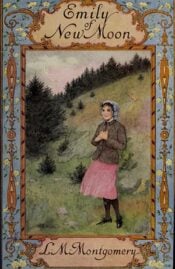
Lucy Maud Montgomery (known to readers worldwide as L.M. Montgomery) became renowned for her beloved orphan characters — Anne Shirley of Anne of Green Gables (1908) and Emily Byrd Starr of Emily of New Moon (1923). From a young age, Maud, as she was known to her familiars, was determined to become a famous writer.
Many of Montgomery’s characters contained elements of her imagination and penchant for storytelling. Her ambition to achieve a successful writing career was conveyed most strikingly by the character she deemed her favorite —the eponymous heroine of the Emily of New Moon trilogy.
“ … dear little ‘Emily’ whom I love far better than I ever loved ‘Anne’. . .” (Montgomery Journals, Volume III)
Comparisons are often made between Anne and Emily, but doing so overlooks a critical difference between the two series: the purpose of the stories.
The Anne series is the story of a young girl’s growth from childhood to womanhood, often referred to as a Bildungsroman, meaning “novel of formation.” The Emily series adheres more closely to the arc of the Kunstlerroman, meaning “the artist’s novel.”
The artist’s novel follows a particular structure, beginning with the creative spark, the sudden realization of a need to create (or in Emily’s case, the need to write), a period of apprenticeship and isolation or exile, and the first creation, or masterpiece.
The Emily series, in following this structure, tells us not only about the creation of a writer, but in many ways tells us about the formation of one of our most beloved, classic Canadian authors, Lucy Maud Montgomery herself.
. . . . . . . . . .

L.M. Montgomery (1874–1972)
. . . . . . . . . .
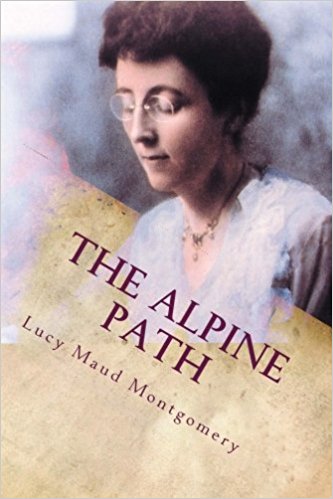
The Alpine Path
“To write has always been my central purpose around which every effort and hope and ambition of my life has grouped itself.” (L.M. Montgomery, The Alpine Path)
Many parallels exist between Montgomery and Emily. The overlap in their lives could fill pages, if not an entire book. Perhaps more important than any other parallel is their shared ambition to become a famous writers, as well as the trials and tribulations that they both encountered in their formative journeys.
Prior to writing Emily of New Moon, Montgomery was rewriting her Cavendish journals and telling the story of her career for Everywoman’s World magazine. From June to November 1917, she wrote six installments titled The Alpine Path that detailing her writing career from her teenage years to her ultimate success as a world-renowned author. These essays were then published as a book titled The Alpine Path: The Story of My Career in 1917.
The details in Montgomery’s journey in The Alpine Path are remarkably similar when compared with the Emily series; the formation of the artist is nearly identical in a myriad of ways. The title was inspired by a stanza of a poem that Montgomery read as a child. It is poignant because it marks her own early recognition of her need to write, and her desire to reach for greatness:
The Alpine Path so hard, so steep
that leads to heights sublime
How may I reach that far-off goal
of true and honored fame
and write upon its shining scroll
a woman’s humble name.
Between the nostalgic reminiscence of her younger, happier days, through the reworking of her journals and the writing and publication of The Alpine Path, Emily Byrd Starr began to take shape in Montgomery’s mind and heart.
. . . . . . . . . .
. . . . . . . . . . .
The Creative Spark
Montgomery began the Emily series by placing her heroine in a similar situation as her own early years. In the pre-WWI era, young Maud was left in the care of her mother’s family on Prince Edward Island. Both the real and fictional young girls were cared for by their guardians, and were often misunderstood and even stifled by adults in their lives.
It’s being misunderstood that drives Emily, as it did Montgomery, to pick up the pen and put her experiences to paper. Like Montgomery, Emily compulsively wrote in her journals. Both the author and her fictional character would begin these earliest endeavors at their craft on “letter bills.”
The craft of journaling in itself would become an exploration in creativity. Emily determines that perhaps one day she will publish her journals, just as Montgomery eventually revised the journals of her youth and young adulthood for that same purpose.
Montgomery also has Emily discover the poetry of life through the wonders of nature around her. The experience of this living poetry often leads to what Emily describes as “the flash”— a profound experience that Montgomery noted similarly in her journals and in The Alpine Path:
“. . .amid all the commonplaces of life, I was very near to a kingdom of ideal beauty. Between it and me hung only a thin veil. I could never draw it quite aside but sometimes a wind fluttered it and I seemed to catch a glimpse of the enchanting realm beyond . . .”
These experiences of “the enchanting realm beyond” are seeds of the creative spark that flows into Emily’s writing, whether through poetic verse or small descriptive scenes. She attempts to capture the elusive and magical qualities of the world around her through her writing. In The Alpine Path, it’s easy to see that Montgomery experienced the same compulsion; her delight in the natural world is evident in every book she wrote.
The Realization
The artist’s novel can only progress via the protagonist’s recognition of the inner longing to create. In The Alpine Path, Montgomery wrote, “I cannot remember the time when I was not writing, or when I did not mean to be an author.” So early did the realization arise in this writer’s life that its exact moment cannot be traced.
Emily, too, discovers that she has the desire and ability to write poetry early on in Emily of New Moon. While being hounded by her fellow students on her first day of school, she announces that she can write poetry — “… at that instant she knew she could write poetry.” And so she does.
Mentors & Manipulators
Over the course of three books in the series, Emily’s apprenticeship in the craft of writing progresses. She discovers what the artist’s novel promises at this stage of a writer’s formation: mentors, manipulators and a sense of exile.
Emily begins to test her writing on others. Montgomery tried reading her early verses to her father, who proclaimed that they “didn’t sound much like poetry.” While Montgomery and her friends would write poetry for one another as children, Emily continued to write poetry for herself. When her poems are discovered, read aloud, and mocked in front of all her schoolmates, she is mortified.
Montgomery carried on with writing regardless of criticism, as did Emily. Failing to win her father’s praise, Montgomery tried reading her verses to an unsuspecting listener. When the unknowing listener stated idly that the words were pretty, Montgomery was delighted.
In another parallel to her creator, Emily also reads several verses of a poem to a teacher who, upon hearing it, wants to know the identity of their author. After Emily declares it is her own poem, the teacher asks for an autographed copy. As Emily leaves, she looks back. “She was still looking after me. Something in her look made me feel glad and proud and happy and humble – and – and – prayerful.”
Perhaps if Maud had been allowed to speak freely, if she had lived in another time, or a different kind of society, the word she would have used at the end would have been powerful.
In The Alpine Path and Emily of New Moon, both author and fictional character share the heartbreak of a poem titled “Evening Dreams.” Young Maud Montgomery submitted the poem to a local publication and heard nothing in response. She had her fictional counterpart experience this heartbreaking first rejection as well. “She drained the draught of failure to the very dregs.”
Emily finds a mentor in a kind schoolteacher, Mr. Carpenter, who critiques her early poetry dispenses enough encouragement to fuel her determination to write. As the artist’s novel structure dictates, Montgomery ensures that Emily also encounters someone who appears to be a mentor but turns out to be a manipulator. This person presents Emily with the same verses that Montgomery noted as being influential to her own writing career.
Biographers and scholars have speculated as to who the fictional manipulator may have paralleled in Montgomery’s life. Perhaps Montgomery used her first fiancé, the overbearing Edwin Simpson, as an inspiration for this character. Mary Henley Rubio, Montgomery’s acclaimed biographer, showed the correlations with Montgomery’s husband, Ewan Macdonald. He was neither supportive of Montgomery’s writing nor much interested in it.
As the series plays out, Emily, like her creator, receives numerous rejections. In the trilogy’s second book, Emily Climbs (1925), her work begins to get published. Like Montgomery, she earns no money for her early efforts. When she finally receives her first payment, the money must go toward practical expenses.
Montgomery wrote that payments from her publications were immediately consumed by necessities. Even when working as a proofreader in Halifax, her earnings from publication were often the “butter” to her bread — not enough for consistent comfort or security. The Alpine Path has a description of her writing in a room so cold in the mornings that she had to tuck her feet beneath her to keep them from going numb. Similarly, Emily tells a relative in Emily Climbs “I’ve written a good deal lately – though it’s pretty cold in my room mornings. . .”
Other hardships Montgomery faced in her earlier years of writing are vividly detailed in The Alpine Path:
“When people say to me, as they occasionally do, ‘Oh how I envy you your gift. . .’ I am inclined to wonder … how much they would have envied me on those dark, cold, winter mornings of my apprenticeship.”
. . . . . . . . . . .

More about Emily of New Moon
. . . . . . . . . . . .
Isolation and Exile
The standard artist’s novel features the protagonist physically leaving the society in which they were raised. Montgomery subverted this exile in the Emily trilogy to mirror her own formation as a writer. Rather than leave their childhood homes, Montgomery and Emily both remain. Their isolation and exile are psychological rather than physical.
Throughout Montgomery’s determined climb to “reach heights sublime” she often hid her submissions and rejections from those around her, to avoid the mockery or disdain of her relatives. Emily faced similar battles, hiding journals and fiction writing from the prying eyes of guardians. However, Emily had open confrontations with her guardians, fighting for and winning her request for privacy and respect, as well as the space and time to write.
As both Maud Montgomery and Emily Starr entered adulthood, they remained on Prince Edward Island, while many of their friends left for further education, marriage, or employment. Montgomery remained to care for her grandmother, while Emily stayed for her own relatives and also for the sake of her writing.
With its beautiful landscape, the island was the inspiration required by both to write, but staying behind was often painful. Only the relentless creative pursuit and the beauty of the island kept them fulfilled during long periods of loneliness.
Montgomery’s isolation and sense of exile only found temporary appeasement in short-lived moments when visiting with her best friend and cousin. For her, fame, wealth, marriage, and motherhood could never completely assuage her sense of being alone and estranged from those who might understand her. Whether she gave Emily a happier ending is something each reader must decide for themselves.
Final Stage: The Masterpiece
Many of L.M. Montgomery’s readers know how her journey as a writer turned out — her journey from rejection to acceptance and unwavering dedication to her craft and readers in the midst of her life’s many ups and downs.
Her first masterpiece — Anne of Green Gables — was written, published, and became successful beyond Montgomery’s wildest dreams. Years later, she would write the story of Emily Starr. Montgomery continued writing until her sudden, tragic death in 1942. Her last written work was submitted for publication on the very day she died.
As Emily’s Quest (1927; the final book in the series) begins, Emily has also finished her first masterpiece. Flushed with fulfillment and excitement, she shares the novel with someone she considers a friend and mentor.
But alas, the mentor is a manipulator in disguise and his response to Emily’s first completed novel unleashes a series of unforeseen events for her. Plunged into the deepest isolation she has ever known, Emily is exiled from her own artistic ambitions. Will she be able to overcome the tragedy? Will she find the heart to write again?
The Emily series isn’t just another orphan story. It’s the story of the formation of a writer, and in so many ways, is intertwined with Lucy Maud Montgomery’s own journey from an imaginative, misunderstood young woman to the famous author we remember today.
We can gain glimpses of Montgomery’s journey through the chapters of The Alpine Path in a straightforward fashion, but the fictional rendering in the Emily trilogy allows us to resonate with the powerful emotions — joy, disappointment, devastation, or absolute ecstasy— that Montgomery must have felt throughout her early days as a writer.
For the duration of the Emily of New Moon series, we can feel closer not only to the fictional heroine, but also to Lucy Maud Montgomery. Perhaps many readers might come away feeling as if they’re sharing their own creative journeys with what Montgomery liked to call a “kindred spirit.”
. . . . . . . . . . .
Contributed by Madeleine Leanora Crown, a project specialist for an engineering firm by day and an avid reader and writer by night. Her independent research is primarily focused on women writers’ lives and works and the many conversations that those have inspired. With a bent towards Singles advocacy, including assisting in the creation of a blueprint for the Singles Bill of Rights, Madeleine is also a dog and cat mom. She looks forward to resurrecting her own literary blog in 2027 adding her voice to the conversations surrounding women’s writing and lives.
. . . . . . . . . . .
Further reading about Emily of New Moon
- Read in full on Project Gutenberg
- Review on Book Snob
- What Children’s Literature Teaches Us About Money:
L.M. Montgomery’s Emily of New Moon
Leave a Reply