Where to Start with South African Writer Olive Schreiner’s Books
By Alex J. Coyne | On February 7, 2026 | Updated September 25, 2026 | Comments (0)
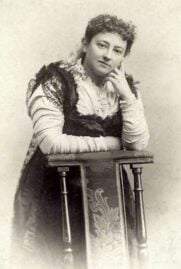
Olive Schreiner (1855 – 1920) was a South African writer and activist best known for her debut novel, The Story of an African Farm, first published in 1883 under the pseudonym Ralph Iron. It was republished in 1891 under her real name.
Today, Schreiner’s work is still widely studied, and she’s considered a pioneering anti-colonial feminist voice. She also wrote many articles, essays, and letters.
The following is a guide to Olive Schreiner’s books is for readers who would like a broader scope of her writing.
. . . . . . . . . .
Learn more about Olive Schreiner
. . . . . . . . . .
Early life, youth, and education
Olive Schreiner was born in Wittebergen, Eastern Cape, South Africa. She was one of twelve children born to missionary parents Gottlob and Rebecca Schreiner.
Schreiner lived with one of her brothers, a headmaster in Cradock, from 1867. After becoming dissatisfied with Cradock, she worked as a governess for several Cape households. This period became the inspiration for The Story of an African Farm, a story considered partially autobiographical.
For most of her life, Olive was disillusioned with the restrictions and rules of traditional Victorian culture. Her critical, anti-establishment views led her to clash with many employers. She struggled to settle into a single job or home in her early years.
In 1881, Schreiner traveled to Southampton, England, to pursue medical studies. She was unable to continue, partially due to worsening respiratory health. The sudden change led her to pursue a career as a writer.
Her first short publication was a short story: “The Adventures of Master Towser,” which was published in the New College Magazine in 1881. She followed this up with an 1882 essay in the same publication titled “My First Day at the Cape.”
The Story of an African Farm was published in 1883 and has remained Schreiner’s best-known work. She continued publishing essays and shorter works: “A Dream of Wild Bees” in The Woman’s World (1889) and “Stray Thoughts on South Africa: The Wandering of the Boers” (1896).
Many of her writings would comment on socio-political issues of the time: particularly Colonial life, Victorian customs, observations on Southern Africa, and women’s rights.
She wrote “Letter on the Taal” in South African News (1905), referring to the rise of Cape Afrikaans against Colonial-dominant English. A more exhaustive collection of her letters and shorter essays is available at Olive Schreiner Letters.
. . . . . . . . . .

. . . . . . . . . .
Books by Olive Schreiner
After the publication of The Story of an African Farm, Olive co-authored The Political Situation with her husband, whom she later divorced, citing a repeatedly unhappy marriage in her letters. Here are her major works:
The Story of an African Farm (1883)
Olive Schreiner’s first novel has remained her best-known and most adapted work. The description following is from the 2008 reprint from Oxford University Press:
“Lyndall, Schreiner’s articulate young feminist, marks the entry of the controversial New Woman into nineteenth-century fiction. Raised as an orphan amid a makeshift family, she witnesses an intolerable world of colonial exploitation.
Desiring a formal education, she leaves the isolated farm for boarding school in her early teens, only to return four years later from an unhappy relationship. Unable to meet the demands of her mysterious lover, Lyndall retires to a house in Bloemfontein, where, delirious with exhaustion, she is unknowingly tended by an English farmer disguised as her female nurse. This is the devoted Gregory Rose, Schreiner’s daring embodiment of the sensitive New Man.
A cause célèbre when it appeared in London, The Story of an African Farm transformed the shape and course of the late-Victorian novel. From the haunting plains of South Africa’s high Karoo, Schreiner boldly addresses her society’s greatest fears — the loss of faith, the dissolution of marriage, and women’s social and political independence.”
The Political Situation (1896)
The Political Situation was co-authored with her husband Samuel Cronwright-Schreiner, and centers around the Cape Colony’s political situation. At the time, the Cape was still under Colonial rule, though an increasing number of people began to opposite it.
Samuel was a farmer, though also a Freethinker who opposed Cecil John Rhodes. After her death, Samuel attracted controversy for his biography, The Life of Olive Schreiner (1924), and the posthumous publication of her works, which she explicitly forbade in her will.
Trooper Peter Halket of Mashonaland (1897)
As it is described, “the story of one of Cecil John Rhodes’ young troopers lost in Mashonaland.” Mashonaland refers to a region in Zimbabwe – and might point to Olive’s overall knowledge of Africa and its political climate. The story’s protagonist is age twenty, and comes to encounter a savior-like figure who brings to light the turmoil of war.
Closer Union (1908)
Closer Union, published in 1908, collected from a series of letters. This volume explores Schreiner’s thoughts on government. It explores what she considered the dangerous idea of unifying the four main colonies into one central government. This was one of her many politically focused works directly critical of colonialism and Cecil John Rhodes.
Woman and Labour (1911)
Woman and Labour explored women’s rights and her thoughts on student and labor activism. While some consider the book to be wordy, it’s nonetheless a valuable collection. Her thoughts were quite revolutionary for the time. It begins, “The female labour movement of our day is, in its ultimate essence, an endeavour on the part of a section of the race to save itself from inactivity.”
Stories, Dreams and Allegories (1922)
The essay collection Stories, Dreams and Allegories was published in 1922, or two years after Schreiner’s passing. This collection contains stories like ‘The Buddhist Priest’s Wife,’ wherein an unnamed woman’s life is recounted – and shines through her accomplishments, unusual for mainstream Victorian life.
Thoughts on South Africa (1923)
If Schreiner’s other books explored family relationships and people, then Thoughts on South Africa was a book about its surroundings and scenery. Thoughts on South Africa focused on colonial life and her observations. In this book, she referred to what she saw as the Boer culture’s “antique faults and heroic virtues.”
From Man to Man (1926)
Schreiner’s last novel may have possibly been one that she started writing in her teens. It remained unfinished at the time of her death. This was among the books published posthumously. Reviews have noted that it’s quite dissimilar to The Story of an African Farm; rather than exploring Victorian life, it seems directed at her critics and takes a hard turn toward escape from circumstances.
From Man to Man is the story of two sisters: one remains in the Cape Colony under British rule, while the other leaves the setting to explore her surroundings and self.
Other books and collections
- The Political Situation (1896)
- Trooper Peter Halket of Mashonaland (1897)
- Closer Union (1908)
- Woman and Labour (1911)
- Stories, Dreams and Allegories (1922)
- Thoughts on South Africa (1923)
- From Man to Man (1926)
. . . . . . . . . .

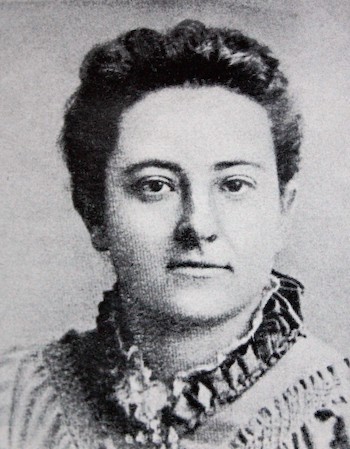
Olive Schreiner in young adulthood
. . . . . . . . . .
Olive Schreiner’s last years and legacy
With her health declining, Schreiner returned to England for treatment in 1913. World War I (which began in 1914) prevented her immediate return to South Africa. She finally returned in 1920 and died of chronic respiratory disease in Wynberg the same year. Her last work, The Dawn of Civilisation, was published after her death.
Schreiner was originally buried in Kimberley, South Africa. Her gravesite was later moved to Cradock in 1921, when Cronwright-Schreiner returned to Southern Africa. Her posthumous legacy includes a residence at Rhodes University named in her honor. The Oliver Schreiner Prize was established in 1961, and is awarded to exceptional works of poetry, prose, or drama.
The Story of an African Farm was adapted into a film in 2004. It was generally unfavorably reviewed. An earlier television series made in 1980 received more favorable reviews. A short documentary called In Search of Olive Schreiner (directed by Lisha Vosloo), exploring her life and legacy, was released in 2025 .
Inspired By Olive Schreiner
Some of the authors inspired by Olive Schreiner’s writing include J.M. Coetzee, Doris Lessing, Nadine Gordimer, and Virginia Woolf. Her work continues to inspire more authors to find their voice; here is what some of these writers have had to say:
Virginia Woolf: Quoted in this study, Virginia Woolf both praised and criticized Schreiner: “The writer’s interests are local, her passions personal, and we cannot help suspecting that she has neither the width nor the strength to enter with sympathy into the experiences of minds differing from her own, or to debate questions calmly and reasonably.”
Nadine Gordimer wrote groundbreaking works like Burger’s Daughter and July’s People; she credited Schreiner’s work as one of her influences, and would call her “the broken-winged albatross of white liberal thinking.”
J.M. Coetzee: The author of Waiting for the Barbarians, admired Olive’s writing, though he criticized her work for skimming over other issues that existed at the time – such as racial segregation.
Doris Lessing wrote the 1968 afterword to The Story of an African Farm and remarked it to be, “one of those few rare books, on a frontier of the human mind.” Lessing herself won the 2007 Nobel Prize for Literature.
. . . . . . . . . . .
Contributed by Alex J. Coyne, a journalist, author, and proofreader. He has written for a variety of publications and websites, with a radar calibrated for gothic, gonzo, and the weird. His features, posts, articles, and interviews have been published in People magazine, ATKV Taalgenoot, LitNet, The Citizen, Funds for Writers, and The South African, among other publications.
More by Alex Coyne on Literary Ladies Guide
- Nadine Gordimer, South African Author and Activist
- 8 Essential Novels by South African Author Nadine Gordimer
- Jeanne Goosen, Author of We’re Not All Like That
- 6 Notable South African Women Poets
- The Banning of Nadine Gordimer’s Anti-Apartheid Novels
- Olive Schreiner, Author of The Story of a South African Farm
- 10 Unforgettable Books by South African Women Writers
- Ingrid Jonker, South African Poet and Anti-Apartheid Activist
Leave a Reply