Introspective Quotes by Sylvia Plath
By Nava Atlas | On August 21, 2017 | Updated July 24, 2026 | Comments (0)
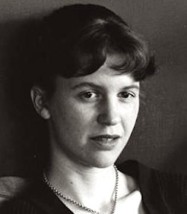
Sylvia Plath (1932 – 1963) has achieved cult-like status as a major American poet. Ambitious, brilliant, and beautiful, she was cursed with a lifelong struggle with depression that led to suicide at the age of thirty.
Because most of her work was published after her untimely death, she wasn’t alive to enjoy very many of the fruits of her labors. But her place in the American literary canon is secure and well deserved.
Her poetry as well as her journals are frank and revelatory about her personal life and innermost thoughts. Passages from her journals reveal her attempts to balance nagging self-doubt with a hunger to write and create. Here are introspective quotes by Sylvia Plath from a variety of sources.
. . . . . . . . . .
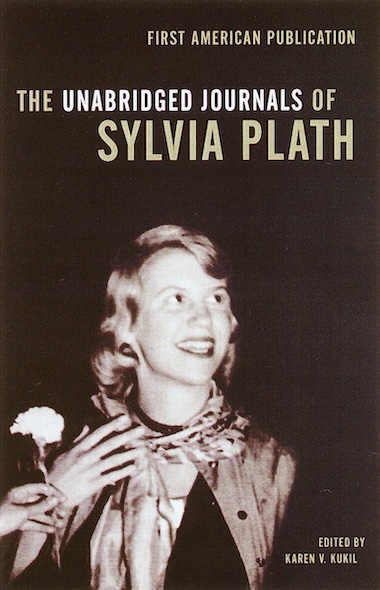
From The Unabridged Journals of Sylvia Plath
edited by Karen V. Kukil, 2000
“I want to taste and glory in each day, and never be afraid to experience pain; and never shut myself up in a numb core of non-feeling, or stop questioning and criticizing life and take the easy way out. To learn and to think; to think and to live; to live and learn: this always, with new insight new understanding, and new love.” (journal entry, July 1950, just before starting Smith College)
. . . . . . . . . .
“I hate myself for not being able to go downstairs naturally and seek comfort in numbers. I hate myself for having to sit here and be torn between I know not what within me. Here I am, a bundle of past recollections and future dreams, knotted up in a reasonably attractive bundle of flesh. I remember what this flesh has gone through; I dream of what it may go through.” (journal entry, November, 1950, freshman year at Smith College)
. . . . . . . . . .
“So many people are shut up tight inside themselves like boxes, yet they would open up, unfolding quite wonderfully, if only you were interested in them.” (journal entry, November 1950, freshman year at Smith College)
. . . . . . . . . .
“I am afraid of getting older. I am afraid of marrying. Spare me from cooking three meals a day—spare me from the relentless cage of routine and dullness. I want to be free . . . Why can’t I try on different lives, like dresses, to see which fits best and is more becoming? I want to be a singer and a writer and an actress and a professor.” (journal entry, September 1951, sophomore year at Smith College)
. . . . . . . . . .
“To look at her, you might not guess that inside she is laughing and crying, at her own stupidities and luckiness, and at the strange enigmatic ways of the world which she will spend lifetime trying to learn and understand.” (July, 1952)
. . . . . . . . . .
“Let me live, love and say it well in good sentences. Let me [someday] see who I am and why I accept 4 years of food, shelter, and exams and papers without questioning more than I do.” (journal entry, July 1953)
. . . . . . . . . .
“I desire the things which will destroy me in the end.” (journal entry, March 1951)
. . . . . . . . . .
“I need a father. I need a mother. I need some older, wiser being to cry to. I talk to God, but the sky is empty, and Orion walks by and doesn’t speak.” (journal entry, February 1956)
“I have done, this year, what I said I would: overcome my fear of facing a blank page day after day, acknowledging myself, in my deepest emotions, a writer, come what may.” (journal entry, May 1959)
. . . . . . . . . .
Other sources
You ask me why I spend my life writing?
Do I find entertainment?
Is it worthwhile?
Above all, does it pay?
If not, then, is there a reason? . . .
I write only because
There is a voice within me
That will not be still.
(From Letters Home: Correspondence 1950–1963, edited by her mother, Aurelia Schober Plath. Written when Plath was sixteen. )
. . . . . . . . . .
“What I fear most, I think, is the death of the imagination. When the sky outside is merely pink, and the rooftops merely black: that photographic mind which paradoxically tells the truth, but the worthless truth, about the world.” (Cambridge notes, 1956; later published postumously in Johnny Panic and the Bible of Dreams, collected short stories by Sylvia Plath, 1977)
. . . . . . . . . .
“I think writers are the most narcissistic people. Well, I mustn’t say this, I like many of them, a great many of my friends are writers. But I must say what I admire most is the person who masters an area of practical experience, and can teach me something.” (Audio interview with Peter Orr, October, 1962; British Council / BBC. Later appeared in the book The Poet Speaks, Peter Orr, editor)
. . . . . . . . . .
“I decided to take a hot bath. There must be quite a few things that a hot bath won’t cure, but I don’t know many of them. Whenever I’m sad I’m going to die, or so nervous I can’t sleep, or in love with somebody I won’t be seeing for a week, I slump down just so far and then I say: ‘I’ll go take a hot bath.'” (The Bell Jar, chapter 2, 1963)
. . . . . . . . . .
“Perhaps when we find ourselves wanting everything, it is because we are dangerously near to wanting nothing. There are two opposing poles of wanting nothing: When one is so full and rich and has so many inner worlds that the outer world is not necessary for joy, because joy emanates from the inner core of one’s being. When one is dead and rotten inside and there is nothing in the world: not all the woman, food, sun, or mind-magic of others that can reach the wormy core of one’s being.” (Letter to Richard Sassoon, December 11, 1955; The Letters of Sylvia Plath, Volume 1, 2017)
. . . . . . . . . .
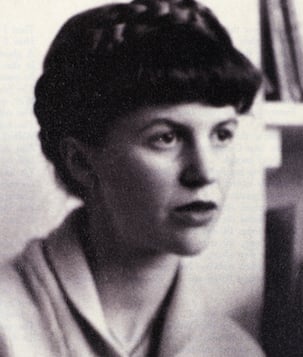
Plath’s Suicide Note: Death Knell, or a Cry for Help?
(Image courtesy of Wikimedia Commons)
. . . . . . . . . .
“I want to write because I have the urge to excel in one medium of translation and expression of life. I can’t be satisfied with the colossal job of merely living. Oh, no, I must order life in sonnets and sestinas and provide a verbal reflector for my 60-watt lighted head.” (from a letter to Edward Cohen, September 11, 1950. The Letters of Sylvia Plath, Volume 1: 1940–1956)
. . . . . . . . . .
“If I have a dry spell . . . I wait and live harder, eyes, ears, and heart open, and when the productive time comes, it is that much richer.” (from a letter to her mother, Aurelia Plath, undated. Letters Home: Correspondence 1950–1963)
. . . . . . . . . .
“Perhaps some day I’ll crawl back home, beaten, defeated. But not as long as I can make stories out of my heartbreak, beauty out of sorrow.” (from a letter to her mother, Aurelia Plath, May 1956, shortly after marrying Ted Hughes. Letters Home: Correspondence 1950–1963)
Leave a Reply