10 Fascinating Facts About Ida B. Wells, Fearless Journalist & Activist
By Taylor Jasmine | On July 22, 2026 | Comments (0)
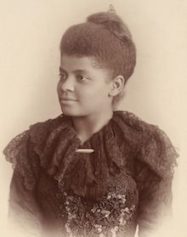
Ida B. Wells was a fearless crusader in the early civil rights movement. A journalist, editor, speaker, reformer, and suffragist, she was born on July 16, 1862 (and lived her big, courageous life until 1932). Get an introduction to her remarkable life and work with these fascinating facts about Ida B. Wells.
Wells was best known for spearheading a national antilynching campaign, through which she worked tirelessly and fearlessly to end the uniquely American practice of the public mob murders of Black Americans.
Wells’ reputation continues to grow, even decades after her death. Journalism awards have been established in her name, scholarships are endowed in her honor, and there’s a museum celebrating her legacy in her hometown in Mississippi.
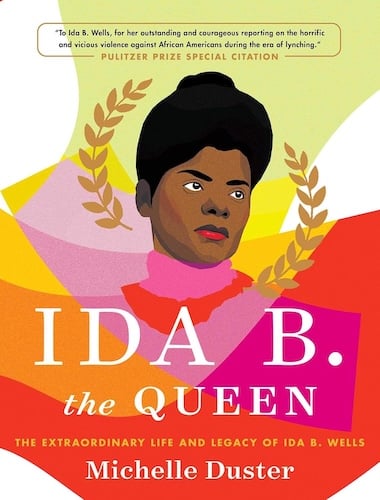
In 2020, nearly ninety years after her death, Ida B. Wells was awarded a long overdue posthumous Pulitzer Prize in the category of Special Citations and awards for “her outstanding and courageous reporting on the horrific and vicious violence against African Americans during the era of lynching.”
Wells’ legacy lives on in the civil rights work she founded and the courage she displayed as a journalist and newspaper publisher. Following are some fascinating facts about her life and work, adapted from Ann Allen Shockley’s essay in Afro-American Women Writers 1746 – 1933.
. . . . . . . . . . .
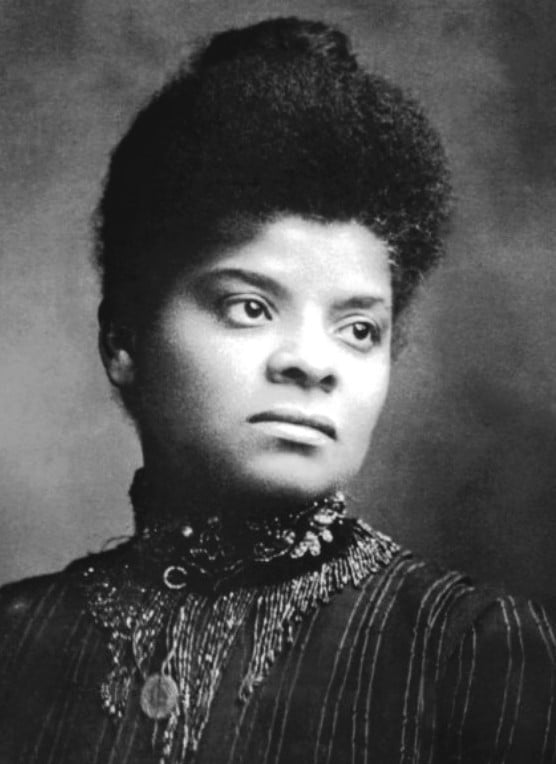
Learn more about Ida B. Wells
. . . . . . . . . . .
Ida B. Wells was born to enslaved parents and orphaned young
Ida Bell Wells was born in 1862, into an enslaved family living in Holly Springs, Mississippi — the midst of the Civil War. Her parents and youngest sibling died during the yellow fever epidemic in 1878.
At just fourteen, she was suddenly the head of the family, responsible for four younger brothers and sisters. Resisting her extended family’s desire to separate the siblings to various foster homes, she managed to keep the family together. To that end, she worked as a teacher while still in her teens to support her siblings.
She refused to move from a white train car
While traveling to Tennessee on the Chesapeake & Ohio Railroad in May, 1884, a conductor asked Wells to move to the smoking car. When she refused, the conductor, and baggage man, tried to force her out. Wells braced herself by planting feet on the back of a seat, and bit the conductor’s hand.
In Memphis, she instigated a lawsuit against the railroad. She won the case, and was awarded five hundred dollars and damages. Her triumph proved short-lived; the railroad appealed and the Supreme Court of Tennessee reversed the decision in 1887. This case foreshadowed Plessy v Ferguson, the 1896 U.S. Supreme Court ruling whose cruel and absurd “separate but equal” was foundational to decades of Jim Crow laws.
As a young journalist, Wells was in great demand
Wells’ writing and editing talent blossomed when she was hired as editor of a small church paper. She wrote her first article for another paper, The Baptist Weekly, on her experience with the railroad lawsuit. Soon, she found herself in demand, and contributed articles to the Detroit Plaindealer, Christian Index, Indianapolis World, Gate City Press, and A. M. E. Review, among others.
Wells was the not only the first woman to attend the Afro-American Press convention in Louisville, Kentucky, but was also elected as the the organization’s assistant secretary.
Wells bought into newspaper ownership
In 1899, Wells bought a one-third interest in the Memphis Free Speech and Headlight. At the time, she was still teaching in Memphis, but came to the conclusion that it wasn’t her calling due to its “confinement and monotony.”
As the partial owner and editor of a newspaper (and not one to ever hold her tongue or her pen) was free to express what she called “the real me.” Shortening the name of the newspaper to the Free Speech, she devoted full-time to traveling, researching, and writing for the paper.
She encouraged Black citizens of Memphis to move west
The March, 1892 lynching of three young Black businessmen in Memphis, owners of the People’s Grocery Company, was a turning point of Wells’ life. She wrote scathing editorials condemning the white community of the city for allow the lynching.
Wells urged the Black citizens of Memphis to leave and go west. And indeed, hundreds, including entire church congregations, heard her call She also helped organize the first boycott that encouraged the Black community in the city to boycott white businesses.
Wells’ newspaper office was destroyed by a white mob
That same year, spurred by an editorial response by the white newspaper to Wells’ writings on race relations in Memphis, a white mob descended on the building in which Free Speech operated, destroying it and all its contents. While this was a major calamity, at least Wells was away at the time. She never returned to Memphis and took up residence in New York City.
. . . . . . . . . .
. . . . . . . . . .
Her anti-lynching crusade coalesced in New York City
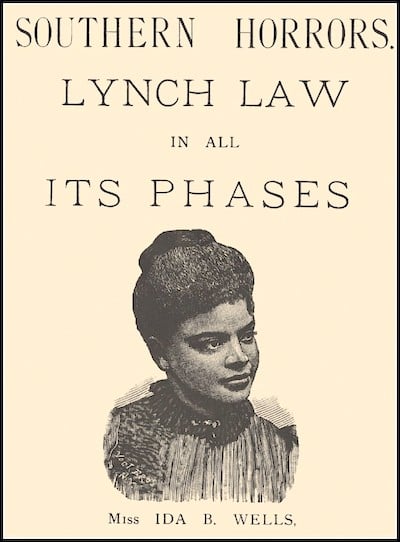
Wells was immediately hired to write for the legendary Black newspaper, the New York Age. The front page of the June 5, 1892 issue featured her detailed piece on lynching. Four months later, it was republished as a pamphlet titled Southern Horrors: Lynch Law in All Its Phases (1892).
By this time, her writings had caught the attention of Frederick Douglass, who contributed a letter to the pamphlet. He praised Wells as a “Brave woman!” The two maintained a lifelong friendship.
Well’s militant anti-lynching writings encouraged other Black women to rally behind the cause. In the fall of 1892, she gave her first public lecture before crowd of prominent Black women on the horrific practice of lynching. This event laid the groundwork for the nascent Black women’s club movement.
She was soon inundated with requests to speak on lynching at home and abroad. In 1893 and 1894, she traveled to England, Scotland, and Wales to amplify the impact of her work at home.
. . . . . . . . . . .
. . . . . . . . . . .
She settled in Chicago and become a mother of four
After Wells settled in Chicago, she wrote A Red Record: Tabulated Statistics and Alleged Causes of Lynching in the United States, 1892-1893-1894 (1895). This notable work detailed lynching statistics and its history.
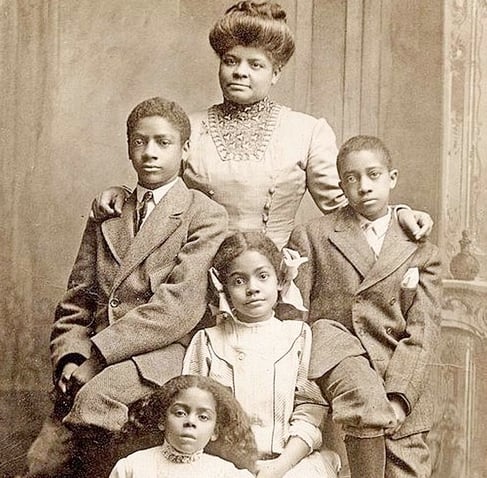
She joined the staff of Chicago’s pioneering Black newspaper, the Conservator, owned by Ferdinand L. Barnett, an attorney and widower. Romance blossomed, and on June 27, 1895 the couple married. From then, she was occasionally referred to as Ida B. Wells-Barnett. Even with four children, motherhood was no obstacle to continuing her writing and activism.
Wells was also deeply involved in the suffrage movement
In 1913, Ida organized the first suffrage group composed of Black women, the Alpha Suffrage Club, which published a newsletter, the Alpha Suffrage Record.The club’s work laid bare that truth that many Black women didn’t have sufficient education to take part in politics and the electoral process. This inspired her to reach out to other clubs that catered to Black women to help remedy this situation.
This same year, she also traveled to the first suffrage parade in Washington, D.C. organized by NAWSA. At the parade, she and sixty Black women were told to march in the back. To this, Wells responded “Either I go with you or not at all. I am not taking this stand because I personally wish for recognition. I am doing it for the future benefit of my whole race.”
. . . . . . . . . . .
. . . . . . . . . . .
Her legacy has been preserved by her daughter and granddaughter
Wells wrote that she fought a “lonely and almost single-handed fight against lynching long before men or women of any race entered the arena.” She began telling her story as an autobiography in 1928. Her memoirs were eventually edited by her daughter, Alfreda M. Duster, and published posthumously as Crusade for Justice: The Autobiography of lda B. Wells (1970).
Michelle Duster, Ida’s great-granddaughter, has continued to preserve her legacy with books including Ida B. the Queen (2021) and Ida B. Wells: Voice of Truth (2022), both intended for a YA readership (but perfect for anyone looking to become acquainted with Wells’ life and work).
Leave a Reply