This Indie Publisher is Reviving Classics by American Women Writers
By Nava Atlas | On January 15, 2026 | Updated September 15, 2026 | Comments (0)
Founded in 2022, Quite Literally Books is a woman-owned indie publisher with a mission of creating new editions of forgotten or neglected classics by American women authors.
Bremond Berry MacDougall and Lisa Endo Cooper, the two women behind Quite Literally Books, are longtime BFFs who have been bonding over their love of reading since they were twelve.
Learn more about Quite Literally Books on their website and Substack.
Quite Literally Books aims to right what they call “a crime (literary and otherwise).” Many women’s works that were bestsellers, part of the national conversation, or both, have gone by the wayside. There are lots of good reasons to rescue these works (and in some cases their authors) from literary oblivion, one being:
“The themes in these novels are strikingly relevant—identity, motherhood, ambition, colorism, the expectations placed on women, and even the performance of domesticity that now plays out online. Ironically, if these authors had received the recognition they deserved, their work might be on banned book lists today …”
. . . . . . . . . . .
. . . . . . . . . . .
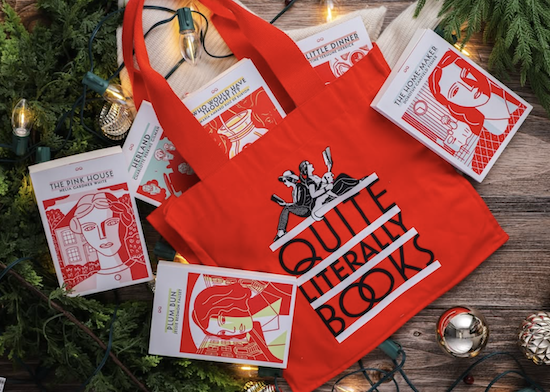
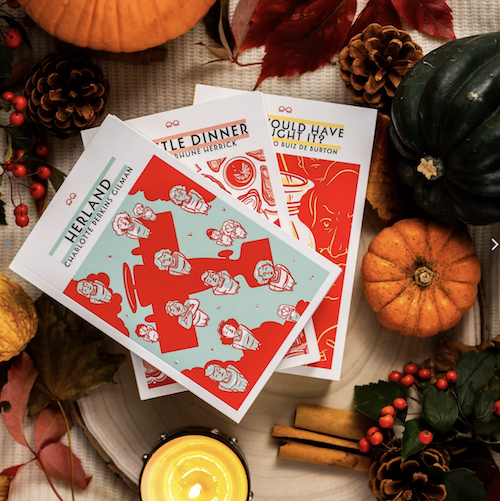
I love the entire aesthetic of Quite Literally’s books— these paperbacks feel substantial yet cozy, with their French flaps and fine printing. The cover designs pop with a contemporary simplify with a hint of art deco. Their mission is completely in sync with that of Literary Ladies Guide — to elevate women’s voices and to ensure that their lives and works are not forgotten.
Here’s a look at the first books on QLB’s growing list. Wouldn’t it be great if they become the Persephone Books of American side of the Atlantic?
. . . . . . . . . .
Who Would Have Thought It?
by María Amparo Ruiz de Burton
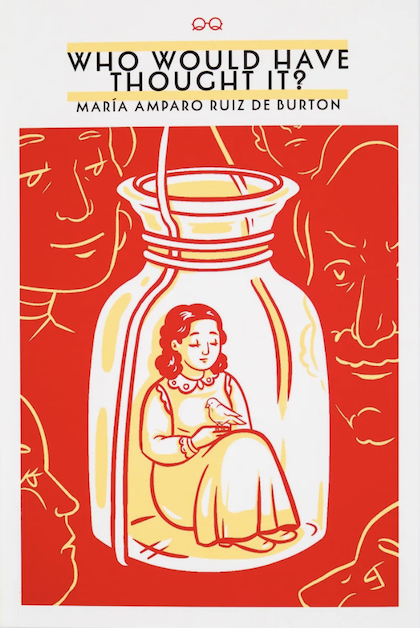
I have to admit that I’d never heard of María Amparo Ruiz de Burton until seeing this book on QLB’s roster; now I’m excited to learn more. She was the first Mexican-American writer to be published in English. In today’s fraught battles over who belongs, it seems the perfect time for her rediscovery. Who Would Have Thought It?, which remains her best-known work, was originally published in 1872. From the publisher:
“With an insider’s knowledge of the room where it happens and an outsider’s perspective, this novel has a lot to tell us about who we are as a nation today.
On the eve of the Civil War, Dr. Norval returns from his travels out West with big surprises in tow: Lola, a ten-year-old orphan entrusted to his keeping, and her immense fortune. In no time, the pious, upstanding Norvals are lusting for Lola’s riches in a most unbiblical way, while their reaction to dark-skinned Lola herself reveals that their abolitionist beliefs don’t run even skin deep.
It’s a uniquely American conundrum, and the Norvals are facile manipulators of their moral code when it’s challenged (almost quite literally) in their own backyard.”
Learn more about the QLB edition of Who Would Have Thought It?
. . . . . . . . . . .
The Home-Maker by Dorothy Canfield Fisher
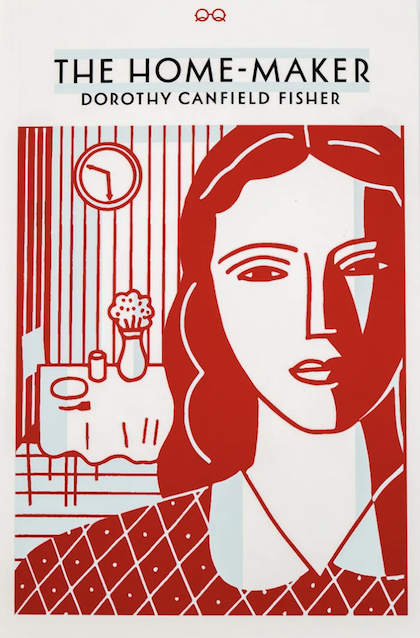
I was already familiar withThe Home-Maker (originally published in 1924), and recall how delightful I found Dorothy Canfield Fisher’s novel of domestic role reversal. The crazy “Trad Wife” trend happening today makes The Home-Maker feel futuristic, rather than a story that took place more than one hundred years ago. From the publisher:
“It’s the 1920s and gender roles are set in stone—can it be anything but “unhappily ever after” for the hapless Knapps? Evangeline is quite possibly the best home-maker in town, but keeping her home and family in immaculate condition is killing her—and them.
Her husband, Lester, is suffering too—a poet and a dreamer trapped in the body of a bookkeeper, he’s professionally inadequate and personally disengaged.
Meanwhile, the Knapp children are chafing under the weight of their mother’s too-great expectations. But then, life (quite literally) knocks a man to the ground, and spouses (figuratively) swap shoes—can the Knapps have a second chance at domestic bliss when they throw social conventions out with the dishwater?”
- Read a 1928 review of The Home-maker.
- Learn more about the QLB edition of The Home-maker.
. . . . . . . . . .
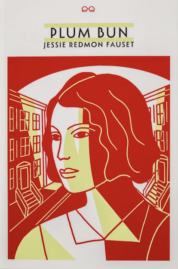
Plum Bun by Jessie Redmon Fauset
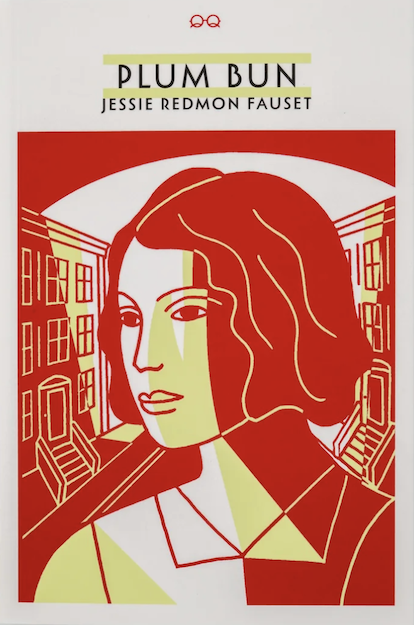
In her role as the literary editor of The Crisis, NAACP’s magazine, Jessie Redmon Fauset ushered in many iconic Harlem Renaissance writers who are still read today. She was also a wonderful poet and novelist in her own right.
As an admirer of Jessie Fauset and her work, I’m gratified by QLB’s beautiful edition of Plum Bun (originally published in 1928). I hope they’ll eventually publish her first novel, There is Confusion (1924); it’s in print but deserves a nicer packaging and cover. From the publisher:
“Angela is beautiful, talented, ambitious, and Black. When she leaves the confines of her family and Philadelphia for the artistic life in Greenwich Village, she makes the choice to enjoy all of the advantages that come with being perceived white. But being a white woman still means being a woman, and Angela soon finds that navigating love, career, and friends won’t be easy on her own.
Plum Bun, a coming-of-age novel, takes a frank look at love and identity and asks, what do we give up and what do we gain when we let the perceptions of others shape who we are?”
- Read a review and analysis of Plum Bun.
- Learn more about the QLB edition of Plum Bun.
. . . . . . . . . . .
Herland by Charlotte Perkins Gilman
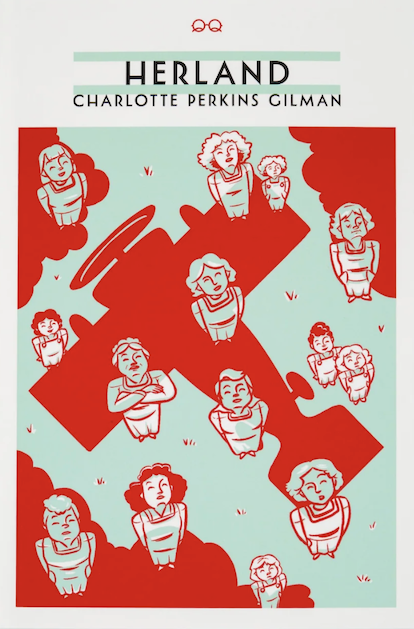
Perhaps best known for The Yellow Wallpaper, Charlotte Perkins Gilman was brilliant and brave (as well as problematic). With so much dystopia going on both in fiction and the real world, a utopian tale might be a nice break. I read Herland (originally published in 1915) some years ago and found its theories, woven into an approachable story, quite fascinating. From the publisher:
“Everybody wants to rule the world … but women might actually be better at it. What happens when three strapping, manly explorers quite literally drop from the sky into a two-thousand-year-old thriving utopia of women?
Hell-bent on ‘discovering’ this mythical civilization, Van, Jeff, and Terry come brandishing bravado, condescension, and pretty trinkets known to charm and pacify women everywhere.
But they’re in Herland now, and everything they ever thought they knew about femininity is just plain wrong. Despite the men’s growing but grudging appreciation of this world and its creators, reconciling new revelations with old habits may not be so easy…”
- Here’s an analysis of Herland.
- Learn more about the QLB edition of Herland.
. . . . . . . . . .
The Pink House by Nelia Gardner White
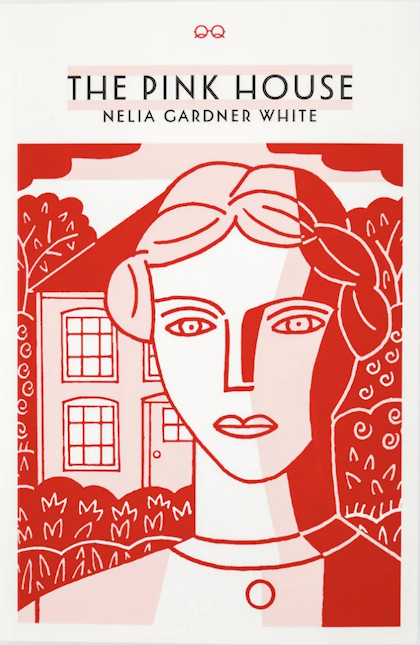
I’ve been remiss about Nelia Gardner White (1894–1957), an extraordinarily prolific writer who has been unfairly forgotten. I’m planning to remedy that, starting with the QLB edition of The Pink House (originally published in 1950). From the publisher:
“When seven-year-old Norah’s life is upended by the death of her mother, she’s sent to the Grange to live with her icy Aunt Rose, absent Uncle John, and four casually cruel cousins. Thank goodness for her (not quite literally) Aunt Poll, who takes Norah under her prickly-but-kind wing—but even with her straightforward guidance, it won’t be easy to fit into this family.
Norah must learn to navigate her new circumstances, relying on her crutches to get about and her powers of observation and intuition to unravel the secrets that torment the inhabitants of the Grange. But are some secrets better left buried? Or will doors open for Norah when family dysfunction sees the light of day?”
- Read an appreciation of The Pink House
- Learn more about the QLB edition of The Pink House
. . . . . . . . . .
Leave a Reply