10 Classic Cuban Women Authors to Discover
By Skyler Gomez | On March 31, 2020 | Updated September 27, 2026 | Comments (2)
With its rich history, Cuban literature is considered among the most influential in the Spanish-speaking world, and women have long been an intrinsic part of its development. Here, we’ll take a look at ten inspirational classic Cuban women authors that deserve to be discovered and read.
Cuban literature started its emergence at the start of the 19th century. Gertrudis Gomez de Avellaneda, the earliest of the writers listed here, focused on abolitionist characters.
After the abolition of slavery in Cuba in 1886, the focus of Cuban literature shifted to themes of independence, freedom, social protest, and personal as well as universal issues.
Poetry was a widely practiced genre for Cuban women writers, and they also produced many short stories, essays, novels, autobiographies, ethnographical studies, and testimonial literature.
. . . . . . . . . .
Gertrudis Gómez de Avellaneda (1814 – 1873)
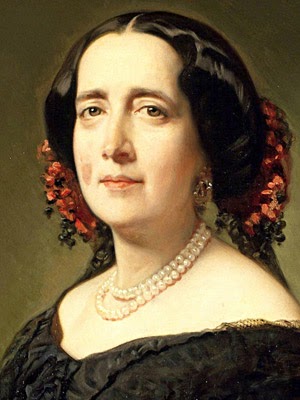
Born in Puerto Principe, Cuba, Gertrudis Gómez de Avellaneda was a Cuban-Spanish playwright and poet considered one of the great romantic writers of the 19th century.
Though she didn’t live in Cuba for much of her life, having spent many years in Spain, she had a major influence on Cuban literature. Avellaneda’s timeless style, romantic vision, and personal suffering combined to create some of the most heart-rending literature in the Spanish language.
Based on historical models, Avellaneda’s plays are distinctive in their poetic diction and lyrical passages. Her first poems, published under her nom de plume La Peregrina, were collected in 1841 and combined into a volume called Poesias Liricas (Lyrical Poems).
Though some of her works are now almost entirely forgotten, including the antislavery Sab (1841), others received major recognition and were met with success. Among those were Alfonso Munio (1844), based on the life of Alfonso X, and Saul (1849).
Years after the publication and success of these works, Avellaneda attempted to enroll in the Royal Academy in 1853. Her friend Juan Nicasio Gallego died, leaving a vacant seat.
Though she was widely admired by its male members, she was rejected by the Academy because she was a woman. Avellaneda briefly returned to Cuba before resettling in Madrid, where she died in 1873.
. . . . . . . . .
Úrsula Cespedes (1832 – 1874)
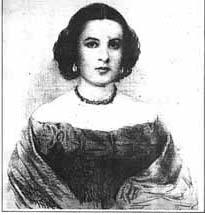
Úrsula Céspedes was born in Hacienda La Soledad, close to Bayamo in the eastern part of Cuba. Céspedes was a poet, and the founder of the Academia Santa Úrsula in Manzanillo, Cuba.
Her education started at home where she learned music and French. Years later, while visiting Villa Clara, a province in Cuba, she met her soon-to-be husband, Gines Escanaverino.
Céspedes became a teacher and founded the Academia Santa Úrsula for women’s schooling with her husband.
Céspedes’ first poems were published in 1855 in Semanario Cubano and El Redactor in Santiago de Cuba. In 1861, she published her first book, Ecos de la Selva, with a prologue by Carlos Manuel de Céspedes.
After the death of her brothers and father, Céspedes moved to Santa Isabel de las Lajas to escape the persecution against her family. She died there on November 2, 1874. In 1948 the Dirección de Cultura of the Ministry of Education published a selection of her works.
. . . . . . . . . .
Aurelia Castillo de González (1842 – 1920)
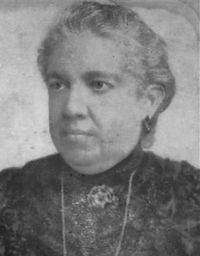
Aurelia Castillo de González was born in Camagüey, Cuba. She received a liberal arts education, which inspired her interest in literature.
She married Spanish soldier Colonel Francisco Gonzalez del Hoyo, whose support of the Republic earned him many enemies in Cuba. As a result, in 1875 the couple left Cuba for Spain. There, Aurelia worked for various magazines to establish her writing career, focusing on anti-slavery issues.
She first attracted attention as a writer with her elegy on “El Lugareno” in 1866. She was also the author of a volume of fables based on the life and works of Gertrudis Gomez de Avellaneda. In addition, she founded the Academia de Artes y Letras (Academy of Arts and Letters).
After much travel, she returned to her hometown of Camagüey where she died in 1920.
. . . . . . . . . .
Lydia Cabrera (1899 – 1991)
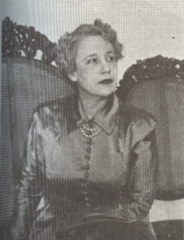
Lydia Cabrera, born in Havana, Cuba, was a writer as well as a literary activist and ethnologist. She is known as a major figure in Cuban letters for her work in Afro-Cuban folklore and fictional works.
In 1927, Cabrera moved to France in hopes of becoming an artist. As a result of her studies in Paris and a friendship with Teresa de la Parra, a Venezuelan author whom she met while studying in Europe, she decided to study Afrocubanismo as an adult. The pair often studied Cuba and read Cuban books together.
In 1938, she returned to Cuba and remained there until 1960. After the Communist takeover by Fidel Castro, she relocated to Miami, Florida, where she lived and continued to work for the remainder of her life. Around the time of her death, she donated her research collection to the University of Miami.
Cabrera published over one hundred books, the most important being El Monte (The Wilderness), the first major ethnographic study of Afro-Cuban traditions, herbalism, and religion.
In addition, she was among the first writers to bring recognition to the rich Afro-Cuban culture and religion, contributing greatly to Cuba’s literature, anthropology, art, ethnomusicology, and ethnology. Cabrera died in Miami, Florida, on September 19, 1991.
. . . . . . . . .
Ofelia Rodríguez Acosta (1902 – 1975)

Ofelia de la Concepción Rodríguez Acosta García was a writer, journalist, activist, and radical feminist born in Pinar del Rio, Cuba. In addition to authoring feminist chronicles, stories, novels, and essays, she’s also considered one of Cuba’s most prominent social reformers.
Writing and study were greatly valued in her childhood, as her father was a writer and intellectual. Rodríguez was a bright student at the Institute of Havana, and as a result of her hard work, she was awarded a grant to study in Europe and Mexico.
Rodríguez was recognized as one of the most prolific writers of the 1920s and 1930s. She played an active role in Cuba’s politics as well. Between 1929 to 1932, she wrote for Bohemia, where she “developed radical psychological challenges to the prescribed behavior of Cuban women.”
Rodríguez, along with Cuban feminist, journalist, and poet Mariblance Sabas Aloma, was among one of Cuba’s most influential feminist writers of the early part of the twentieth century.
Some of Rodríguez’s work was quite controversial. La Vida Manda (1927), which caused public outrage, was perhaps the most controversial of all her works. She was adamant about women’s liberation from the religious, social, and sexual structures of society, and encouraged women to take control of their own liberation.
Rodríguez moved to Mexico in 1939 and likely lived there until her death on June 28, 1975. There has been speculation that she spent her last years in a Mexican lunatic asylum, while others report that she passed away at the Santovenia nursing home in Havana.
. . . . . . . . . .
Dulce Maria Loynaz (1902 – 1997)
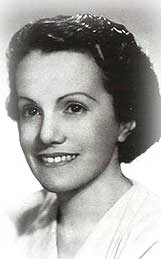
Dulce Maria Loynaz, known as the “grande dame of Cuban letters,” was born in Havana City, Cuba, into an artistic and patriotic family. She was the daughter of General Enrique del Castillo (author of the lyrics of the march theme “El Himno Invasor”) and the sister of poet Enrique Loynaz Muñoz.
Loynaz’s young adulthood was filled with adventure, as she was able to enjoy experiences only accessible to the privileged. She published numerous poems in this phase of her life and graduated with a Doctorate of Civil Law at the University of Havana in 1927. She never formally practiced law.
In 1928, Loynaz began writing the novel Jardin and completed it in 1935. Feminism was flourishing in Cuba, and women’s rights were making waves in politics.
Loynaz was elected as a member of the Arts and Literature National Academy in 1951, the Cuban Academy of Language in 1959, and the Spanish Royal Academy of Language in 1968. She received many prizes and awards from various Cuban cultural institutions. Perhaps the most notable award was the Miguel de Cervantes Prize in 1984, considered the equivalent of the Nobel Prize in Spanish literature.
She voluntarily stopped writing in Cuba in 1959 after the victory of the Revolution. She continued to gain recognition for her works, however, and was awarded the Cuban National Prize for Literature in 1987. Dulce Maria Loynaz died in 1997 and was buried in the Colon Cemetery, Havana.
. . . . . . . . . .
Dora Alonso (1910 – 2001)
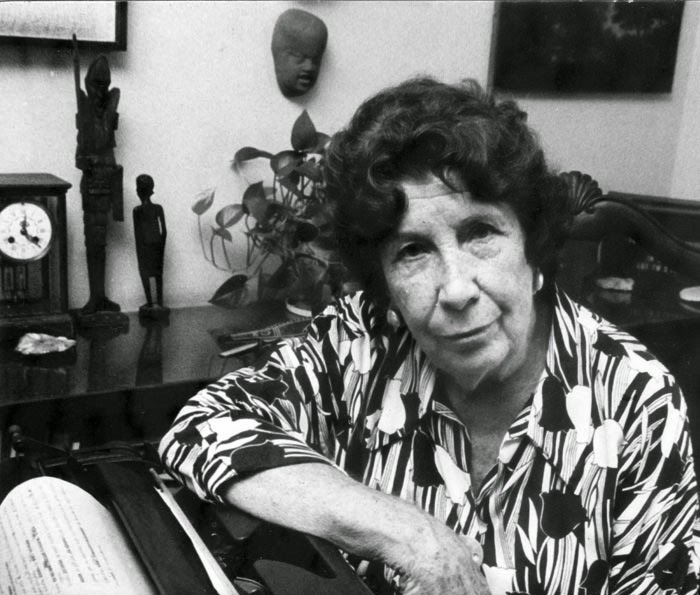
Born in Maximo Gomez, Matanzas, Cuba, Dora Alonso was a journalist and writer who worked in both print and radio. Her works include novels, short stories, poetry, children’s literature, and plays.
After her first poem, Amor, appeared in the El Mundo newspaper, she began taking on diverse writing jobs, including working as a correspondent for the newspaper Prensa Libre (Free Press) and writing radio scripts.
One of her first short stories on social issues was awarded in 1936 by Bohemia, a literary magazine. In 1942, she began writing for a magazine called Lux, which showcased her first interviews with many political and public figures. These included the Chinese ambassador in Cuba and Pablo Neruda, the Chilean poet.
Alonso is the most translated and published Cuban author for children. Two of her novels, Tierra Brava and Soy el Batey have been adapted to film by Instituto Cubano de Radio y Televisión.
Another one of her novels, Tierra Inerme, was given the highest recognition at II Spanish American Literary Contest at Casa de las Americas.
Dora Alonso, one of the most prolific of Cuban writers, passed away at the age of ninety on March 21, 2001.
. . . . . . . . . .
Rafaela Chacón Nardi (1926 – 2001)

Rafaela Chacón Nardi was a Cuban poet and educator born in Havana, Cuba. After studying to become a teacher, she became a professor and taught at Escuela Normal para Maestros, Universidad de La Habana, and Universidad Las Villas.
In 1948 she published Journey to the Dream, her first volume of poetry. The work was reprinted in 1957 and included a letter that Chilean poet Gabriela Mistral wrote in praise of Nardi’s poetry.
In 1971, Nardi founded the Grupo de Expresión Creadora as she had an interest in the design and development of educational activities for disabled children.
She also facilitated children’s workshops in order to teach them about the work of José Martí and directed the Clubes de Promocion a la Lectura (Reading Promotion Clubs) for blind children. As a result of her dedication and hard work, she was awarded the Alejo Carpentier medal. Nardi died on March 11, 2001, in Havana, Cuba.
. . . . . . . . . .
Julieta Campos (1932 – 2007)
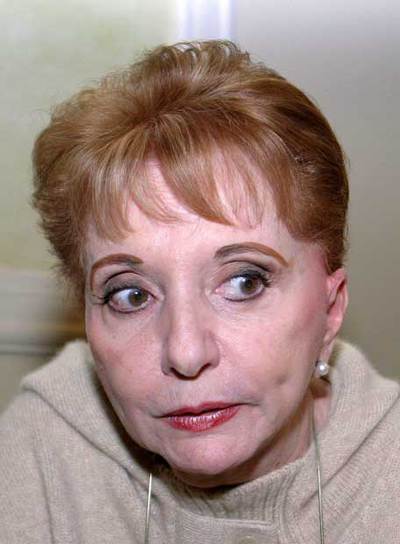
Julieta Campos was a Cuban-Mexican writer born in Havana, Cuba. She was awarded the Premio Xavier Villaurrutia for her novel, Tiene Los Cabellos Rojizos y Se Llama Sabrina (1974). Four years after receiving the award for her outstanding work, she became the director for the Mexican chapter of the writer’s organization, PEN.
In addition to her literary endeavors, Campos served in López Obrador’s cabinet as the local Secretary of Tourism during the administration of Andrés Manuel López Obrador as Head of Government of the Federal District.
Campos died of cancer at the age of 75 in Mexico City on September 5, 2007.
. . . . . . . . . .
Excilia Saldaña (1946 – 1999)

Excilia Saldaña Molina, born in Havana, Cuba, was an Afro-Cuban author of juvenile literature, as well as a poet and academic.
After graduating from the Pedagogical Institute in Havana, she became a high school teacher. She was also one of the cultural figures who established El Caimán Barbudo (The Bearded Cayman) in 1966.
In 1967, she received an honorable mention from the jury of the Casa de las Americas Prize for her first book of poetry, Enlloro’, an unpublished manuscript. After leaving her teaching job in 1971, Saldaña became an editor at Editorial Casa de las Américas.
Saldaña was a professor of children’s literature at the Felize Varela Teaching Institute as well as at other universities. Her writing style incorporated elements of folklore and cultural tradition. It also explored women’s roles. Her work sheds light on issues of abandonment, incest, and sexual violence faced by Caribbean women.
Saldaña was the recipient of numerous awards, including the 1979 National Ismaelillo Prize and the Rosa Blanca Prize (which she won three years in a row) from the National Union of Writers and Artists of Cuba (UNEAC). Years later, UNEAC honored her again with the Nicolás Guilén Award for poetry.
Due to complications related to asthma, Saldaña died on July 20, 1999 in Havana.
More Cuban women authors worth a mention
- Brígida Agüero y Agüero (1837 – 1866)
- Mirta Aguirre (1912 – 1980)
- Juana Borrero (1877 – 1896)
- Domitila García Doménico de Coronado (1847 – 1938)
- Maria Cristina Fragas (1856 – 1936)
- Gilda Antonia Guillen (1959 – 2006)
- Ada Maria Isasi-Diaz (1943 – 2012)
- María Dámasa Jova Baró (1890 – 1940)
More about Cuban women authors
- In Focus: “Cuban Art and Identity 1900-1950”
- Women poets of Cuba: a selection of poems translated by Margaret Randall
. . . . . . . . . .
Skyler Isabella Gomez is a 2019 SUNY New Paltz graduate with a degree in Public Relations and a minor in Black Studies. Her passions include connecting more with her Latin roots by researching and writing about legendary Latina authors.
Very interesting piece which introduced me to many Cuban female writers I did not know (I was familiar only with Gertrudis Gomez de Avellaneda).
I wonder if you have information about a Cuban writer not mentioned in the list. I refer ti Flora Basulto de Montoya, (Maide name Flora Basulto Guevara) who was born in Camaguey in 1889, and passed away while exiled in Miami, FL in 1962. She was an awarded teacher, teacher, a respected columnist In the “El Camagueyano” newspaper and an author of fiction, adventure, historical and local lore books and novels, one of which was adapted by the Castro regime for use in schools throughout the island; said book was later re-issued in Its original version in Miami by exiled relatives.
Among her books:
—Carlos J. Finlay, a biography.
—Aventuras de Raflo and Raul Alrededor del Mundo, a major, fascinating novel in the guise of a surprisingly well informed book on adventure travel with a feminist undertone.
—Cuentos y Legendas Cubanas, a book of Cuban legends and lore.
—Tierra Procer, a well received paen to The history of Camaguey.
—Una Niña Bajo Tres Banderas, a biographil book which depicts the author’s chilhood as Cuba moves from its Independence War from Spain through the US intervention and occupation in 1998, to Its final independence in 1902; this is the book adopted by the Castro regime.
My sister and I read some of these books in our early years, and would love to know more about the author’s work and literary legacy and, if possible, locate copies of her travel themed novel to gift to younger generations.
I would appreciate hearing from you on this subject.
Hello George — thank you for this helpful and fascinating comment. This piece was written by a former intern who had a special interest in Latina writers. Just quickly doing a search, my theory is that Flora Basulto de Montoya may not have been included because there seem to be just about no English language results, and perhaps none of her work has been translated to English, to benefit our mostly English-speaking audience.
That doesn’t mean, however, that she’s not worthy of coverage, so if you’d like to submit an article about her and her literary work, I’d be happy to consider it!