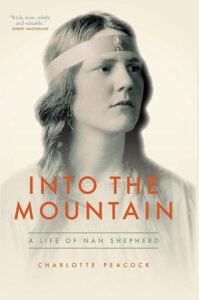
Nan Shepherd (February 11, 1893 – February 27, 1981) was a Scottish modernist poet, writer, and mountaineer.
Best known for The Living Mountain, she published three novels, a collection of poems, several essays, articles, and letters.
Her deep love of the Scottish mountains and her knowledge of them through walking was fundamental to her writing and shaped most of her work. Read More→
Beginning in 1886, Amy Levy wrote several essays on Jewish culture and literature for The Jewish Chronicle. The best known is The Ghetto at Florence, presented here. Others in this series included The Jew in Fiction, Jewish Humour, and Jewish Children.
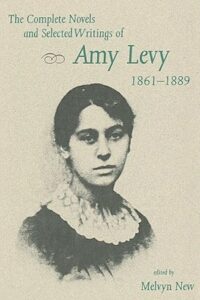
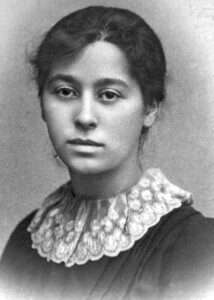
Amy Levy (1861 – 1889) was a 19th-century British novelist, essayist, and poet. She was best known for Reuben Sachs, an 1888 novel that examined Jewish life in Victorian England, a subject that was unusual for its time.
Despite talent and accomplishment, this promising writer died by her own hand when not quite twenty-eight years old following years of struggle with depression. Read More→
Amy Levy (November 10, 1861 – September 9, 1889) was a British essayist, novelist, and poet who, despite the gift of talent and early accomplishments, died by her own hand just shy of twenty-eight.
Her best-known work was Reuben Sachs, the 1889 novel of Jewish life in Victorian England, was quite unusual for its time. It was preceded by the 1888 novel of a business-minded family of sisters, The Romance of a Shop. 1889 also saw the publication of a significant collection of poetry, A London Plane Tree and Other Poems, and an additional novel, Miss Meredith.
Levy was the second Jewish woman at Cambridge University, and as the first Jewish student at Newnham College, Cambridge. She was becoming known for her feminist positions and friendships with others who would become known as “New Women.” Read More→
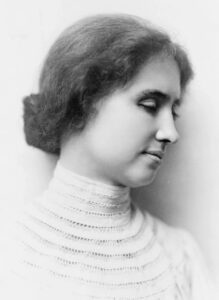
Blind and deaf from an early age, Helen Keller (1880 – 1968) became a prolific American author and disability rights activist. The 1905 essay by Helen Keller presented here, “A Chat About the Hand,” conveys in great detail how she communicated and sensed the world around her. At right, Helen Keller in 1904.
This entry in the 1911 Encyclopedia Britannica illustrates how accomplished she was already (with decades to live yet ahead of her) at the age of thirty-one:
Helen Adams Keller was born in Tuscumbia, Alabama, in 1880. When about nineteen months old she was deprived of sight and hearing by an attack of scarlet fever. At the request of her parents, who were acquainted with the success attained in the case of Laura Bridgman, one of the graduates of the Perkins Institution at Boston, Miss Anne Sullivan was sent to instruct her at home … Read More→
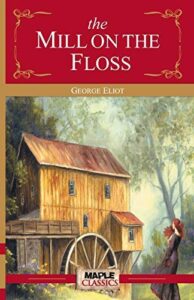
George Eliot (1819 – 1880; pen name of Mary Ann Evans) has been recognized for her probing Victorian novels. Middlemarch is her arguably her greatest achievement, though most all of her novels were met with great critical and public acclaim.
Eliot’s writing was politically and socially driven, with many characters who are small-town individuals, some free thinkers, some eccentrics, others learned intellectuals. She drew her characters with great psychological depth whether they played major or minor parts in her narratives.
George Eliot’s heroines were no exception. From Adam Bede (1859) her first novel, through Daniel Deronda (1876), her last, her female characters were imagined fully formed, with dreams and desires of their own. Read More→
Cold Comfort Farm by British author Stella Gibbons (1902– 1989) is a comic novel that satirized the over-romanticized rural novel of the 19th and early 20th centuries.
It was said to be a send-up of what was called the “loam and lovechild” genre, poking fun at purple prose by deliberately including passages even more purple. The book was an immediate critical and popular success.
In 1933, the novel won the prestigious French literary prize, the Prix Femina, which angered fellow British author Virginia Woolf, who felt that her friend, Elizabeth Bowen, was more deserving of that year’s prize. Read More→
The Moomins (Mumintroll in Swedish) were the most famous creation of Finnish-Swedish author and artist Tove Jannson. Though this beloved creator wrote and illustrated many other works for both children and adults, the names of Tove Jansson and The Moomins will be forever linked.
The family of round, white fairytale creatures — which resemble hippopotamuses — first appeared in 1946, and were the central characters in a total of nine novels, four picture books, and a comic strip that ran for more than twenty years.
Although Tove was a prolific illustrator, painter, and writer for adults, the Moomins are her enduring legacy, beloved across Finland and the world, and still hugely popular today. Read More→
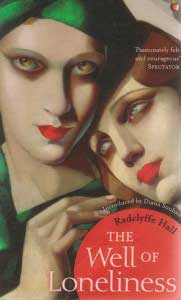
Since its first appearance in 1928, The Well of Loneliness by Radclyffe Hall (1880 – 1943) has spurred much discussion and controversy. This novel about a young woman’s coming to terms with her love for women as well as her gender identity caused a furor when first published in England.
Once denounced as immoral, it has also been praised as a courageous work of literature. It shocked some members “proper” society and served as an awakening to others who felt isolated by repressive social mores.
The Well of Loneliness is a semi-autobiographical story of Radclyffe Hall’s own life. Shockingly candid for its time, this novel was the very first to condemn homophobic society. Read More→