Gertrude Bell, English archeologist, writer & traveler
By Marie Lebert | On June 23, 2025 | Updated September 4, 2026 | Comments (0)
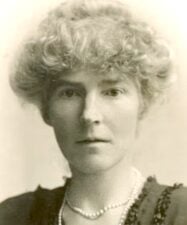
Gertrude Bell (1868 – 1926) was an English archeologist, writer, and translator. She traveled extensively in the Middle East and advocated for Arab nationalism before settling permanently in Baghdad and contributing to the nation building of the Kingdom of Iraq.
She published several books about her travels and her archeological excavations. She corresponded extensively with many friends, colleagues and policy makers during her whole life.
Gertrude was outspoken and independent from an early age. She studied modern history at Oxford University and developed a passion for archeology and languages. The support of her father, English industrialist Hugh Bell, and the family fortune helped her achieve her passion.
She became fluent in Arabic, Persian (Farsi), French, and other languages, which proved essential to interact with the local population during her travels.
She authored the translation of the poetry collection The Divān of Hafez, published in London in 1897. Hafez, a 14th-century Persian lyric poet, wrote his poems in Persian (Farsi) and Arabic.
. . . . . . . . . .
. . . . . . . . . .
Exploring and mapping the Middle East
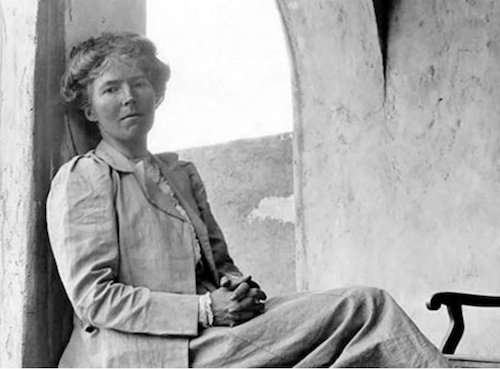
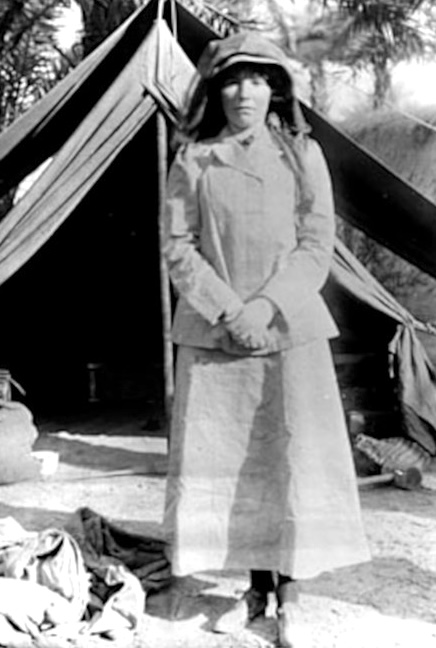
Gertrude spent many years exploring and mapping the Middle East, and participating in several archeological excavations. As she was fluent in Arabic and Persian (Farsi), she established close relations with local inhabitants, local tribes and local policy makers.
She advocated for the creation of independent Arab states and advised the British government against fighting with nationalists. She authored intelligence reports and white papers and, as such, was labelled the first female diplomat in the region.
After settling permanently in Baghdad in 1919, Gertrude became a key player in the nation building of the Kingdom of Iraq. Because of her background as an archeologist, she was appointed the director of the new Department of Antiquities in order to organise and regulate archeological excavations and to prevent the looting of antiquities.
She participated in the creation of the Baghdad Archeological Museum (later renamed Iraq Museum and also known as National Museum of Iraq) and the Baghdad Public Library (later renamed National Library of Iraq), and supported the education of Iraqi women.
Gertrude Bell’s writings
She wrote several books, including:
- Persian Pictures (1894), about her first travels to Persia
- Syria: The Desert and The Sown (1907) about her trip to Damascus, Jerusalem, Beirut, Antioch and other places
- A Thousand and One Churches (with English archeologist William Mitchell Ramsay, 1907) about their excavations in Anatolia
- Amurath to Amurath (1911) about her archeological work in Mesopotamia
- The Palace and Mosque of Ukhaidir: A Study in early Mohammadan Architecture (1914) about the ruins of Ukhaidir in Mesopotamia
. . . . . . . . . .
. . . . . . . . . .
The Legacy of Gertrude Bell
Gertrude corresponded extensively with many friends, colleagues and policy makers during her whole life, including with fellow British archeologist and diplomat Thomas Edward Lawrence (better known as T. E. Lawrence, and popularly as “Lawrence of Arabia”), a lifelong colleague and friend, and with her stepmother Florence Bell, a writer and playwright who had married her father in 1876 after the death of Gertrude’s mother (who was his first wife).
According to the obituary penned by her colleague David George Hogarth in 1926:
“No woman in recent time has combined her qualities – her taste for arduous and dangerous adventure with her scientific interest and knowledge, her competence in archeology and art, her distinguished literary gift, her sympathy for all sorts and condition of men, her political insight and appreciation of human values, her masculine vigour, hard common sense and practical efficiency – all tempered by feminine charm and a most romantic spirit.”
One year after her death, a selection of her extensive correspondence (out of 2,400 pages of letters) was edited by her stepmother Florence Bell and published in two volumes as The Letters of Gertrude Bell (1927).
Further reading (& viewing) about Gertrude Bell
- The Incredible Life and Adventures of Gertrude Bell (documentary)
- The Death of Gertrude Bell
- Gertrude Bell (Historic UK)
- The Incredible Gertrude Bell
. . . . . . . . . . . .
Contributed by Marie Lebert. Reprinted by permission. Marie is a bilingual French-English translator. She has worked as a translator and/or librarian for international organizations and has written ebooks, articles and essays about translation and translators, ebooks, libraries and librarians, and medieval art. She holds a doctorate of linguistics (digital publishing) from the Sorbonne University, Paris, and a master of social science (society and culture) from the University of Caen, Normandy. See more entries by Marie Lebert, most profiling women translators, on Literary Ladies Guide. Find more about women translators of the past at Marie Lebert.
Leave a Reply