Eliza Ashurst Bardonneau & Matilda Mary Hays, Translators of George Sand
By Marie Lebert | On June 26, 2025 | Updated September 4, 2026 | Comments (0)
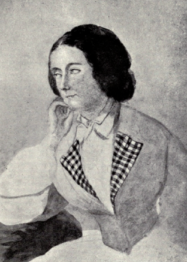
Eliza Ashurst Bardonneau (1813–1850), born Elizabeth Ann Ashurst, belonged to a family of English radical activists. She teamed up with her friend Matilda Mary Hays (1820–1897), an English journalist writing about women’s rights, to offer the first translations into English of some works by French novelist George Sand.
They both liked the subversive tone of Sand’s novels and the political and social issues tackled in her works.
Eliza Ashurst belonged to a family of English radical activists who supported causes such as abolitionism, women’s suffrage and Italian unification (Risorgimento).
She attended the World Anti-Slavery Convention in London in 1840 with her father William Henry Ashurst, who was a delegate, and her sister Matilda Ashurst (later known as Matilda Ashurst Biggs).
Eliza and Matilda were not permitted to speak at the conference because women couldn’t serve as delegates. The exclusion of women was one of the many incentives which triggered the women’s suffrage movement. Eliza and her three sisters (Caroline, Matilda and Emilie) signed the 1866 Petition of Women’s Suffrage presented to the English Parliament.
Eliza met the Italian politician Giuseppe Mazzini, who was leading the fight for Risorgimento, in 1844 and corresponded extensively with him until her death in 1850. Mazzini corresponded with Eliza’s sisters Caroline Ashurst (later known as Caroline Ashurst Stansfeld) and Emilie Ashurst (later known as Emilie Ashurst Venturi) as well.
Emilie Ashurst became the primary translator of Mazzini’s works into English. The three volumes of “Mazzini’s Letters to an English Family, 1844-1854” were published in New York by John Lane in 1920–23. The 1,500 selected letters were first compiled by Emilie (until her death in 1893) before being compiled by her friend Elinor Francis Richards.
. . . . . . . . . .
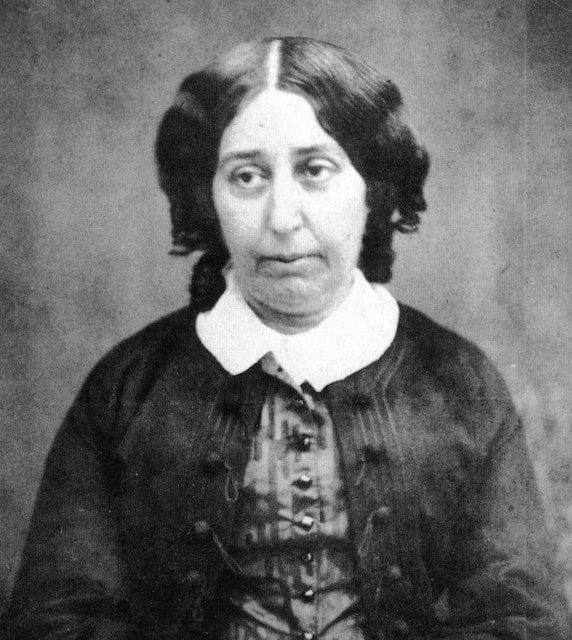
George Sand
. . . . . . . . . .
Widening George Sand’s reach, and other endeavors
Eliza Ashurst and her friend Matilda Hays both read some French novels by George Sand. They loved her free-love and independent lifestyle, highly unusual at the time, as well as the subversive tone of her novels and the political and social issues she described.
George Sand had a turbulent love life, advocated for women’s rights, criticized the institution of marriage, and regularly fought against the prejudices of a conservative society.
Encouraged by Giuseppe Mazzini, who was corresponding with George Sand, Eliza Ashurst and Matilda Hays decided to give a larger audience to George Sand through translation. At Mazzini’s request, George Sand invited Eliza to her home in Nohant, a village in central France, for them to meet in person.
Matilda Hays had already translated The Last Aldini (original title, La Dernière Aldini). Eliza and Matilda teamed up to translate Spiridion (Spiridion), Letters of a Traveller (Lettres d’un Voyageur), The Mosaic Workers (Les Maîtres Mosaïstes), and André.
It seems that Eliza mainly translated the works while Matilda mainly edited the translations of her friend. Most English editions were published in 1847, except for Spiridion, published earlier, in 1842. Manzini wrote a preface for the English edition of Letters of a Traveller.
. . . . . . . . .
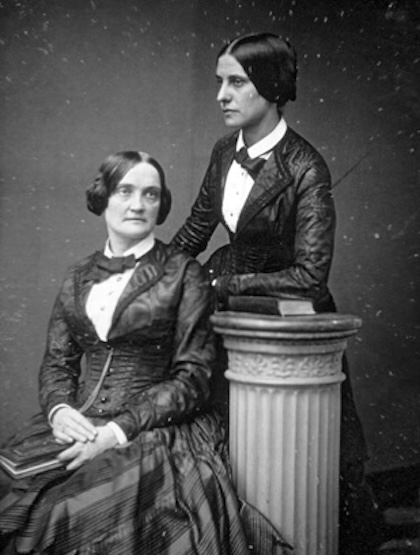
Matilda Hays (right) and Charlotte Cushman were
in a long-term openly lesbian relationship
. . . . . . . . . .
Matilda Hays’ Work after Eliza Ashurt’s Death
Eliza Ashurst met Jean Bardonneau Narcy, a French national guardsman, in Paris in 1848 and married him in 1849 despite her family’s reluctance. She first miscarried and then died in childbirth in 1850. Matilda Hays translated Fadette (La Petite Fadette) alone after Eliza’s death. The English edition was published in 1851.
Matilda Hays later co-founded (with English feminists Barbara Bodichon and Bessie Rayner Parkes) the monthly English Woman’s Journal in 1858 to cover women’s employment and equality issues. She became the co-editor of the journal (with Bessie Rayner Parkes) during its six years of existence, until 1864. Their office was also used as a women’s club with a reading room, drinks and meals.
The journal was printed by the Victoria Press, established to this intent by the women’s rights activist Emily Faithfull along with other feminist activists (including Matilda Hays). Their goal was to employ women as compositors despite the hostility of the male-dominated London Society of Compositors.
Matilda wrote two novels, Helen Stanley (1866) and Adrienne Hope (1868). In her first novel, she stated that women couldn’t secure their financial and social futures until they “teach their daughters to respect themselves … to work for their daily bread, rather than prostitute their persons and hearts” by getting married.
She also became a part-time actress. Her love interests included the American stage actress Charlotte Cushman, with whom she had a ten-year relationship, and the English poet Adelaide Anne Procter.
. . . . . . . . . . . .
Contributed by Marie Lebert. Reprinted by permission. Marie is a bilingual French-English translator. She has worked as a translator and/or librarian for international organizations and has written ebooks, articles and essays about translation and translators, ebooks, libraries and librarians, and medieval art. She holds a doctorate of linguistics (digital publishing) from the Sorbonne University, Paris, and a master of social science (society and culture) from the University of Caen, Normandy. See more entries by Marie Lebert, most profiling women translators, on Literary Ladies Guide. Find more about women translators of the past at Marie Lebert.
Leave a Reply