By Francis Booth | On July 17, 2024 | Updated April 1, 2025 | Comments (0)
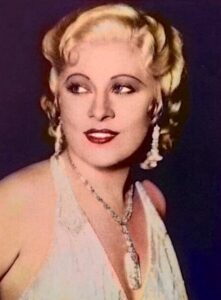
The notorious stage and screen actress and playwright Mae West (1893–1980) of “come up and see me some time” fame, was surprisingly literary minded. West was famous as an actress, but it’s far less known that she wrote all her own stage and screen roles, creating the wickedly witty vamp character she became identified with.
Despite her bad girl reputation, despite having been sentenced to ten days in prison for obscenity in her 1926 play Sex, and despite the equally provocative title of her 1927 play The Drag: A Homosexual Play in Three Acts, Mae West wasn’t as much a modern woman as she seemed. Of her 1928 play Diamond Lil West said: Read More→
By Tyler Scott | On July 11, 2024 | Updated July 17, 2024 | Comments (0)
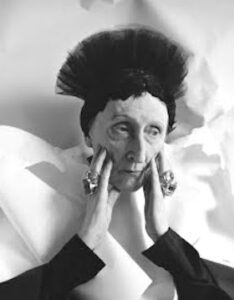
Dame Edith Sitwell (September 7, 1887 – December 9, 1964) was a British poet considered one of the first of the avant-garde movement. She had an enormous influence on literature and was also known for her eccentric demeanor, bon mots, and rather pronounced, if sarcastic, opinions.
As Elizabeth Bowen once said, she was “a high altar on the move.” Photo at right by Cecil Beaton.
Read More→
By Marie Lebert | On June 20, 2024 | Updated September 4, 2026 | Comments (0)
Presented here are ten trailblazing women translators whose work proved groundbreaking, from the 16th to 20th centuries.
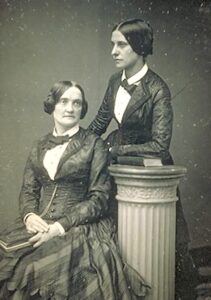
After being entirely forgotten or reduced to half a line in their husbands’ entries in many encyclopedias, women translators are now starting to be recognized in their own right. Shown at right, translator Matilda Mary Hays (standing) and a love interest, actress Charlotte Cushman, 1858.
Read More→
By Taylor Jasmine | On June 10, 2024 | Updated November 10, 2025 | Comments (0)
It may be surprising to learn that a small but determined coterie of women published newspapers in the American colonies, before the states declared independence from Britain.
By the start of the American Revolution (1765), there were more than a dozen women printer-publishers operating on their own in the colonies. Most of them, called “widow-printers,” inherited their presses and newspapers after their husbands’ deaths.
Even so, it was rare for any woman to run a newspaper on her own. Not until much later could American women own property. They were property, though not to the extreme degree as their slaves and servants. Read More→
By Elodie Barnes | On June 9, 2024 | Updated March 15, 2025 | Comments (0)
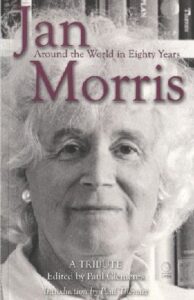
Jan Morris (October 2, 1926 – November 2, 2020) was a Welsh author and historian, whose work spanned the genres of journalism, memoir, history, essays, articles, and novels.
As a writer, she is best known for her Pax Britannia trilogy (a social history of the British Empire) and her written portraits of cities including Trieste, Venice, Oxford, Hong Kong, and New York City.
She is also famous for her transition from male to female in 1972, making her one of the first transgender public figures. Read More→
By Alex J. Coyne | On June 3, 2024 | Updated June 1, 2025 | Comments (0)
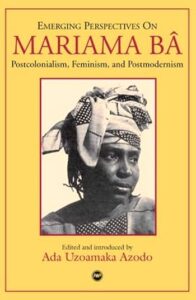
Mariama Bâ (April 17, 1929 – August 17, 1981) was a Senegalese novelist, poet, teacher, and feminist. Her best-known works, So Long a Letter and Scarlet Song, both written from a woman’s perspective, explored themes of multiculturalism, polygamy, oppression, interpersonal relationships, and grief.
These two novels are among the most widely translated and studied African works of the twentieth century, according to Cambridge University Press. Read More→
By Nava Atlas | On June 2, 2024 | Updated July 24, 2026 | Comments (0)
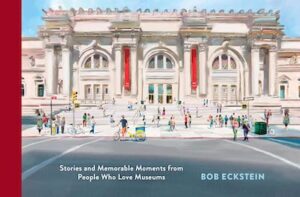
Bob Eckstein’s 2024 book, Footnotes from the Most Fascinating Museums: Stories and Memorable Moments from People Who Love Museums (Princeton Architectural Press) is a fantastic addition to the body of work by this talented writer, illustrator, and cartoonist.
A love letter to museums mainly around the U.S., it’s an eclectic collection that features Bob’s distinctive artwork. It was interesting to discover that several important museums were founded by women, and that’s what we’ll focus on here.
You’ll find plenty of art museums, of course, but other types of museums are well represented as well. Science, culture, transportation, history, and historic homes are represented. The entries offer basic info, but what really makes them shine are the personal stories from visitors to each venue. Read More→
By Taylor Jasmine | On May 27, 2024 | Updated October 10, 2024 | Comments (0)
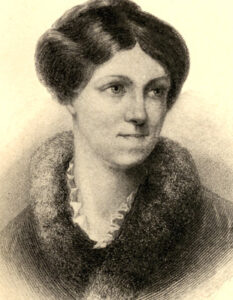
Harriet Martineau (June 12, 1802 – June 27, 1876) was an English social theorist, lecturer, and novelist. She was also an ardent supporter of women’s suffrage and other causes of her day.
Her writings, which earned enough to support herself (quite rare for a woman of her time) were proto-feminist and discusses aspects of culture pertaining to religion, politics, economics, and social institutions.
Harriet lost her senses of taste and smell from an early age and was partially deaf. Other health issues hindered her, yet she persevered in bringing her theories to a receptive audience. Read More→