Quick Writing Tips from Katherine Anne Porter
By Nava Atlas | On February 9, 2015 | Updated September 16, 2026 | Comments (0)
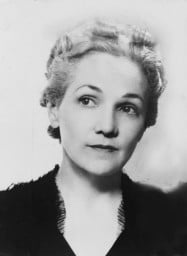
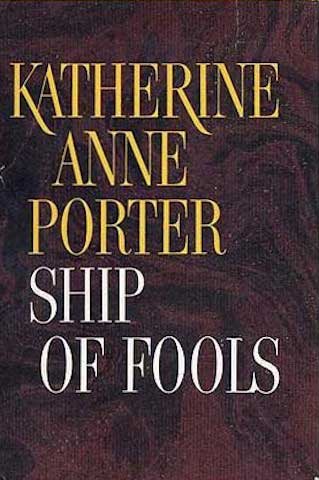
Here are some helpful writing tips from Katherine Anne Porter (1890 – 1980), novelist and short story writer best known for Ship of Fools and Pale Horse, Pale Rider. Hers was a true American rags to riches story.
Porter often took many years after events to write about and analyze them fully, using her own life as a basis for her work. Her writing was a way to face questions that were left unanswered in her own life, giving her work a passionate, realistic, and sometimes harsh voice.
She lived on her own terms, and rose to fame by using her steely determination, energy, and above all, her writing talent. She was a friend and correspondent of many literary figures of her time.In 1966 Porter won a Pulitzer Prize, the Gold Medal for Fiction and the National Book Award for The Collected Stories, published in 1965.
Porter often spoke of writing as a craft and used her own struggles as a point of departure to smooth the rough road for others who hoped to see their work in print. Here’s a sampling of writing tips from an American master.
Writing as a craft
“Most people won’t realize that writing is a craft. You have to take your apprenticeship in it like anything else. You have to learn your trade.” (Interview with Roy Newquist, Conversations, 1965/1967)
. . . . . . . . . .
Don’t show your work before you’re ready
“If you go about showing what you do and asking advice and perhaps taking it, then the work isn’t yours any more, isn’t entirely your own. Work in progress should be kept private; exposure destroys the delicacy of the idea before it has time to take firm root.” (Interview with Roy Newquist, Conversations, 1965/1967)
. . . . . . . . . .
Write for the sake of writing
“There is so much in one’s mind that doesn’t work itself into fiction, and I love to write for the sake of writing and saying what is in my mind at the time … We are happier and do better work if we let our minds range freely through all our interests, not trying to sustain one tone, or level, or mood; and everything we do helps everything else.” (The Paris Review, “The Art of Fiction No. 29,” Winter-Spring 1963)
. . . . . . . . . .
Staying “limbered up”
“By writing, we keep limbered up, like an athlete. Thoughts just running around in the head are not much good to anybody, least of all the writer, unless she can snare them and put them into words.” (The Paris Review, “The Art of Fiction No. 29,” Winter-Spring 1963)
. . . . . . . . . .

. . . . . . . . . .
Belonging to a tradition
“Any writer worth talking about, no matter how original he or she seems, can be placed within a tradition; there was somebody before who prepared the way … The tradition you belong to is something you can’t select for yourself: your own temperament will simply lead you to a certain path. You don’t choose your ancestors, you are born to them.” (The Paris Review, “The Art of Fiction No. 29,” Winter-Spring 1963)
. . . . . . . . . .
Write the ending first
“If I didn’t know the ending of a story, I wouldn’t begin. I always write my last lines, my last paragraph first, and then I go back and work towards it. I know where I’m going. I know what my goal is. And how I get there is God’s grace. If I didn’t know how it was going to end, I wouldn’t know where to begin.” “The Art of Fiction No. 29,” Winter-Spring 1963)
. . . . . . . . . .
. . . . . . . . . .
Leave a Reply