The 1994 Film Adaptation of Little Women, Louisa May Alcott’s Timeless Classic
By Skyler Gomez | On April 8, 2019 | Updated December 17, 2025 | Comments (0)
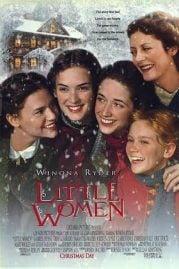
Little Women, the beloved 1868 novel by Louisa May Alcott (1832 – 1888), follows the lives of the four March sisters — Meg, Jo, Beth, and Amy. The 1994 film adaptation of Little Women centered on strong-willed, tomboyish Jo, who was as much of a standout character as in the novel.
With a screenplay by Robin Swicord, and directed by Gillian Armstrong (also the director of the wonderful 1979 film version of My Brilliant Career), this was the fifth feature film adaptation of Alcott’s classic Little Women.
It followed silent versions released in 1917 and 1918; director George Cukor’s 1933 film; and a 1949 adaptation by Mervyn LeRoy. The film was released nationwide on Christmas Day of 1994 by Columbia Pictures. It would be twenty-five years before another adaptation would appear in 2019, written and directed by Greta Gerwig.
The Gerwig adaptation, released in December, 2019, featured Saoirse Ronan as Jo; Emma Watson as Meg; Laura Dern as Marmee; Meryl Streep as Aunt March; and Timothée Chalamet as Laurie. While the film received accolades from critics as well as audiences, it doesn’t seem to have dethroned the 1994 film from its iconic stature. In fact, we’d argue that it can’t hold a candle to the 1994 adaptation that’s the subject of this post.
“Some books are so familiar, reading them is like being home again.” Though this is Jo March talking about Shakespeare, Little Women is a nostalgia-laced classic about which one might say the same.
. . . . . . . . . .
How Louisa May Alcott Came to Write Little Women
. . . . . . . . . .
The perfect cast for the job
The story follows the March sisters, as they grow up in Concord, Massachusetts during and after the American Civil War. While their father is away fighting in the war, the girls struggle with problems large and small under the watch of their firm yet loving mother, Marmee. As the film progresses, the audience gets to know their personalities and how they relate to one another.
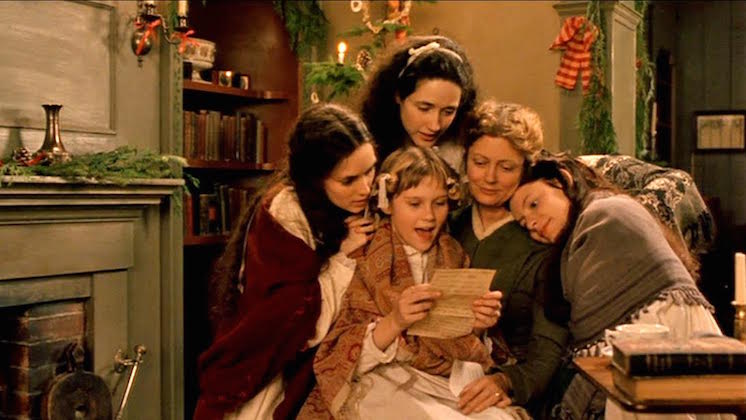
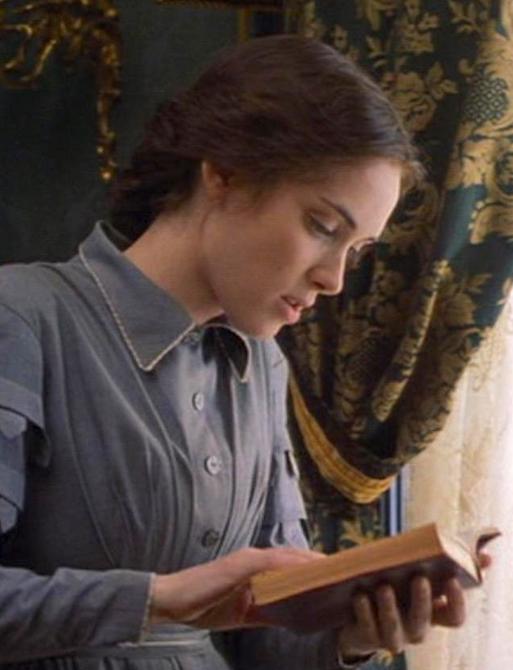
Winona Ryder captures the tomboyish Jo exceptionally well, as she performs with spark and confidence. She is the self-proclaimed “man of the family” with a perfect blend of sensitivity and bravado. Jo loves to create stories for her sisters to perform in their attic theater to escape their humdrum reality.
The perfect contrast to Jo is scene-steaming Amy, played by Kirsten Dunst. Her character is vain and mischievous, fitting for an 11-year-old as opposed to the grown-up Joan Bennett from the 1933 movie adaptation, or even the cool and sophisticated Florence Pugh of the 2019 iteration.
Meg’s ladylike composure is captured exceptionally well by Trini Alvarado. Her role as the oldest and most marriageable of the sisters was not only perfect for the 1994 film, but a wonderful showcase for her versatility as an actress.
Beth, played by Claire Danes, instantly gains the sympathy of the audience as the sickly sister. Throughout the film, Beth is a selfless character, and her somber death reduced viewers to tears.
. . . . . . . . . .
. . . . . . . . . .
The critics are won over
In the December 1994 review “The Gold Standard Girlhood Across America,” Janet Maslin wrote in the New York Times:
“Armstrong’s film is enchantingly pretty and so potent that from the start of the opening frame, it prompts a rush of recognition. She clearly demonstrates that she mastered the essence of the book’s sweetness and chose young vibrant actresses who were absolutely right for their famous roles. The effect of the film on its viewers is magical and for all its unimaginable innocence, the film has a touching naturalness this time.”
Maslin was pleasantly surprised as she said that the film is “sentimental without being saccharine.” She claims that the filmmaker is “too savvy to tell this story in a cultural and historical vacuum.”
Edward Guthmann of the San Francisco Chronicle claimed that the film was “meticulously crafted and warmly acted.” He observed it as a rare Hollywood studio film that captivated the interest of the audience with effects and easy manipulation.
Robert Ebert of the Chicago Sun-Times awarded the film 3 ½ stars, calling it “a surprisingly sharp and intelligent telling of Alcott’s famous story.” He wrote in his 1994 review:
“Little Women grew on me. At first, I was grumpy, thinking it was going to be too sweet and devout. Gradually, I saw that Gillian Armstrong […] was taking it seriously. And then I began to appreciate the ensemble acting, with the five actresses creating the warmth and familiarity of a real family.”
. . . . . . . . . .
Louisa May Alcott on Bookshop.org*
. . . . . . . . . . .
Awards and Nominations
The film was nominated for three Academy Awards, including Best Actress for Winona Ryder, Best Costume Design for Colleen Atwood (also nominated for the BAFTA Award in the same category), and Best Original Score for composer Thomas Newman, who also won the BMI Film Music Award.
Winona Ryder was given the title of Best Actress by the Kansas City Film Critics Circle Awards. Kirsten Dunst was honored for her performance in both Little Women and Interview With the Vampire by the Boston Film Society of Film Critics. Additionally, she was also given the Young Artist Award.
Screenwriter Robin Swicord was nominated for the Writers Guild of America Award for Best Adapted Screenplay. She didn’t win the award, but was in good company, losing to Eric Roth for Forrest Gump.
Among critics, Little Women received an impressive 91% score on Rotten Tomatoes. One critic wrote: “Thanks to a powerhouse lineup of talented actresses, Gillian Armstrong’s take on Louisa May Alcott’s Little Women proves that a timeless story can succeed no matter how many times it’s told.”
. . . . . . . . . .
You might also like:
10 Writers Who Were Inspired by Jo March of Little Women
. . . . . . . . . .
Contributed by Skyler Isabella Gomez, a 2019 SUNY New Paltz graduate with a degree in Public Relations and a minor in Black Studies. Her passions include connecting more with her Latin roots by researching and writing about legendary Latina authors.
*This is a Bookshop.org affiliate link. If a product is purchased after linking through, Literary Ladies Guide receives a modest commission, which helps us to continue to grow.
Leave a Reply