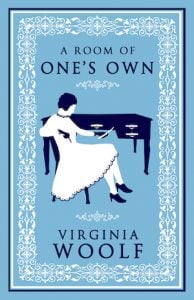
Literary gift boxes are a fun and thoughtful way to celebrate great books and authors. These boxes are perfect for book lovers who enjoy reading and want something special. These are great for birthdays, holidays, or book clubs.
You can fill these boxes with items inspired by famous women writers. With the right packaging, items, and design, you can create a gift box that reflects the writer’s theme.
Let’s explore some unique ideas to create a gift box that every book lover will appreciate and cherish. Read More→
There’s a lot of hoopla around 2025 being the centenary of The Great Gatsby by F. Scott Fitzgerald, published in 1925. It’s the quintessential novel of what’s come to be known as the Jazz Age.
But it’s not the only centenary worth celebrating in 2025. There was some great 1925 fiction that came from the pens (and typewriters of women writers, including Virginia Woolf, Zora Neale Hurston, Willa Cather, Anita Loos, Anzia Yezierska, and more.
Poor Scott Fitzgerald didn’t live long enough to see the lasting legacy of his work (he was gone by 1940, at the age of 44). There’s a LOT (this is the listing on Google News alone) of news and editorializing about Gatsby. It’s kind of cool that a book is getting so much attention in the midst of all the horrors we’re living through — kind of a testament to the power of literature. Read More→
When Edna St. Vincent Millay lost a national poetry contest in 1912, it created quite a scandal in the world of American poetry! Yet that loss, and the controversy, went a long way to launching her storied career.
Vincent (as she was called by those closest to her) was just nineteen when she began to compose “Renascence” toward the end of 1911. Written at a time of uncertainty about her future, it was a poem about herself, yet it dealt with the common human struggle to find hope in the face of hopelessness.
She had been an outstanding student in her tiny Maine high school, and a star contributor to the popular children’s publication St. Nicholas Magazine. Once she had passed the age limit (eighteen) for submissions, she was left without an outlet for her poetry. Read More→
Elaine Lobl Konigsburg, known as E.L. Konigsburg (February 10, 1930–April 19, 2013) was a prolific American writer and illustrator of books for children and middle grade readers.
In 1967, she published her first children’s book, Jennifer, Hecate, Macbeth, William McKinley, and Me, Elizabeth. That same year, her second book, The Mixed-Up Files of Mrs. Basil E. Frankweiler, was also published. (Photo above right by Ron Kunzman)
E.L. Konigsburg’s first book won the 1968 Newbery Honor, and her second won the 1968 Newbery Medal. Though not written at the same time, both were published the same year due to an interesting turn of events. Read More→
Saving Vincent: A Novel of Jo van Gogh (She Writes Press, April 15, 2025) by Joan Fernandez is based on the true story of the fascinating woman who singlehandedly rescued Vincent van Gogh’s artistic legacy (Photo at right, Jo in 1889; photo courtesy of Wikimedia Commons). Here, Joan introduces her novel:
In 1891, timid Jo van Gogh-Bonger lived safely in the background of her art dealer husband Theo’s passionate for selling work by unknown artists, especially his ill-fated, deceased brother Vincent.
When Theo van Gogh died unexpectedly, Jo’s brief happiness was shattered. Her inheritance—hundreds of unsold paintings by Vincent—was worthless. Pressured to move back to her parents’ home, Jo defied tradition, opened a boarding house to raise her infant son alone, and chose to promote Vincent’s art herself. Read More→
Silvina Ocampo (July 28, 1903 – December 14, 1993) spent most of her life in Buenos Aires, the cosmopolitan capital of Argentina. Born into wealth and privilege, she developed a unique body of work inspired by the avant-garde art and literary movements of her time, including Surrealism and Magical Realism.
Too often, Silvina Ocampo has been mentioned only in relation to her sister, Victoria Ocampo—an intellectual, activist, and publisher; and her husband, Adolfo Bioy Casares, a successful writer and frequent collaborator with Jorge Luis Borges (the pioneering short story writer and translator who brought Spanish-language literature to global prominence).
Ocampo’s work is has been been translated into English more frequently of late. Her short stories reveal astonishing originality, gifts for humor and vivid descriptions, and subtle commentary on social issues of her time. Read More→
Marie Colvin (January 12, 1956 – February 22, 2012) was an American journalist known for her intimate, storytelling reporting style covering conflicts worldwide.
She was best known for her coverage of the Middle East (as well as for her trademark black eyepatch, worn after losing her left eye in Sri Lanka). She died while covering the conflict in Syria in 2012, and the Syrian government has since been held responsible for her death. Read More→
Some years before her death, renowned poet, professor, and activist Nikki Giovanni wrote, “I hope I die warmed by the life I tried to live.”
Giovanni’s hope and vision have been realized. When she passed away on December 9, 2024, she was surrounded by the boundless love of her wife, Virginia Fowler, her son Thomas, and her granddaughter Kai.
Nikki Giovanni was eighty-one years old when she died of complications from cancer, her third diagnosis of the disease. Despite this tremendous physical challenge, Ms. Giovanni continued to write, speak, teach, and publish throughout the last decade of her life. Read More→