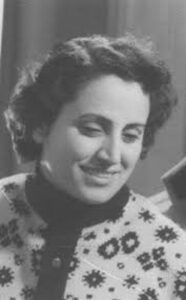
Samira Azzam (September 13, 1927 – August 8, 1967) was a journalist and broadcaster who left her mark on Palestinian literature. Her numerous short stories reflected the Palestinian experience of the 1950s and 1960s.
She was born in Acre (in what was then the Palestinian Mandate and today is Israel). Acre is located on the Mediterranean coast, often known locally as Akko.
Had she lived today, she might have been a social media influencer, as she started writing reviews and essays for the newspaper Filistin, signing them “A Girl from the Coast” while still a teen. Azzam was apparently a dedicated student: she became a teacher at the age of sixteen. Read More→
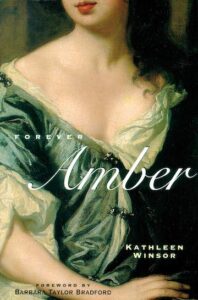
Forever Amber by Kathleen Winsor (1944) tells the sprawling story of Amber St. Clair, a cunning beauty who ascends the class structure of Restoration-era England.
Sixteen-year-old Amber escapes her humble rural roots after an encounter with a troupe of traveling soldiers. This becomes her ticket out of the countryside – and her journey of social advancement begins.
Amber’s fictional narrative is interwoven with true historic facts of the English Restoration; she is born of circumstances resulting from the English Civil War, becomes a survivor of the plague, and witnesses the Great Fire of London.
Amber meets a vast array of characters from all the English classes, her adopted farmer parents, the mischievous highwayman Black Jack Mallard, her true love royalist Lord Bruce Carlton, and King Charles II. These encounters amount to a sweeping portrait of the English Restoration. Read More→
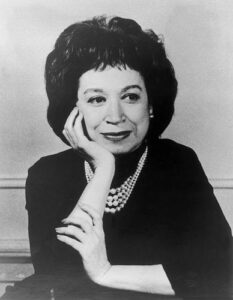
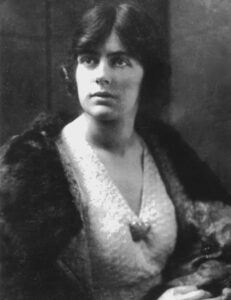
Playwright and novelist Alice Childress (October 12, 1916 – August 14, 1994) was a prolific and influential contributor to American theater and letters throughout the second half of the twentieth century. Her first full-length play, Trouble in Mind, premiered in 1955 and won an Obie.
Childress said, “I never was ever interested in being the first woman to do anything. I always felt that I should be the 50th or the 100th. Women were kept out of everything.”
Read More→
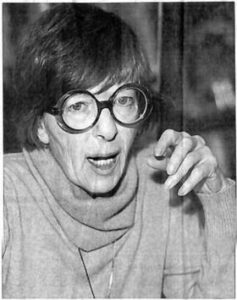
Joan Lindsay (November 16, 1896 – December 23, 1984) was an Australian author, essayist, and visual artist, best known for her mystic novel Picnic at Hanging Rock.
She began her literary career at forty years old when Through Darkest Pondelayo (1936) was published. Picnic at Hanging Rock (1966) was published when she was seventy-one. Read More→
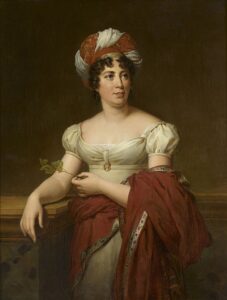
Madame de Staël (April 22, 1766 – July 14, 1817) was a French intellectual, writer, and political theorist. She was a staunch supporter of freedom of speech, democracy, women’s rights as well as a political enemy of Napoleon Bonaparte.
Looking at Germaine’s portrait, with her grandiose turban, silk gown, and shawl draped over her arms, the last thing she brings to mind is an 18th-century French revolutionary, but that is precisely what she was.
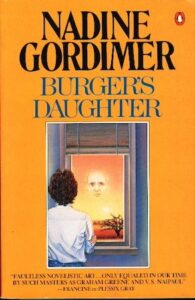
The author Francine du Plessix Gray called Germaine “the first modern woman.” Read More→
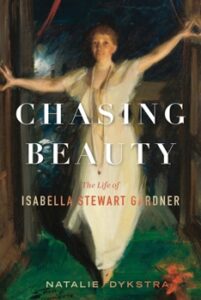
Chasing Beauty: The Life of Isabella Stewart Gardner (Mariner Books, March 2024), award–winning author Natalie Dystra delivers the definitive biographical portrait of the ambitious and innovative—and until now misunderstood—woman behind one of America’s most important art collections.
With access to all archival holdings at the Isabella Stewart Garner Museum—including thousands of digitized and newly accessible letters and other unpublished records—as well as original sources in Paris, Venice, and more. Dykstra brings Isabella to life as never before. Read More→