Self-Acceptance: A Hard-Fought Battle for Writers
By Nava Atlas | On January 23, 2017 | Updated November 20, 2025 | Comments (2)
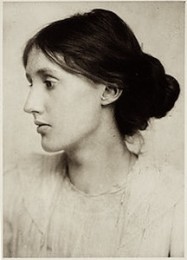
For writers and other creatives, it’s a tough task to gain the kind of self-acceptance that allows them to feel deserving of using their talent and reap the rewards of hard work and perseverance.
I used to have a cartoon tacked on my bulletin board, showing two caterpillars creeping along on the ground and a butterfly hovering above them. One caterpillar eyes the butterfly suspiciously, and says, “You’ll never catch me going up in one of those things!”
Maybe it isn’t what the cartoonist intended, but I see it as a metaphor for the sad state of self-regard. It’s so hard to feel worthy, both before and after achieving any kind of success.
I no longer have the cartoon (nor the bulletin board!) and I can’t find it online, but you get the idea. Okay, it’s a little corny, but I think we’re all destined to become glorious butterflies, yet we persist in perceiving ourselves as caterpillars, opting for crawling the safer but unexciting ground, instead of allowing our true selves to take flight.

Vector illustration: K3Star/Bigstock
Think of favorite classic authors such as Virginia Woolf, Edith Wharton, and Louisa May Alcott, with their distinct styles and personas. It’s hard to imagine that they didn’t possess the kind of self-acceptance that would allow them to write brilliantly and succeed gloriously. And yet—they didn’t.
Like most of us, writers who eventually succeeded struggled with self-acceptance for years, sometimes for decades. Consider:
. . . . . . . . . . . . .
Edith Wharton:
A long road to self-confidence
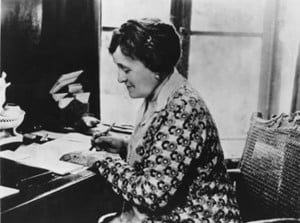
Edith Wharton, a wealthy heiress, got nothing but disapproval from her snooty mother and society friends who looked down upon or ignored her literary pursuits.
She tiptoed haltingly into the world of print, hampered by crippling insecurity. It took many small victories — published stories, books, and warm reviews — before Wharton believed she was worthy of success. In her memoir, A Backward Glance, she wrote of her struggles to finally land where she wanted:
“At last I had groped my way through to my vocation, and thereafter I never questioned that story-telling was my job … I felt like some homeless waif who, after trying for years to take out naturalization papers, and being rejected by every country, has finally acquired a nationality. The Land of Letters was henceforth to be my country and I gloried in my new citizenship.”
It took the reinforcement of the public and her peers for her to acquire a new image of herself as a capable, talented author—one who, before very long, became the first female author to win the Pulitzer Prize for the Novel in 1921 for The Age of Innocence.
. . . . . . . . . . . . .
Virgina Woolf:
A bottomless need for approval
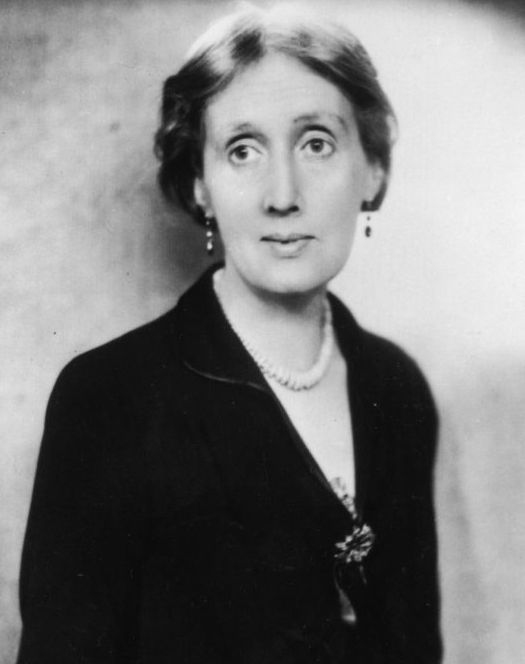
Like Edith Wharton, Virginia Woolf’s need for the approval of others was vast, and she sought it from her husband, friends, publishers, and critics.
But unlike Edith Wharton, those closest to her gave her just that. That didn’t allay her constant struggle with self-doubt, seeing herself as somehow lacking.
“I can assure you,” she wrote to her friend Vita Sackville-West, “all my novels were first-rate before I wrote them.” When her publishers or husband praised her efforts, it meant everything to her.
Woolf needed the reinforcement of others to build a foundation of self-acceptance, which in turn gave her courage to create works that were experimental and far ahead of their time. Though self-doubt never left her, it was a catalyst to do constantly do better, not a signal to stop growing.
. . . . . . . . . . . .
Gwendolyn Brooks:
“A surprised queenhood”

In Conversations with Gwendolyn Brooks (2003), Gloria Wade Gayles wrote that “for the first time in her life, Gwendolyn Brooks, a dark-skinned black woman who had known the pain of rejection based on skin color, was in the midst of Black poets who claimed the beauty of Blackness. For the first time, she heard a new poetry forged into existence by the Civil Rights Movement. She experienced an epiphany; she was transformed.”
Already a Pulitzer Prize winner, Gwendolyn described her evolution from a poet who happened to be Black to a Black poet. Famously, she declared, “I — who have ‘gone the gamut’ from an almost angry rejection of my dark skin … to a surprised queenhood in the new Black sun — am qualified to enter at least the kindergarten of new consciousness now. New consciousness and trudge-toward-progress.”
Staying true to herself and her purpose, Gwendolyn experienced a full life as a working poet and teacher of poetry. Though she remained committed to Black poetry as an art form, her work has retained universal appeal, speaking to the shared humanity of readers of all backgrounds.
. . . . . . . . . . . . .
Louisa May Alcott:
Dismissive of her own talent
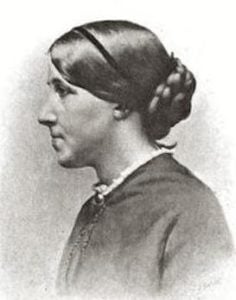
Louisa May Alcott was determined to make a living by writing, no small feat for a woman of her time. To support her family, she wrote thrillers, gothics, and “sensational tales” under pseudonyms.
After years of toil, she took up her publisher’s request to try a “girls’ story,” and reluctantly cranked out Little Women. Always viewing herself as more of a workhorse than an artist, she thought little of it.
Though neither she nor her publisher thought highly of the results, the book became an immediate best-seller. When she learned of its embrace by the public, Alcott saw it in a new light, and changed her tune: “It reads better than I expected. Not a bit sensational, but simple and true…”
No longer going from one anonymous literary identity to another, self-acceptance came after the “simple and true” novel that emerged from the pen of its reluctant author met an enthusiastic audience. Her career blossomed, as did the fortune she had long craved.
. . . . . . . . . . . . .
While researching The Literary Ladies’ Guide to the Writing Life I learned of that struggling with self-regard and self-acceptance is universal among writers, even those whose works have entered the canon of classics.
I realized that I was behaving more like the two caterpillars in the cartoon than the butterfly. I’ve played it safe by accepting only a certain version of myself as a writer, one that’s occasionally at odds with the “real me.” The illusion of safety can get in the way of progress. After all, caterpillars are vulnerable to getting smooshed on the road.
Sometimes acceptance of a new version of ourselves—as writers who have arrived, or are just on the cusp of doing so—lags behind what others have already perceived about us: we’re already aloft, like the butterfly; we just need the courage to lose sight of the ground below.
And it’s not just self-acceptance for authors but for women in general. I belong to a Commission for Women in the Worcester Diocese and we put on programs for women. We hosted a wonderful nun who spoke about the need for self-love and taking care of ourselves. It seems to be epidemic especially among older women, this lack of self-acceptance. I felt so sad hearing caring, wonderful women saying that they don’t “deserve” to take time for themselves, who find it an incredible struggle just to step aside and “do something for me.” It makes you wonder just what feminism has done for women when so many still feel this way.
I appreciated how Edith Wharton overcame her insecurities and even saw her family’s disdain for her writing as a good thing because it made her tougher. Good attitude! Makes me want to read her works.
I’ve been reading the section in your book about authors who are mothers and I’ve come to believe that these “distractions” in fact, make us better writers. We have to fight harder to get the time in but in the meantime, these distractions are living life, the best possible food for writers.
Thanks for this thoughtful comment, Susan. I wouldn’t blame feminism, though, but a culture in which male is still the “default gender” and women still have to fight for equality, whether in a blue collar job, in a boardroom, or in creative professions.
It’s changing, but more slowly than one would expect given the rise of girls and young women over boys and young men in the school and college years. The “deserving” piece is a huge one, one I relate to, but still don’t fully understand. Especially why it’s so universal among women of all ages. One good step is to raise awareness of it, speak about it openly, and find ways to overcome it in our real and virtual communities of women.